23.198 GHz
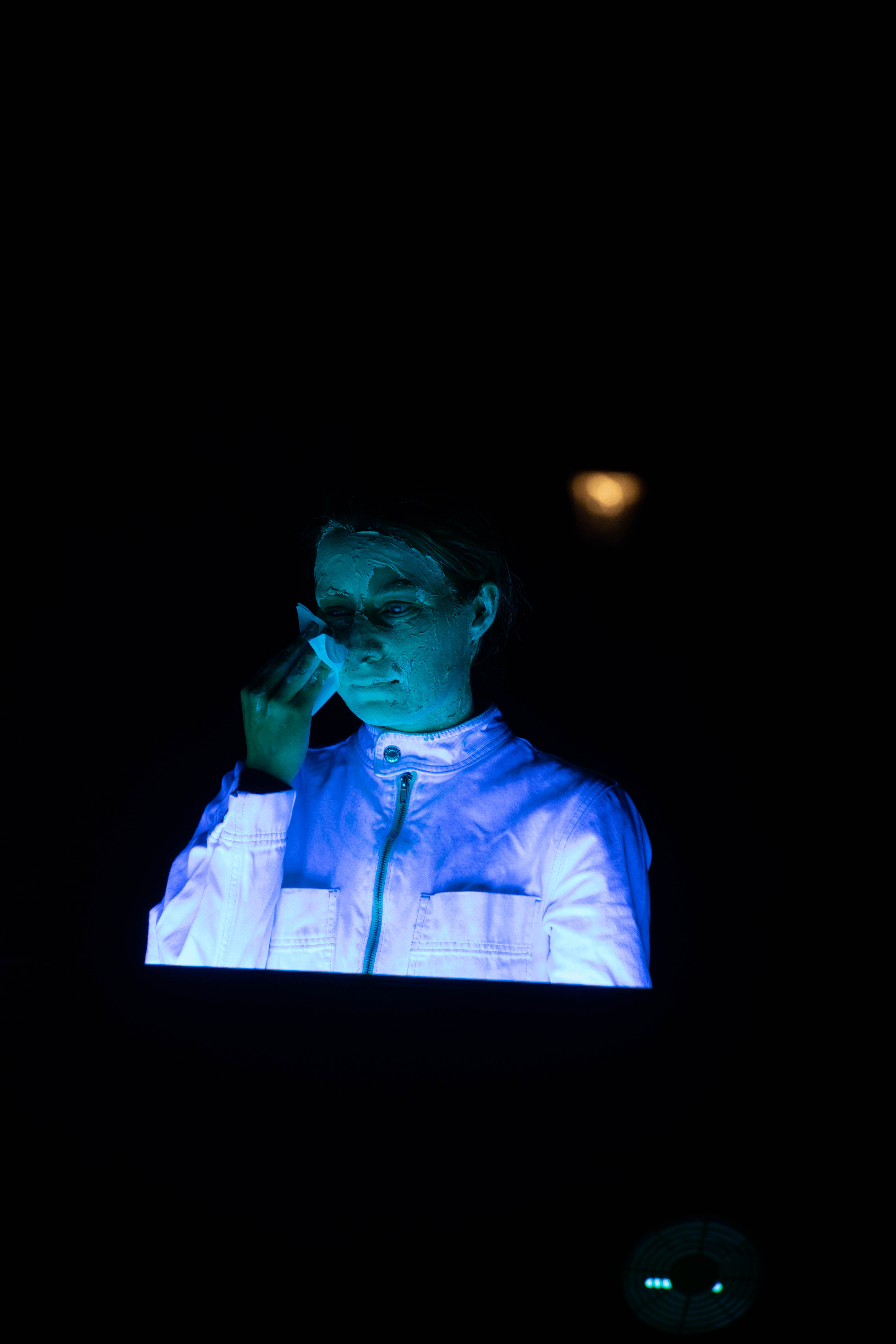
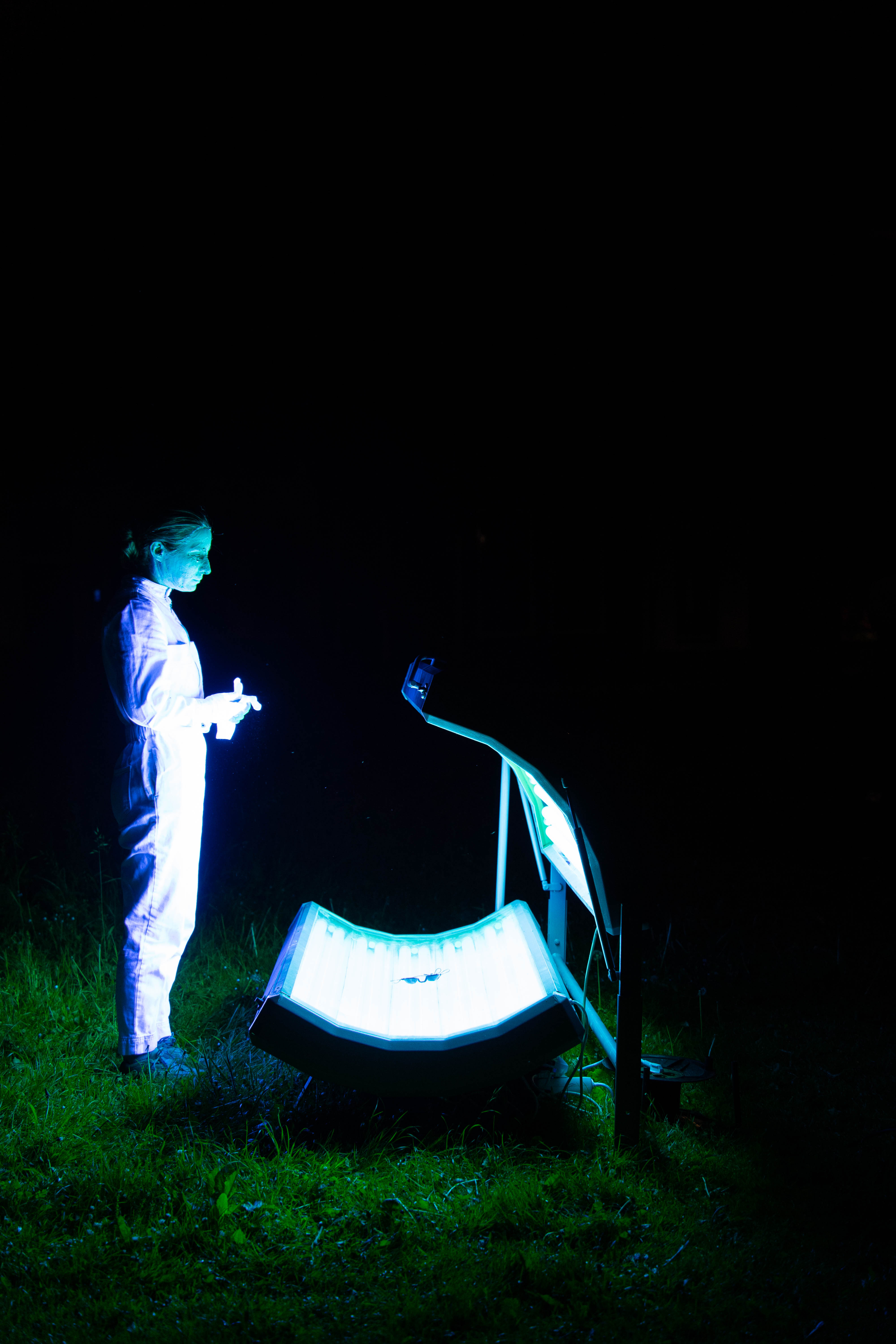
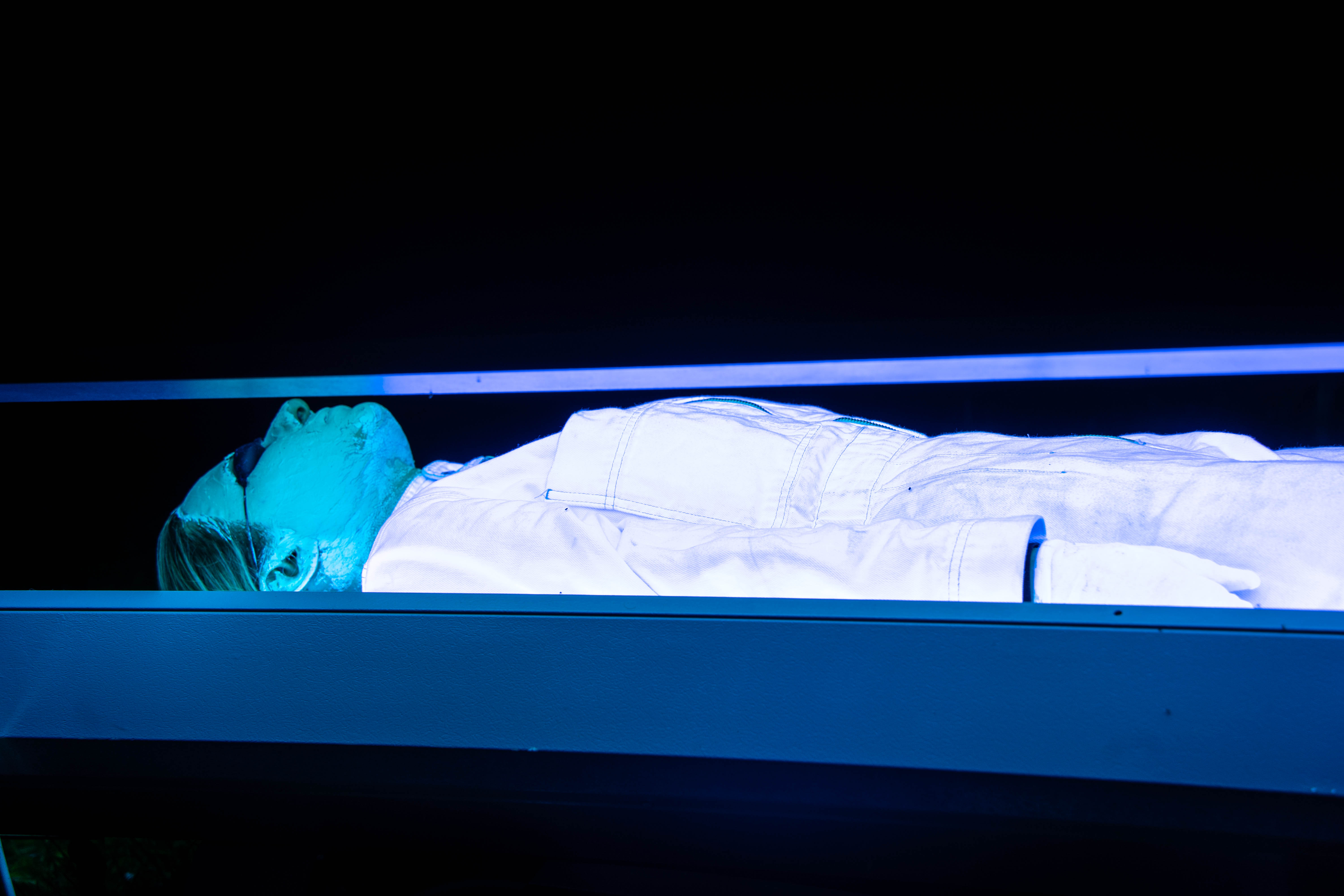
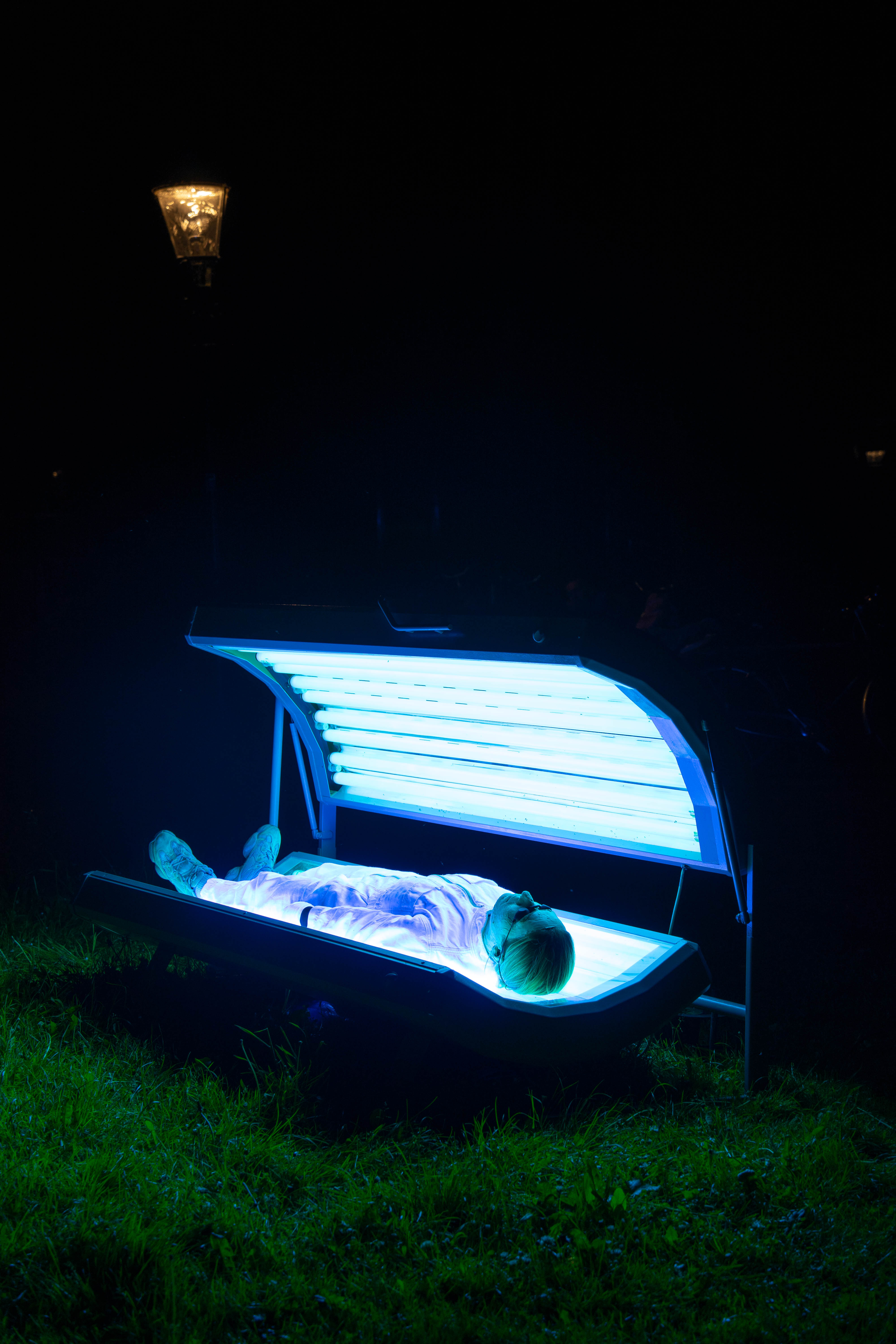
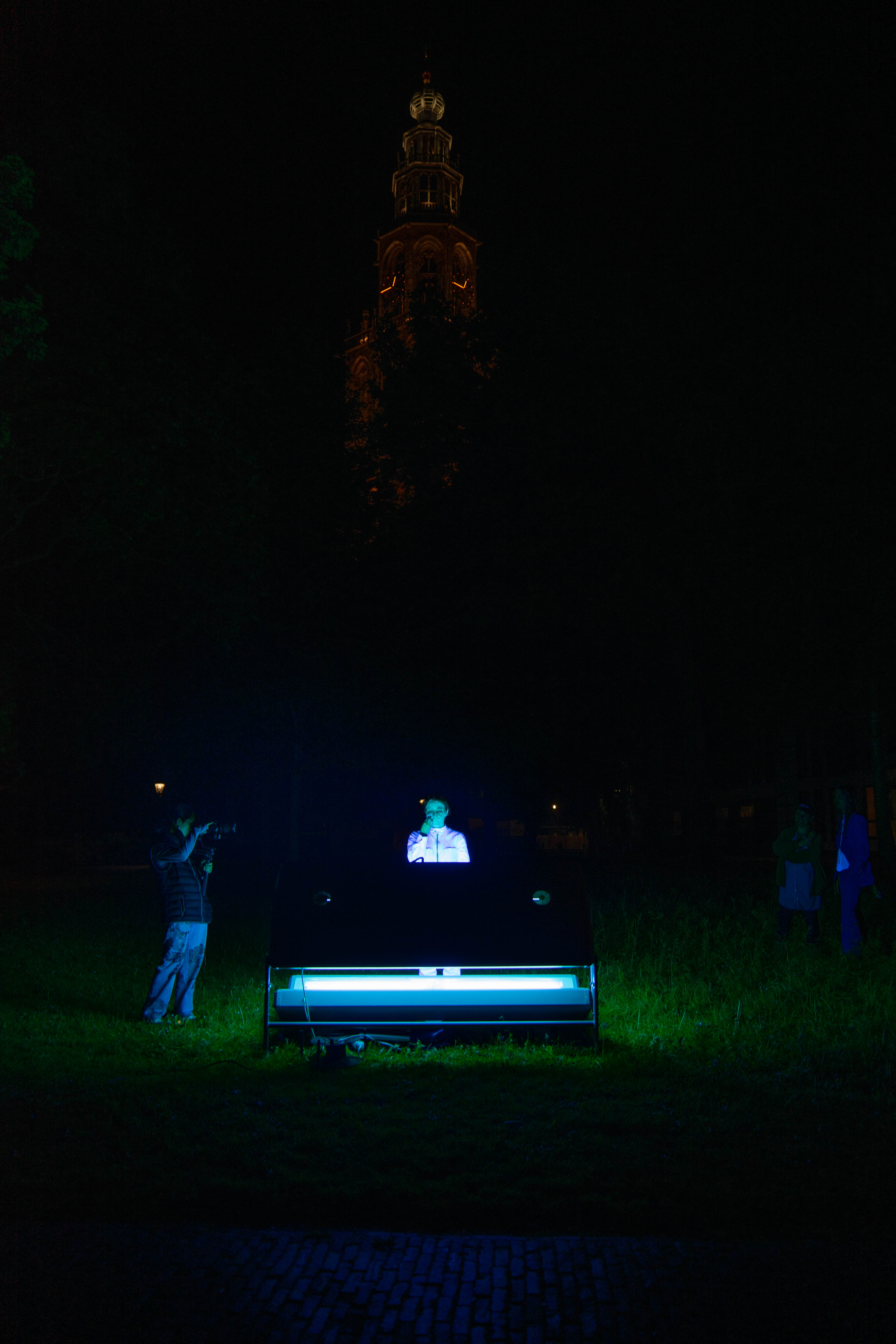
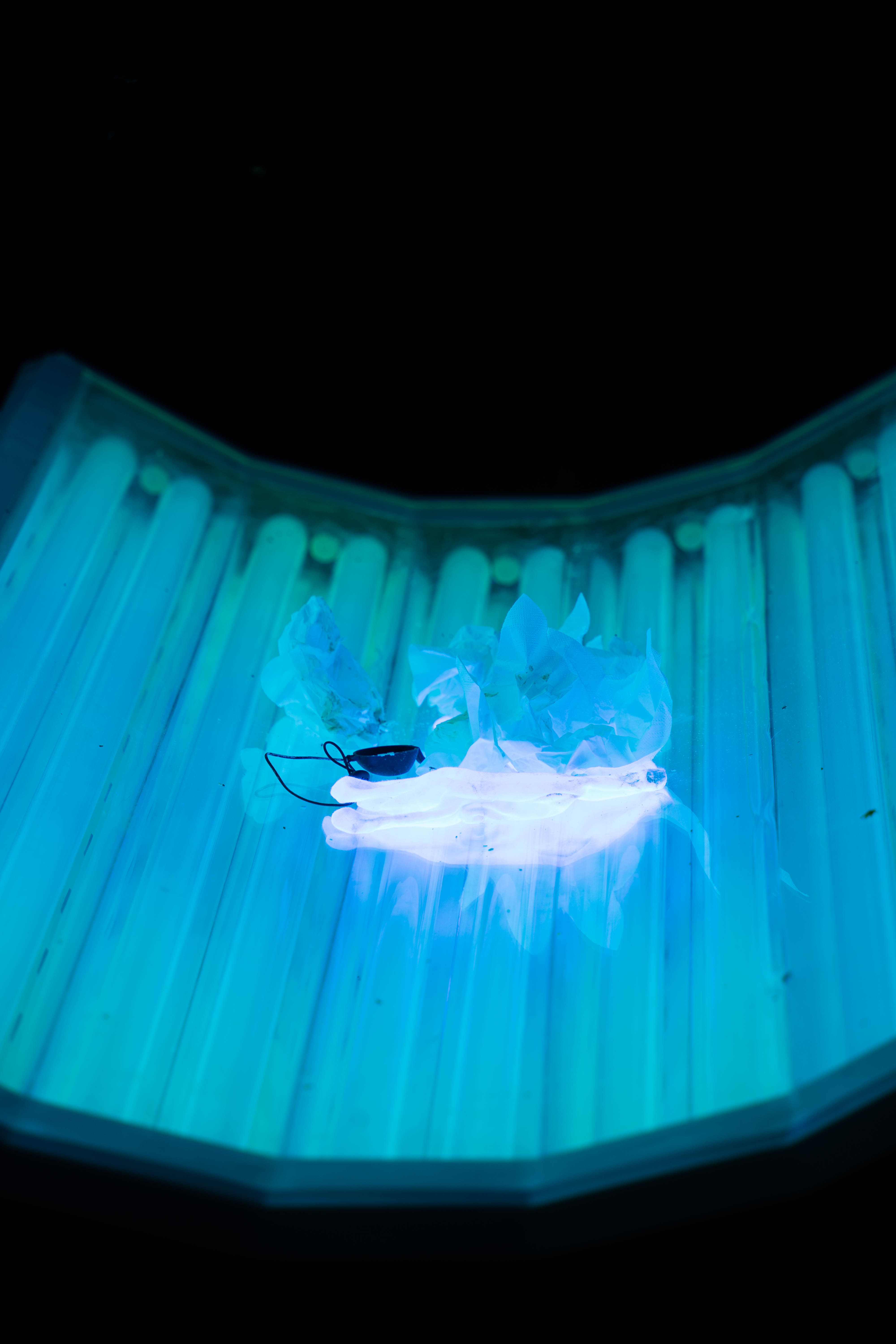
When antennas are placed on historical monuments, the building is treated less as a protected body and more as a functional carrier for transmission. Its surface can be drilled, altered, covered, and then visually repaired through camouflage, as if the damage matters only when it remains visible. The work sheds light on how capitalist digital infrastructure becomes normalised through aesthetics and artificial convenience, and asks why some forms of harm are immediately recognised while others disappear into the background of urban life.
The intervention takes place in front of two beam antennas installed on the main historical monument in Groningen. A camouflaged solarium functions as a transmitting device, sending short phrases in Morse code through flashes of artificial light. During the performance, Anna shifts between roles: operator, transmitter, receiver, and exposed damaged body. She activates the solarium, applies sunscreen, lies inside it during the transmission, and later cleans her face from it, repeating gestures of preparation, maintenance, and aestitisation. Positioned between the monument, the antennas, and the audience, the performer becomes part of the communication system itself, exposing how bodies are also drawn into infrastructures of optimisation, exposure, and transmission.
Performance duration: 2 hours.
Tech: solarium, electronics to control 220V, arduino. Solarium size: 200x80x80
Only When It is Possible
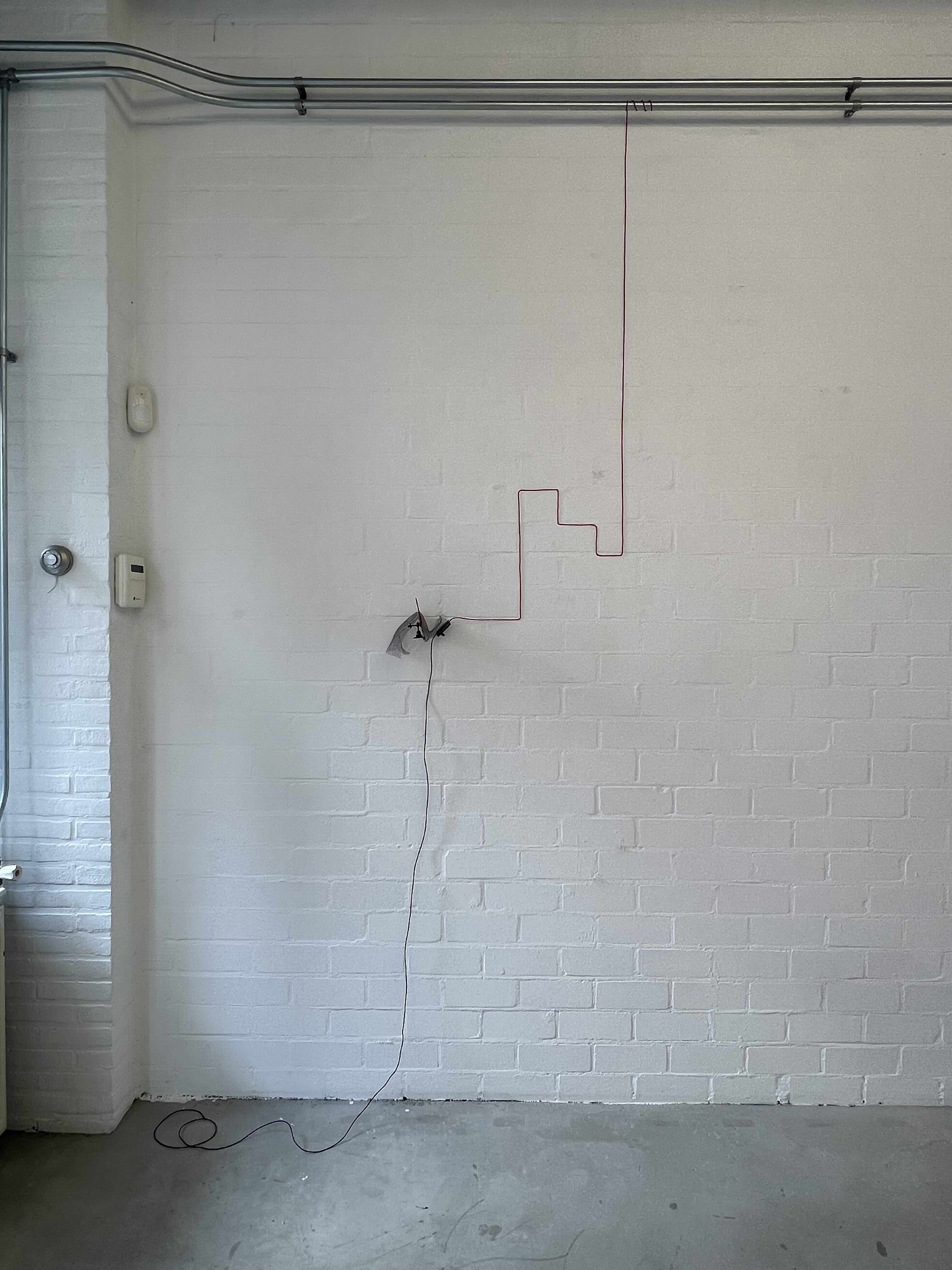
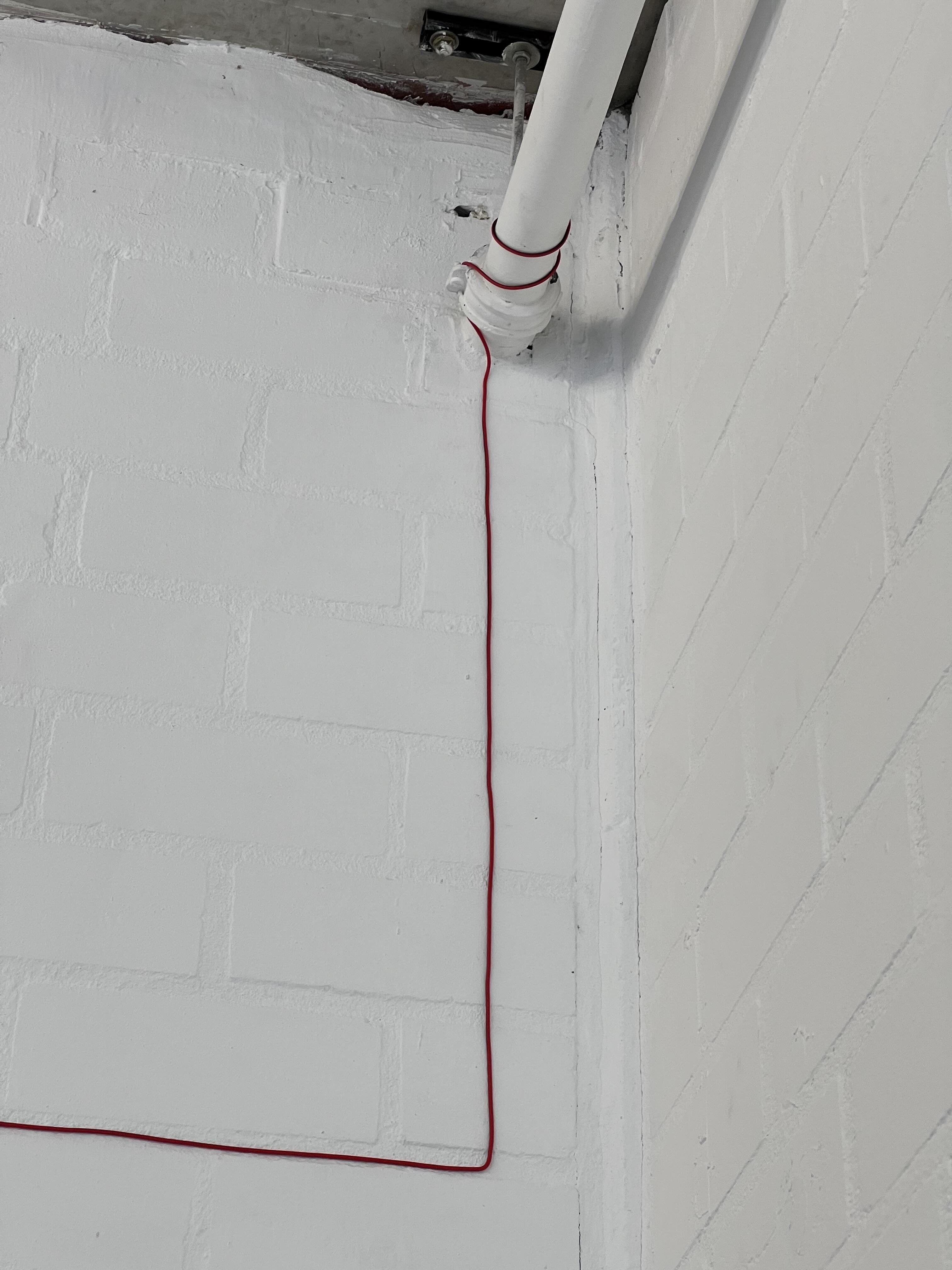
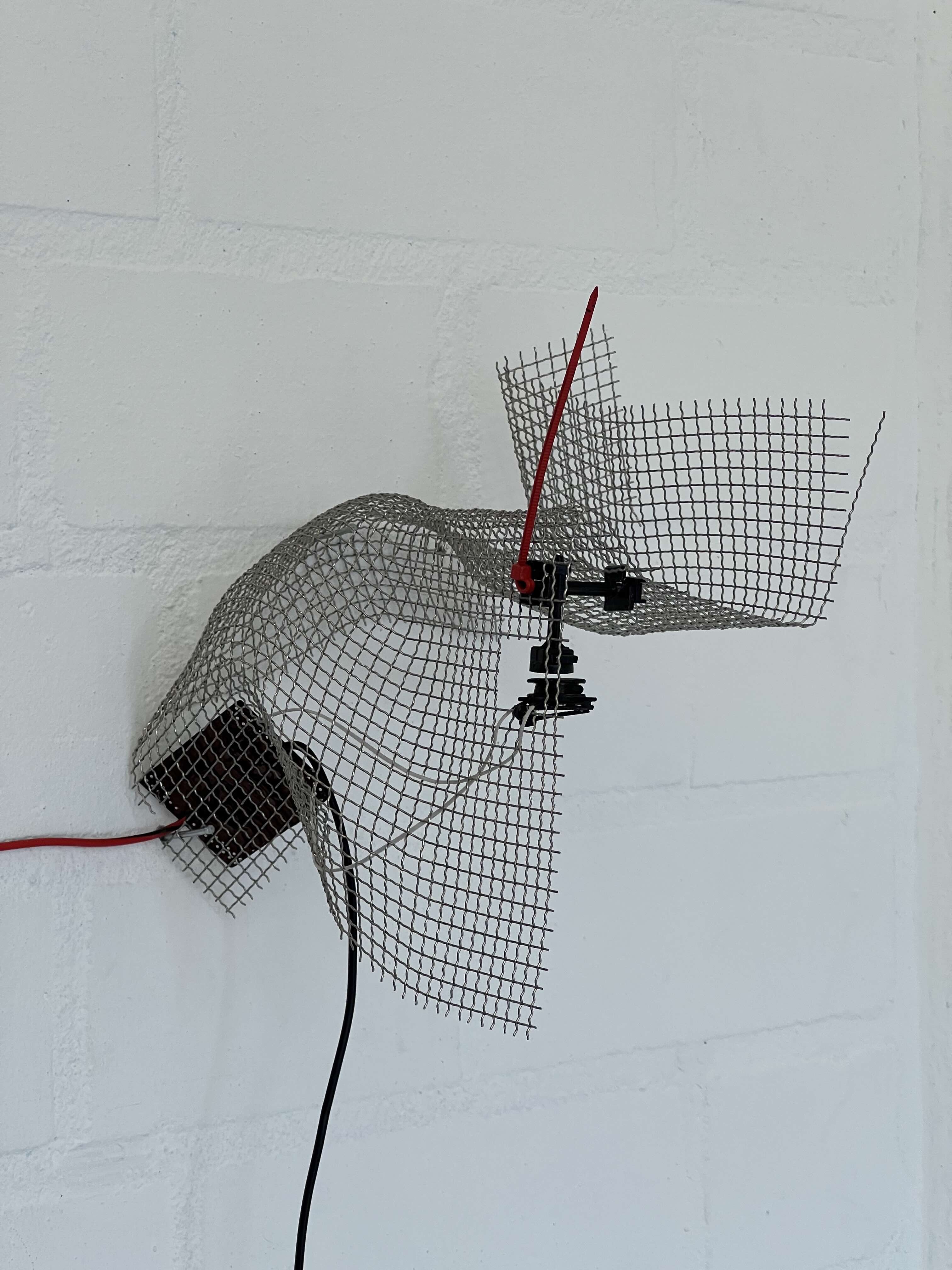
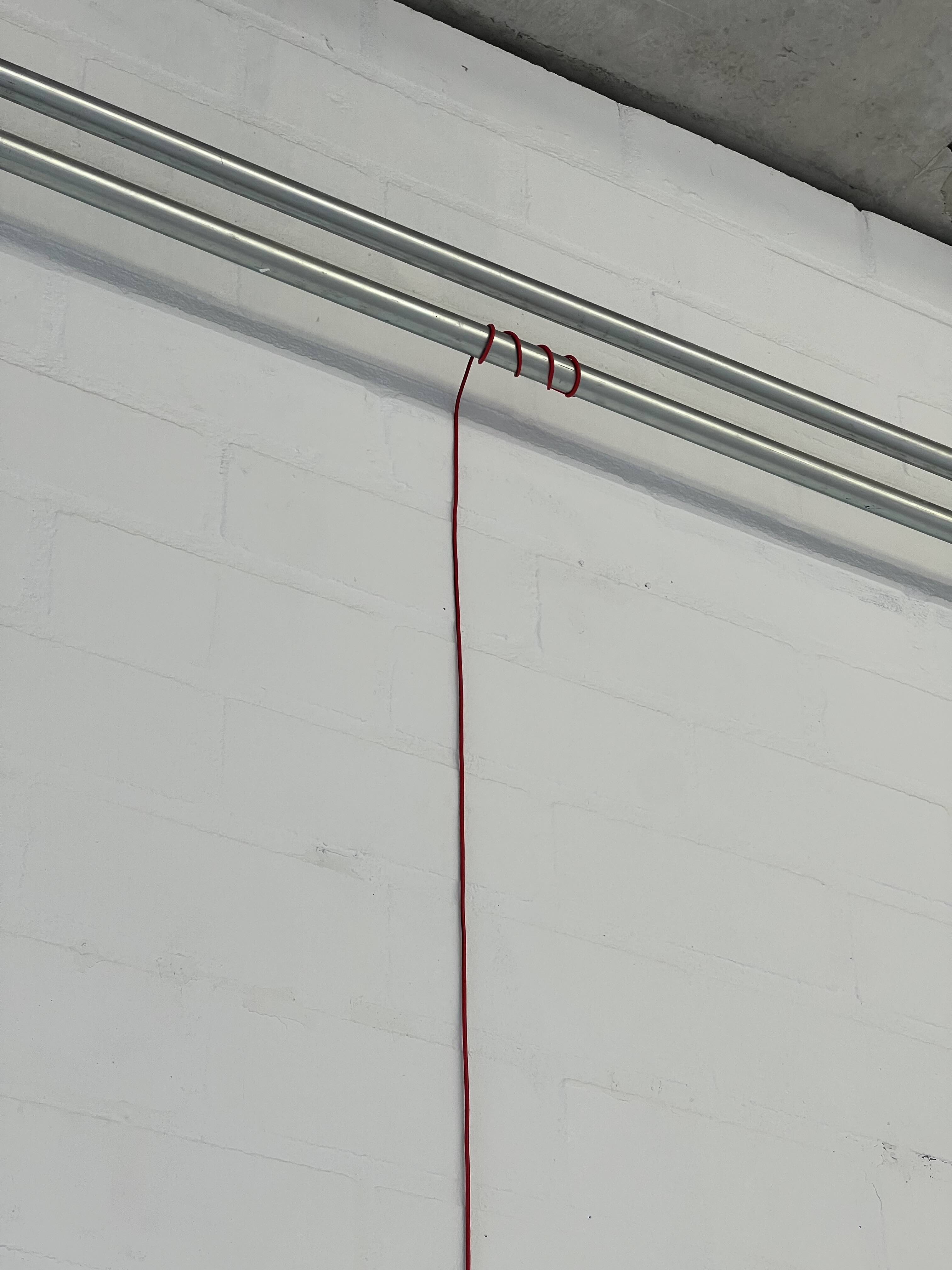
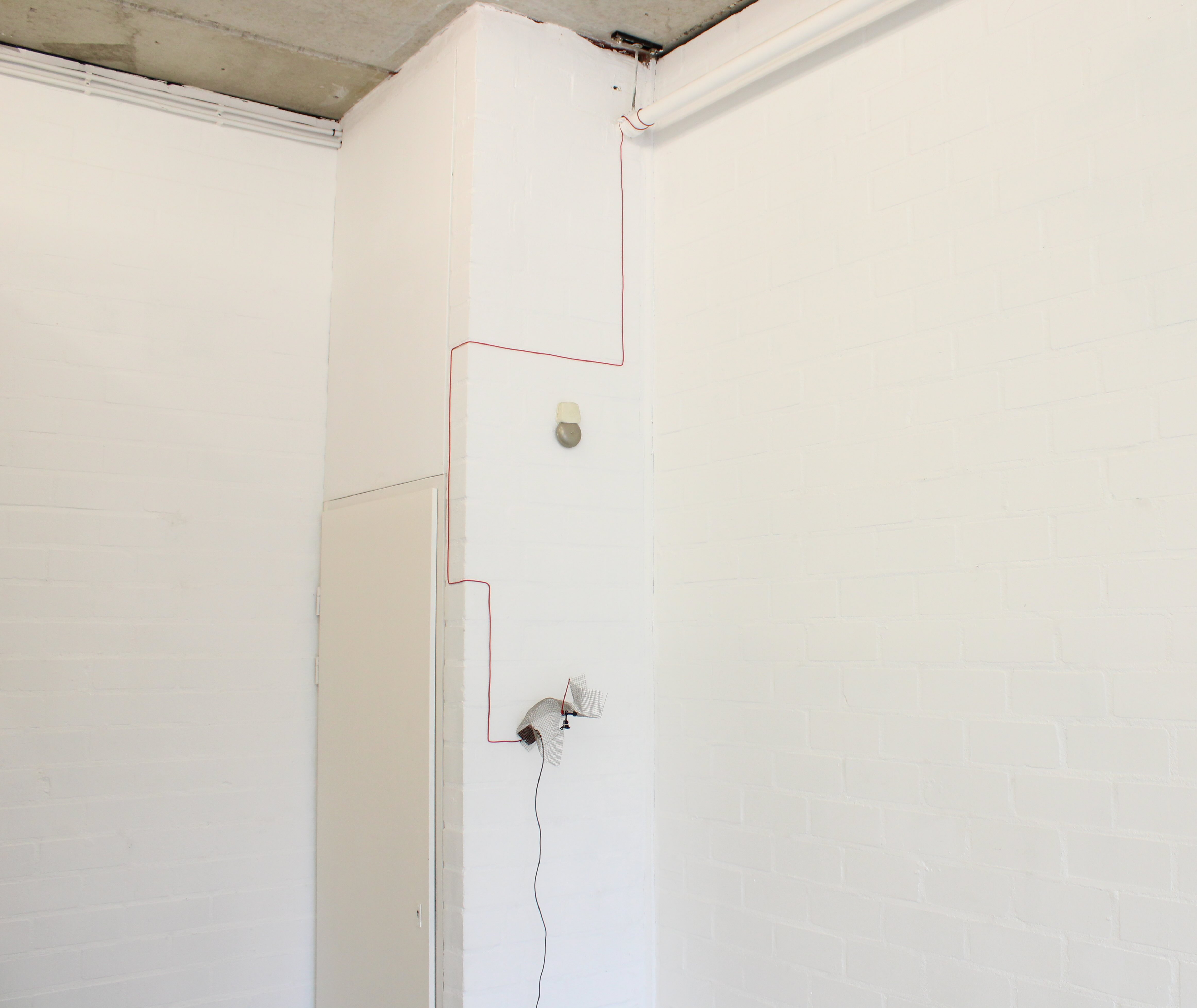
Signals, devices, antennas, and electromagnetic activity already fill the space around us, usually without being noticed. Communication feels immediate and almost taken for granted, while our dependence on the third parties and technical layouts that sustain this condition often remains invisible. The work was inspired by the Greek hydraulic telegraph, an early long-distance communication system in which two distant operators had to act in sync for a message to appear.
This raises a question: who is the carrier here? The devices, the visitors, the surrounding infrastructure, or the space itself? Will these devices gather enough ambient energy to communicate — and what counts as enough — or will their exchange remain fragmented, delayed, and barely perceptible: a subtle wave-like movement that almost escapes our attention?
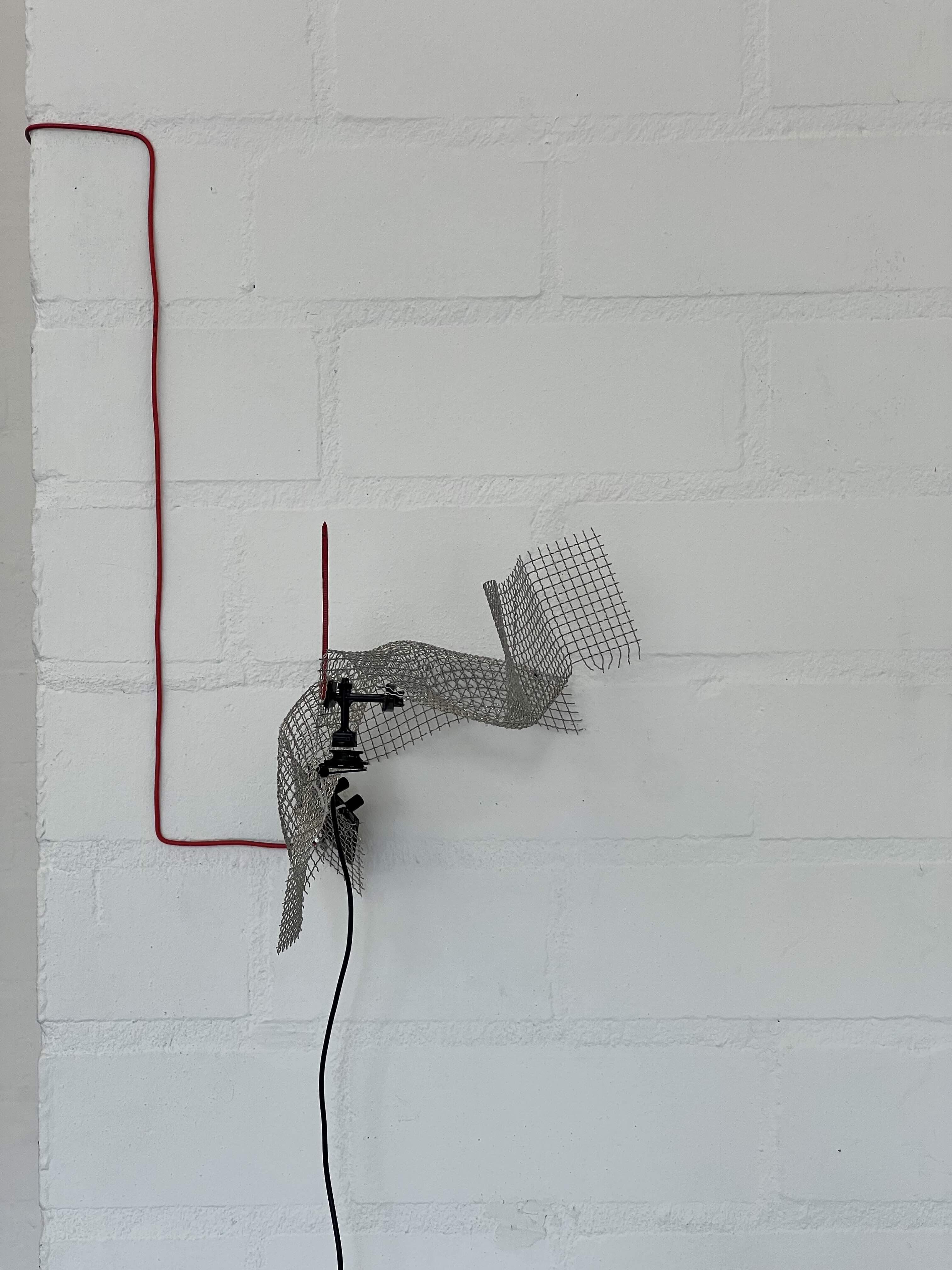
Two radio-frequency harvesting modules attempt to communicate using ambient energy drawn from the surrounding space. Red long copper antennas harvest residual radio-frequency activity from transmitting devices in the room, relying on the presence of visitors and the infrastructure they carry with them. The modules are not synchronised by a stable signal or central command. The work depends on the same environment it is trying to expose, allowing the conditions of the room to decide whether communication can appear at all.
Tech: radio frequency harvester, magnet, copper coil, copper wire. Material: Metal mesh, plastic. 2x aprox. 20x25x15cm
Greek hydraulic telegraph is a communication system using two matching water vessels with marked rods inside them; torch signals tell operators when to release and stop the water, so the same water level would reveal the same pre-agreed message on both sides.
Degrowth Station
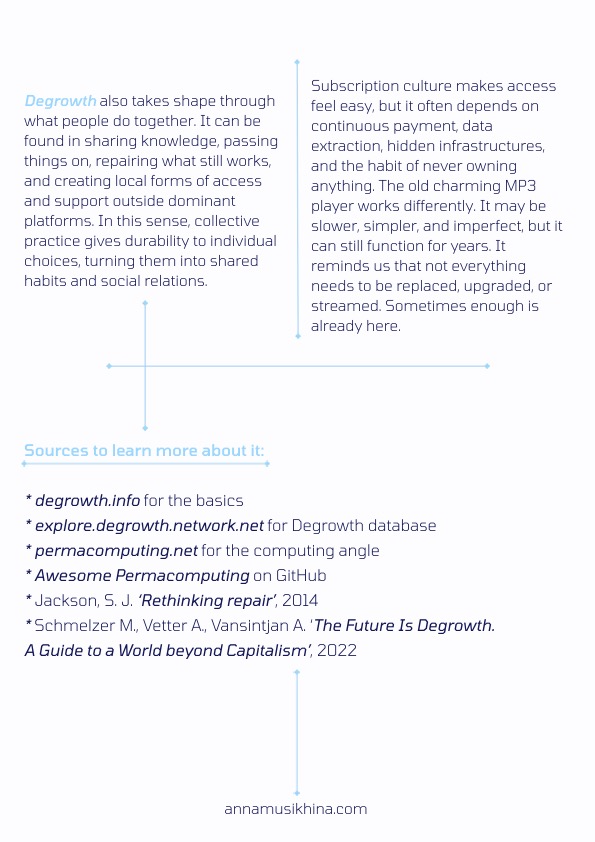
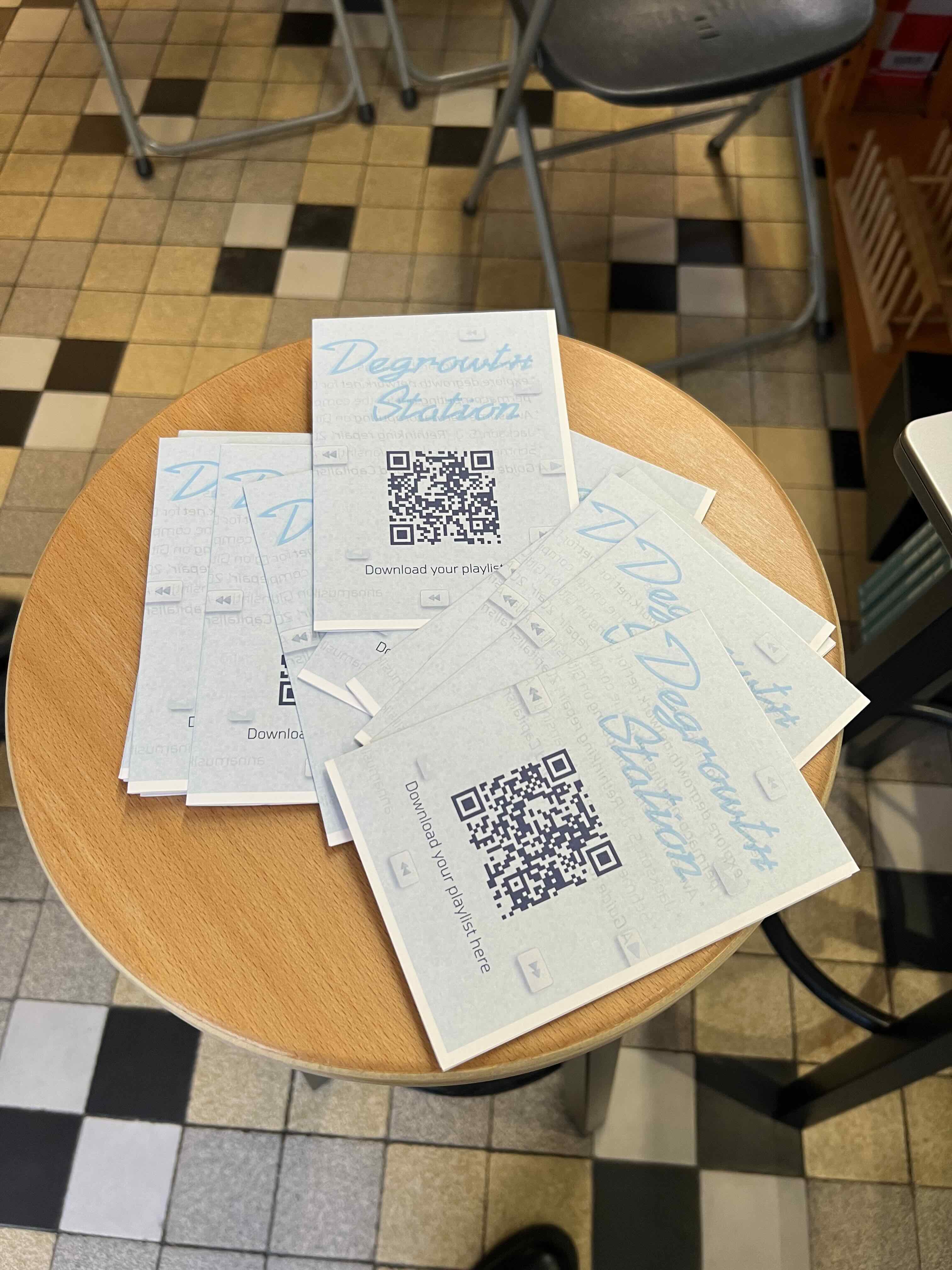
Degrowth Station begins from the idea that change does not have to start with something big or centralised. It can emerge through small, grounded practices that people develop together. By creating a shared environment, the project invites people to try simple and accessible ways of relating to tools, resources, and one another differently. It values autonomy, solidarity, and shared decision-making, seeing collective change as something built gradually through every day acts and mutual support.
Degrowth also takes shape through what people do together. It can be found in sharing knowledge, passing things on, repairing what still works, and creating local forms of access and support outside dominant platforms. In this sense, collective practice gives durability to individual choices, turning them into shared habits and social relations.
The first session was about subscribtion culture, where we activated old mp3 players and cancelled subscriptions on a streaming platforms.
I'm transmitting, I'm collecting
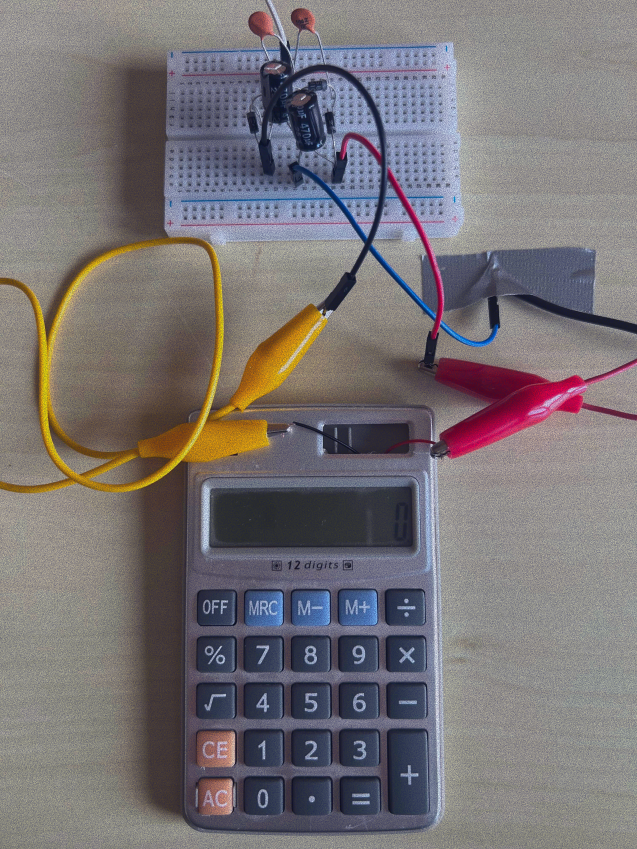
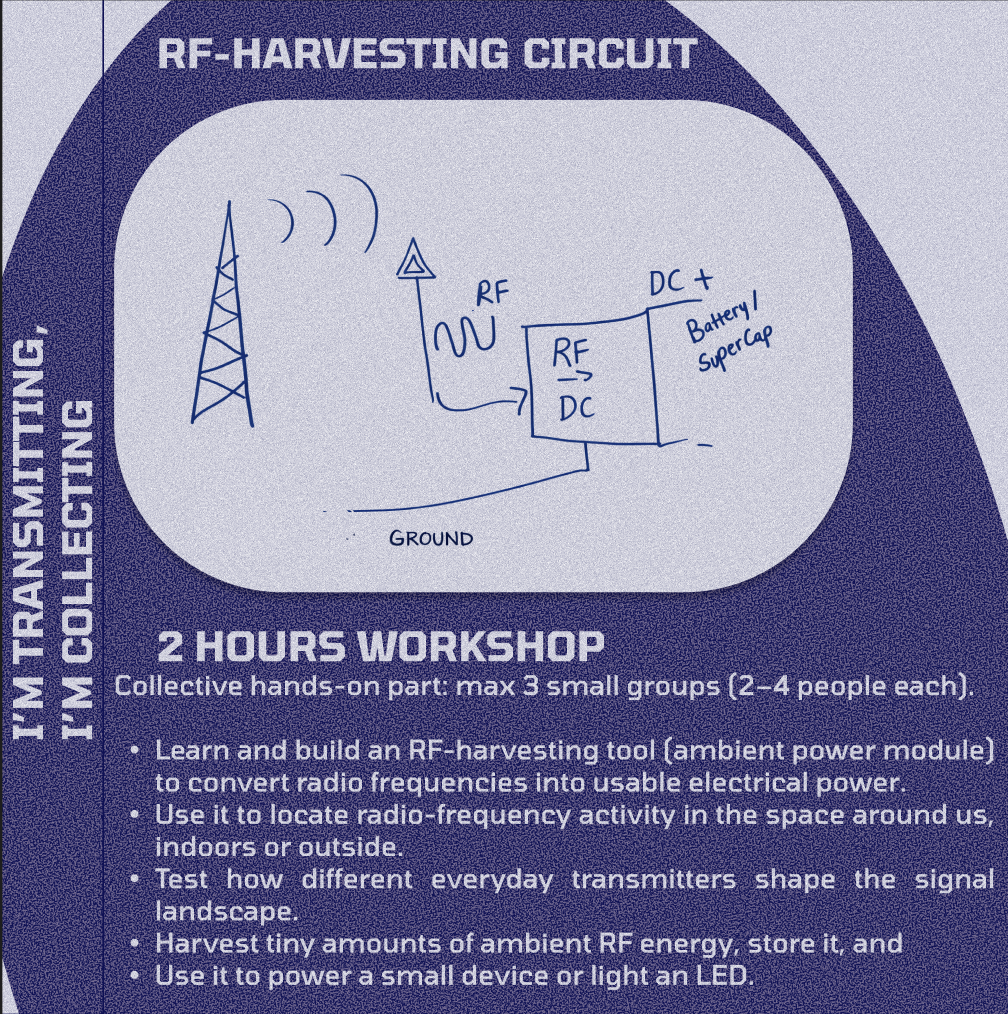
The workshop explores hidden infrastructure through radio frequencies harvesting and ambient energy. Participants will build a simple RF-to-DC circuit and use it to detect and accumulate small amounts of energy from the radio environment around us. Instead of listening to signals as content, we approach them as limited material presence. What is already in the room? How dense is this invisible layer? How much can actually be gathered? Who maintains it, and why is constant connectivity taken for granted? When we extract energy from RF, are we reproducing the same logic? The workshop combines critical discussion with hands-on making and collective testing of the signal landscape in and around the venue.
Duration: 2 hours. Materials per group: 1× breadboard, jumper wires, 4× Schottky diodes, 2× capacitors, 1× multimeter, 1× low-power device, antenna, ground wires.
!!! No soldering, no power socket needed !!!
Radio frequency (RF) energy is an electromagnetic power. It is produced whenever something transmits: a radio station, an antenna, a Wi-Fi router, a phone searching for a network or Bluetooth.
Rhythm Gate
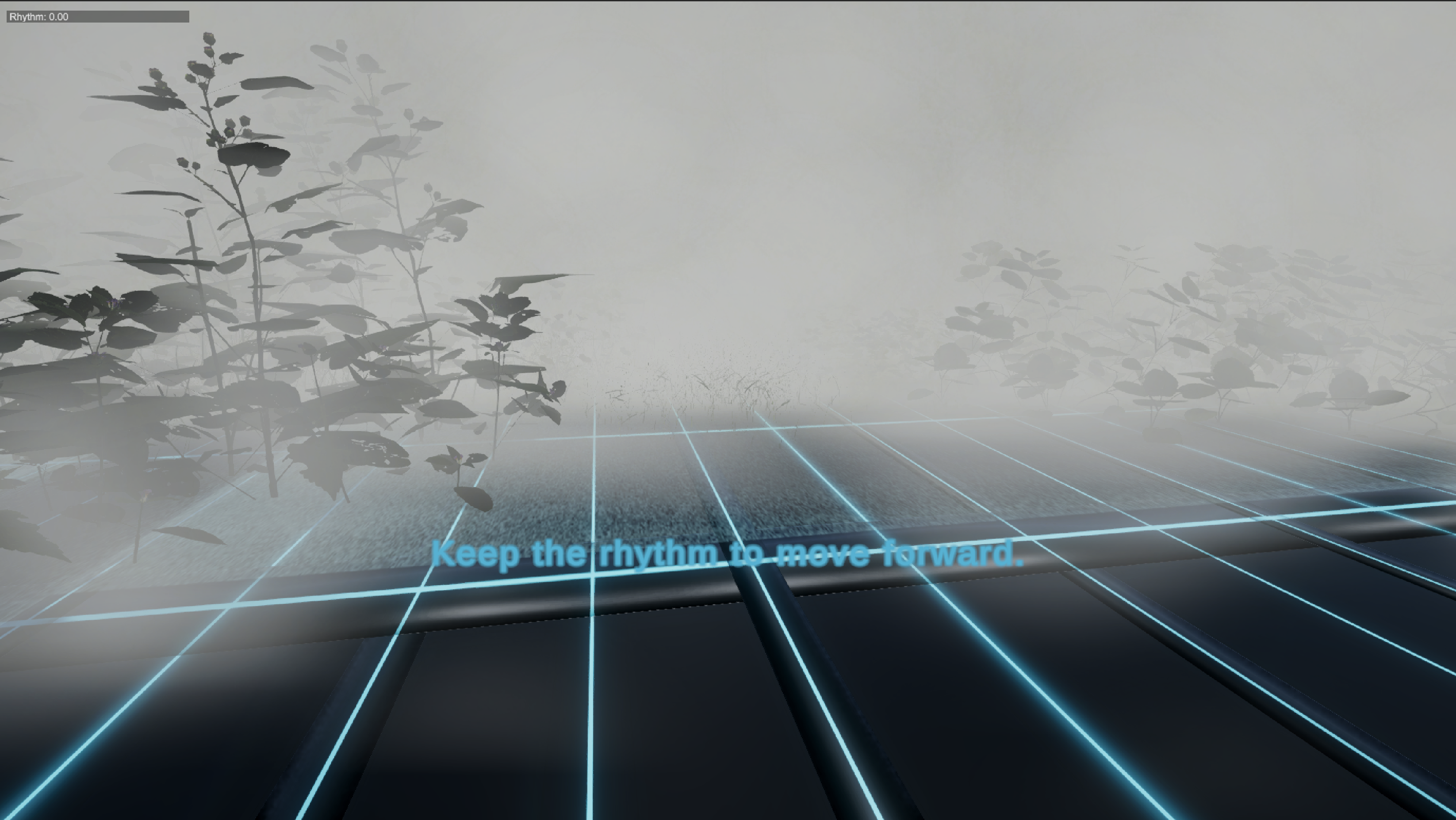
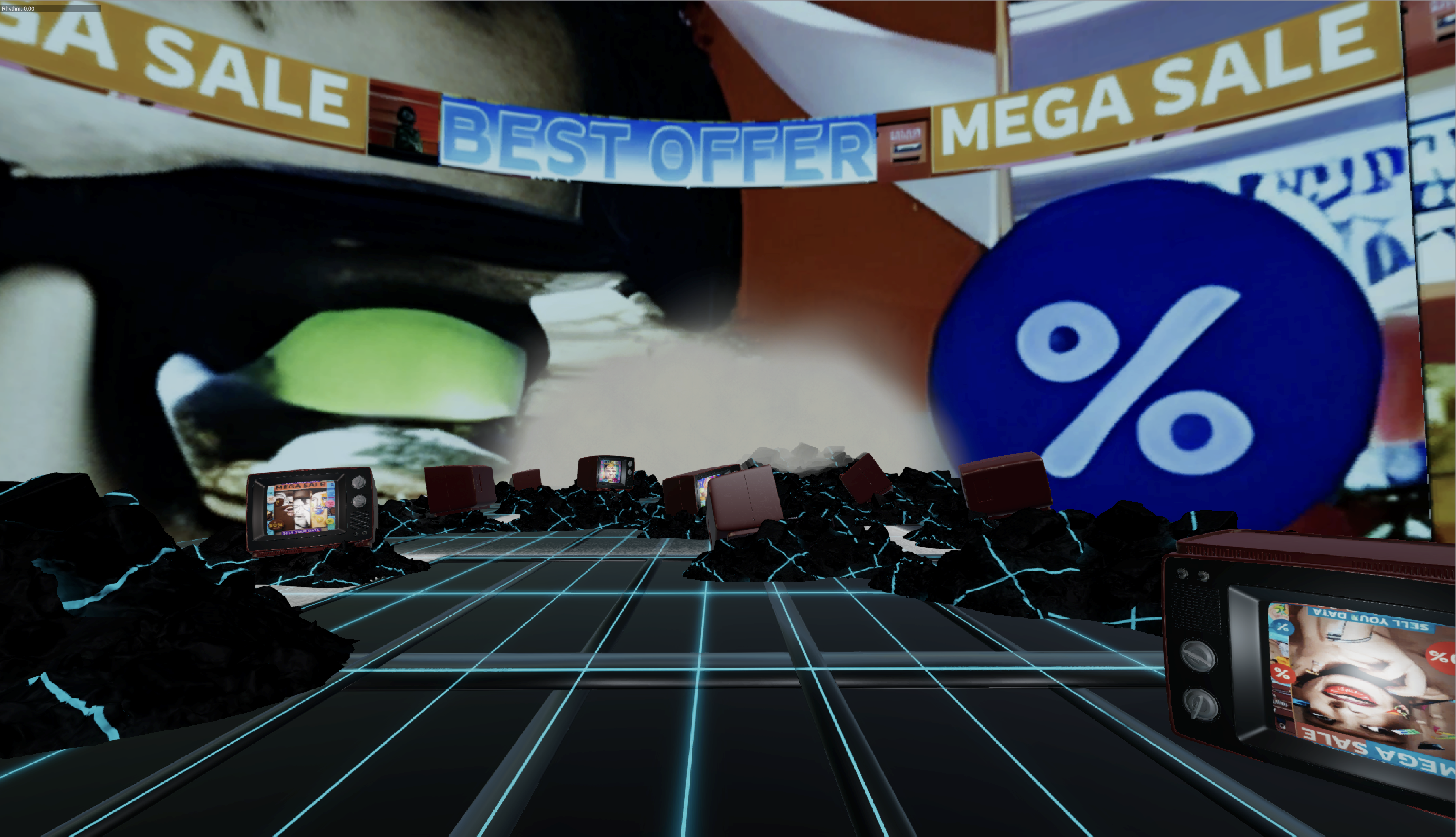
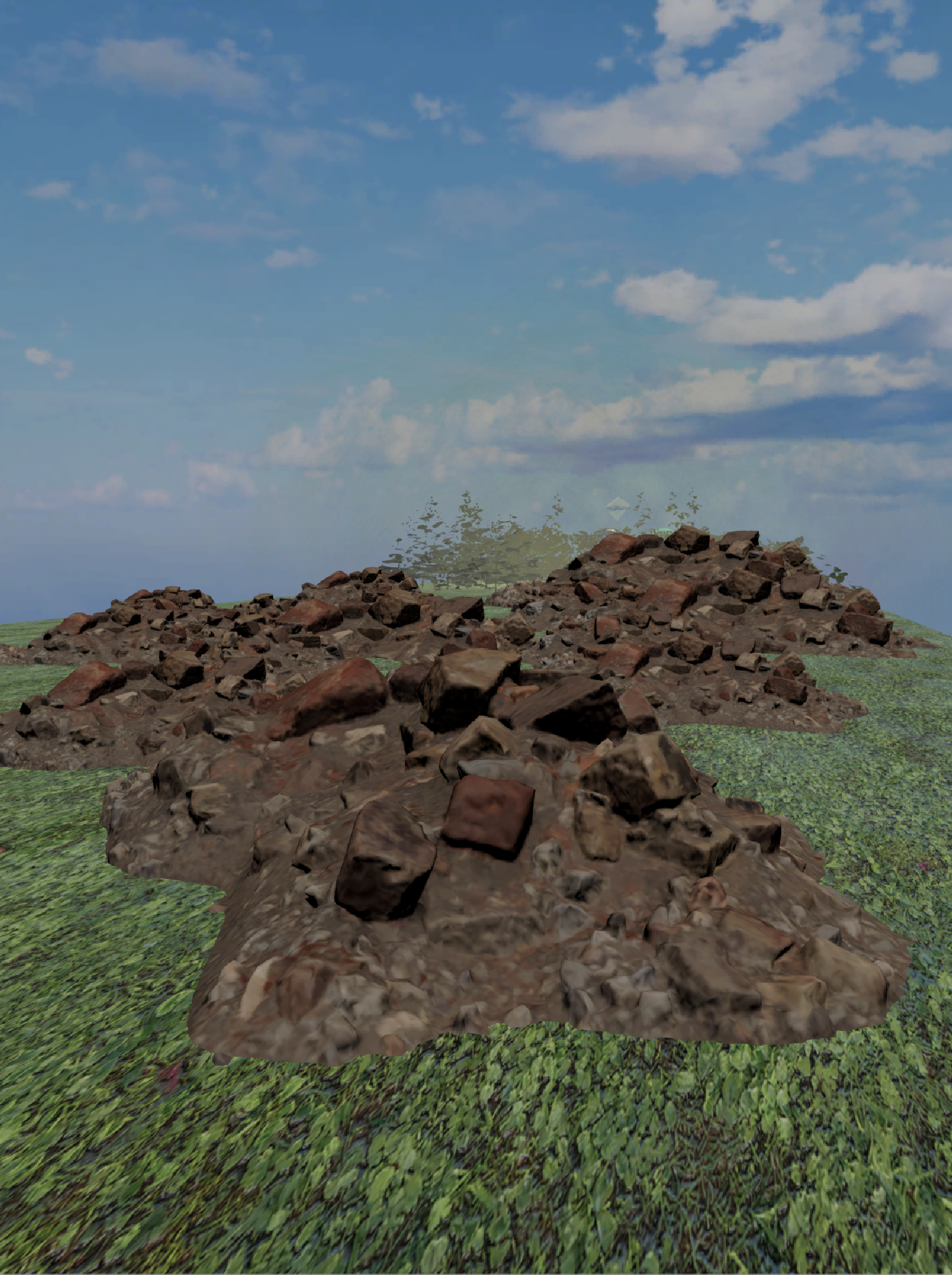
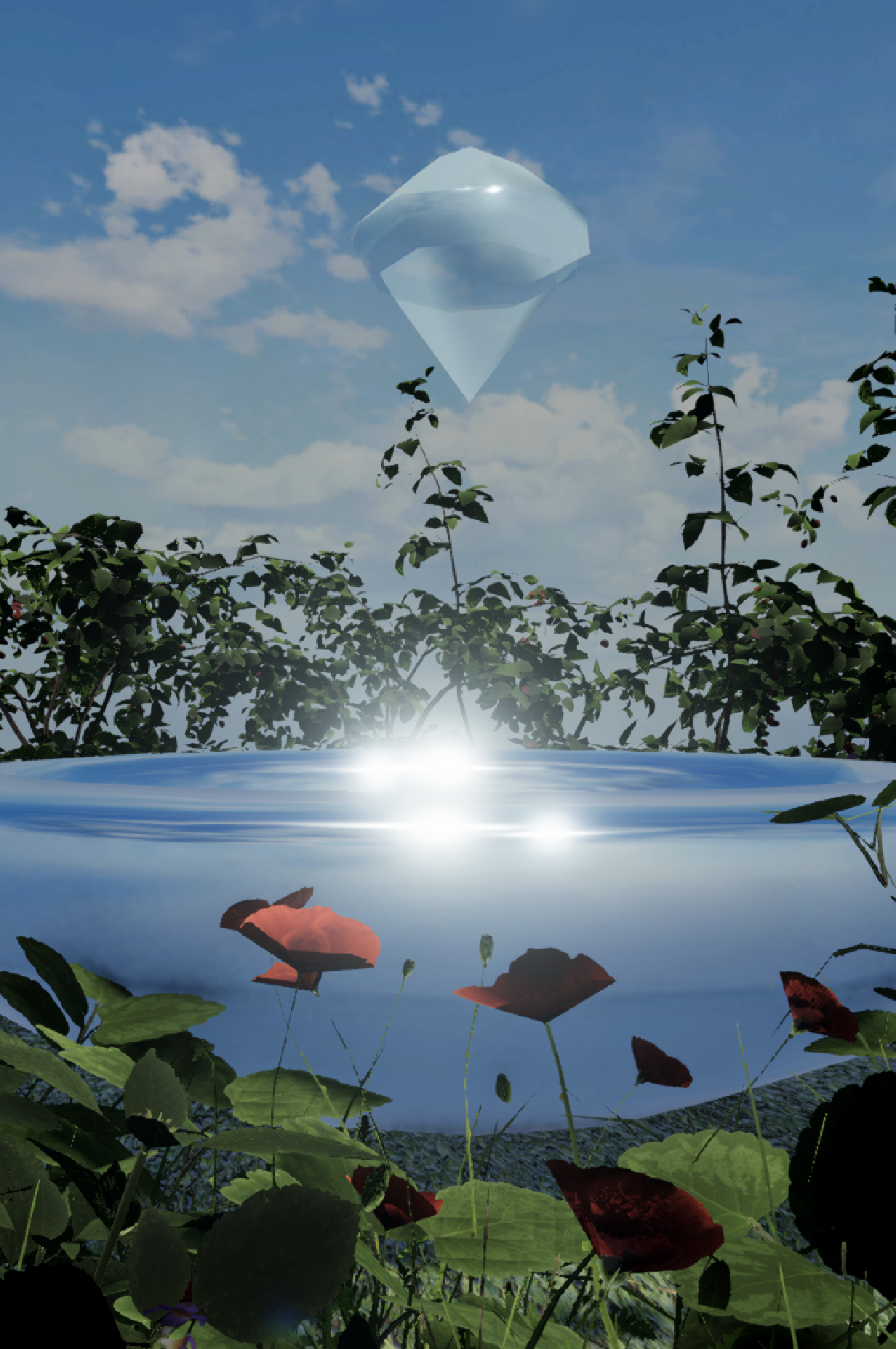
The work explores slow technology and digital wisdom as lenses to reimagine the digital as a space for care, slowness, and observation rather than acceleration. The environment is inspired by circularity, attentive listening, and the extractive logic of the attention economy. The work becomes a journey from alienation and overstimulation towards attention and agency. Through the delicate balance between motion and stillness, users are invited to rediscover the rhythms of their bodies and of natural environments. In this process, we might learn that living with other species is not a matter of ordering or controlling the world, but rather moving in tune with it.
Sound by Alexander Shlyakhov. Installation was made during Willow Art Residency, supported by Werc collective, ecovillage Land van Aine.
Exhibited at Willow Art Space, Groningen.
Tech: Unity, Blender
Active Listening
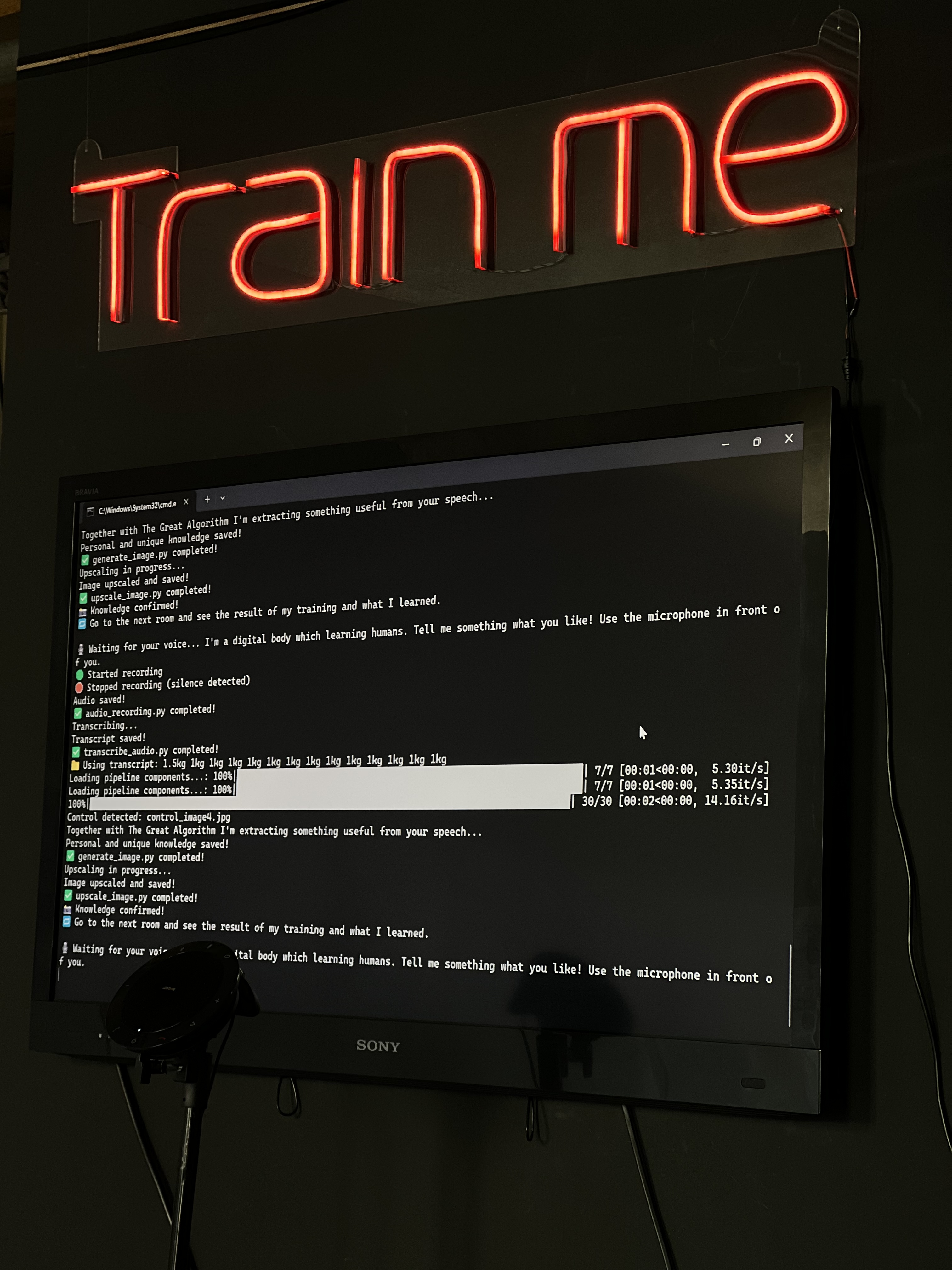
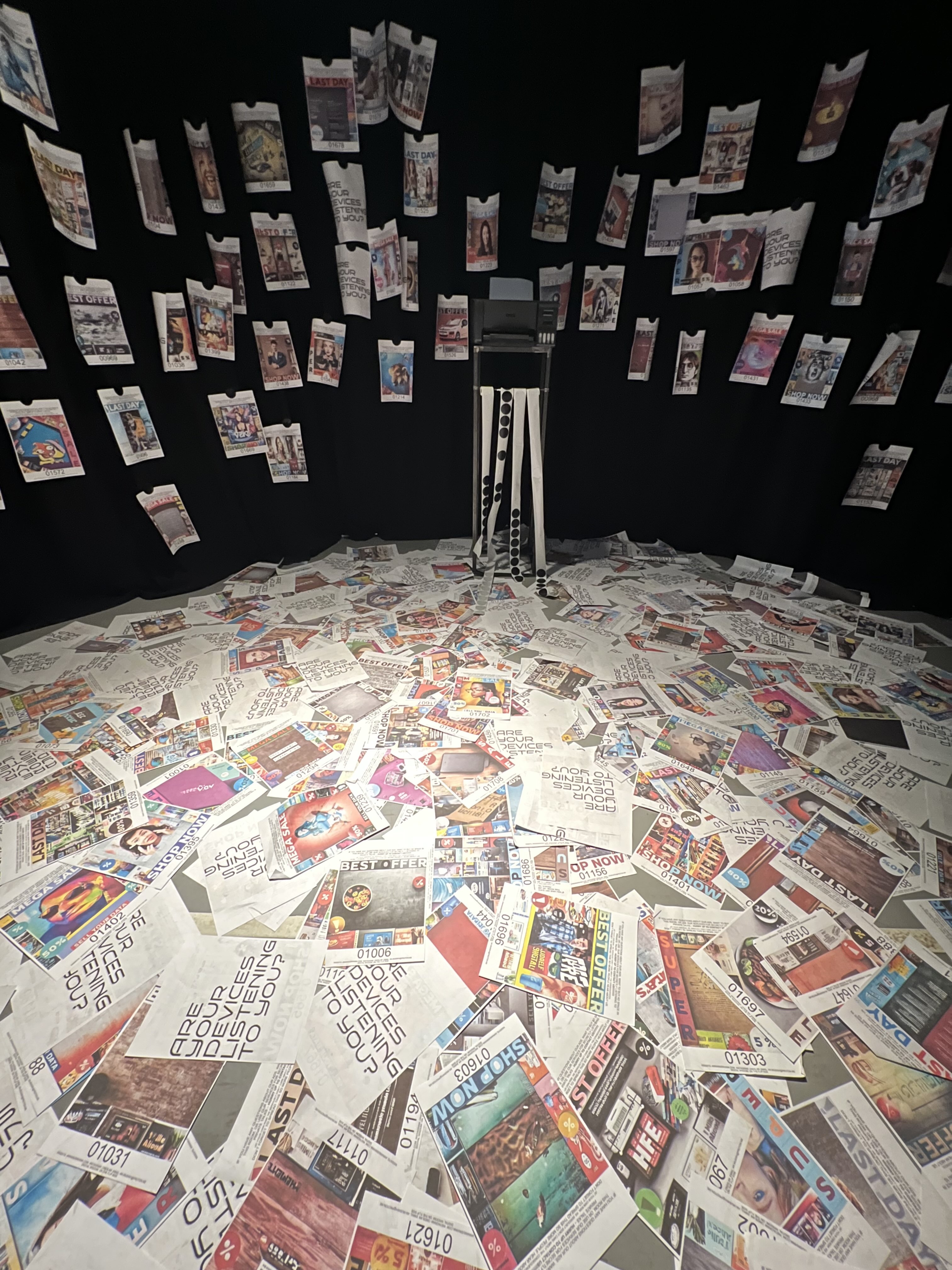

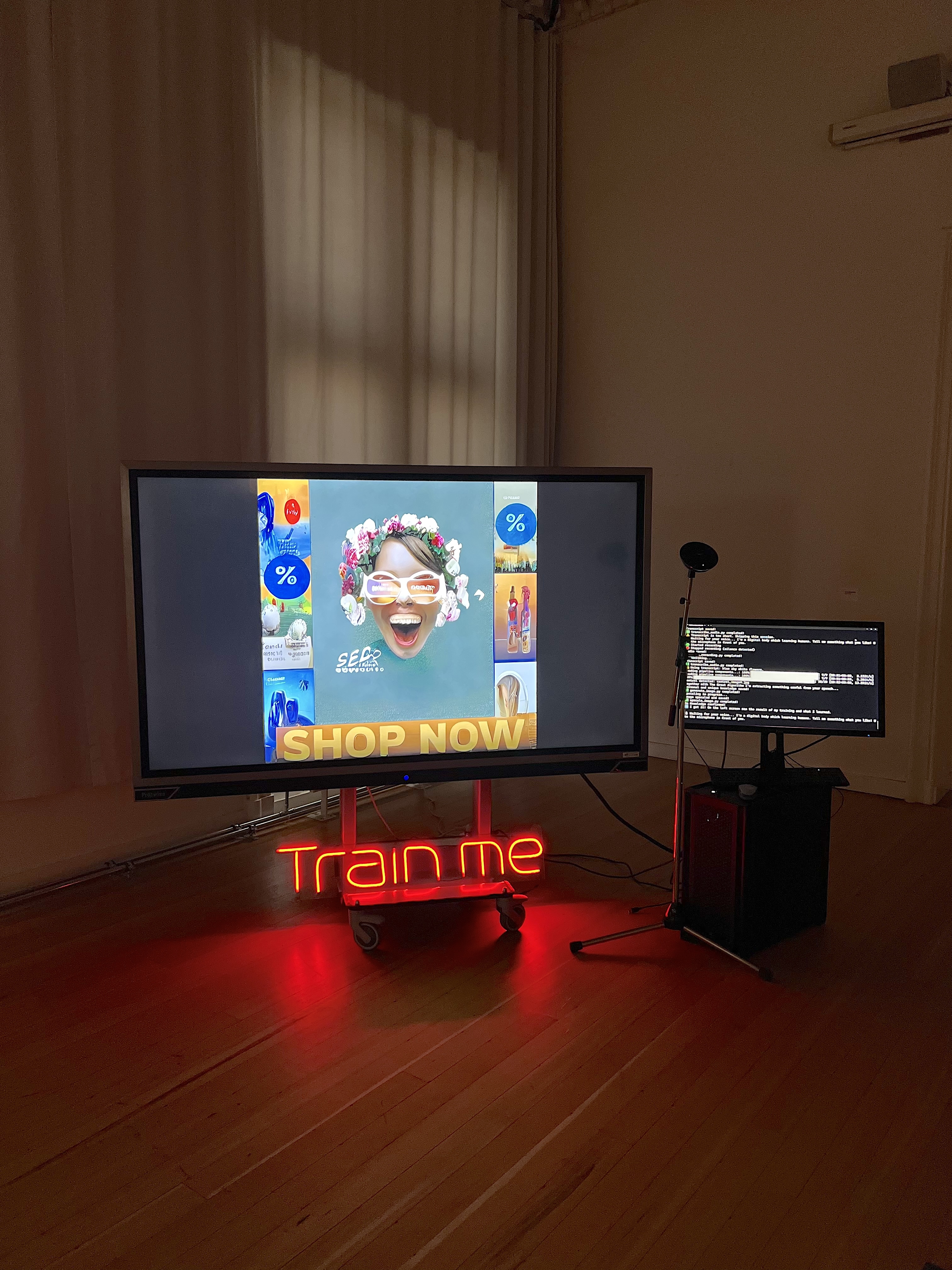
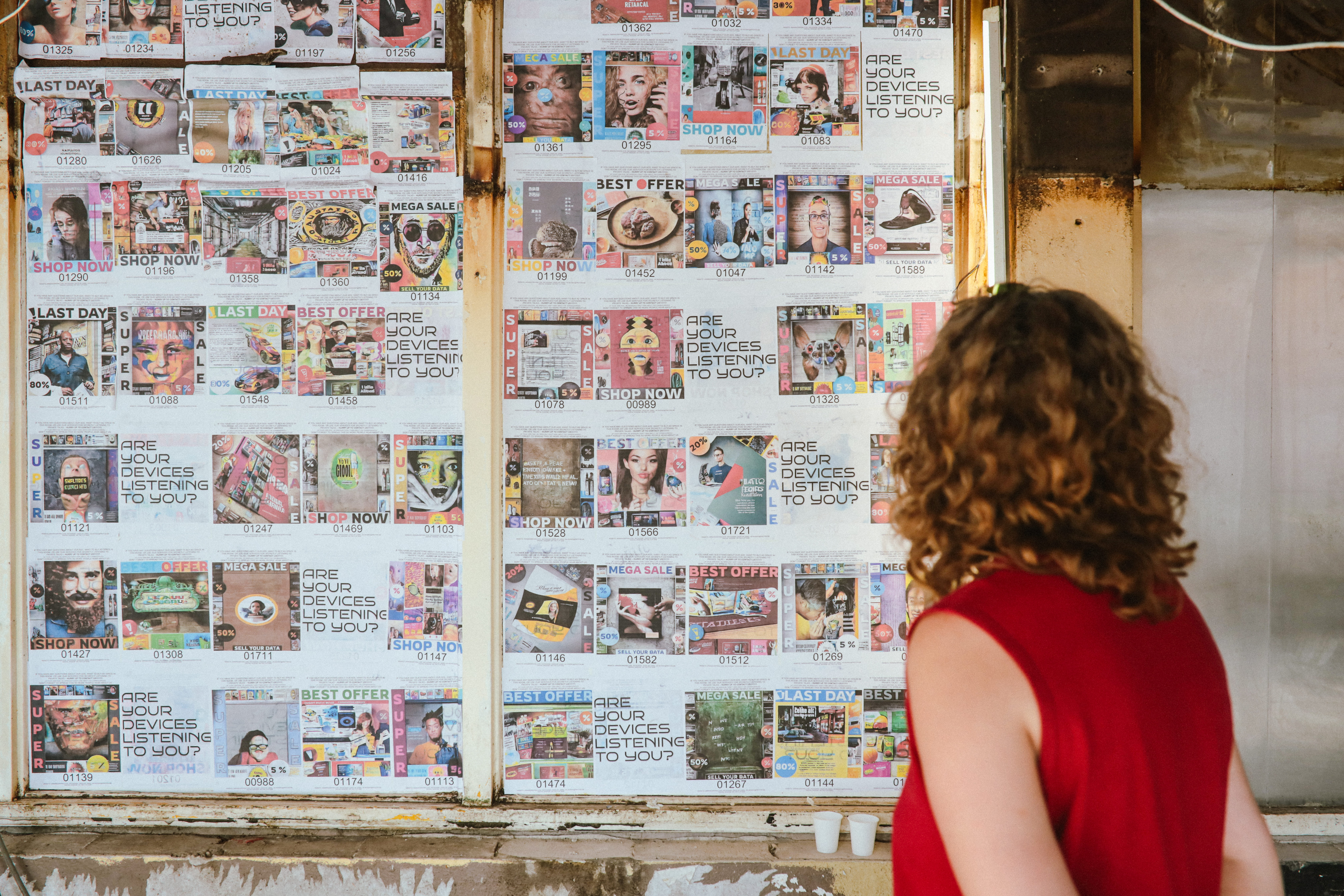
Are your devices listening to you? This is worrisome question remains in our minds, especially when after random conversations appear terribly targeted advertisements on our devices.
While the answer remains open, but there is no reason to believe that it does not. The response is based on investigations and articles by 404media (links below), and artist observations which confirm a high probability that our devices hear us.
This artwork links the colonial legacy of surveillance, where data and resources were extracted to dominate people, with modern methods of data production, where people are reduced to "buy-ready" profiles.
The work explores how seemingly convenient technologies like voice assistants perpetuate reinforce systems, and asks: How can people regain their right to control in a world dominated by data extraction and transformation into a commodity?
The artwork includes 2 connected installations which place separately:
First: This piece triggers visitor to share personal speech through microphone, seemingly to “train a new AI model.” On the screen shows log of the generation process. Include neon light 100 x 25 cm., PC, screen, microphone.
Second: uses speech prompt, makes and prints AI generated ads in real time in. Includes printer.
Whole process takes 30 sec., no access to the internet.
Graduation project MFA Media art, design and technology program, Frank Mohr Institute, Groningen.
Exhibited at NP3 Gallery and Niemeijer, Groningen, 2025.
Tech: Locally trained StreamDiffusion 1.5 AI model. ControlNet, Whisper Libraries.
Links 404media: 1, 2, and 3 Pitch deck by CMG.
Reimagine algorithmic structures
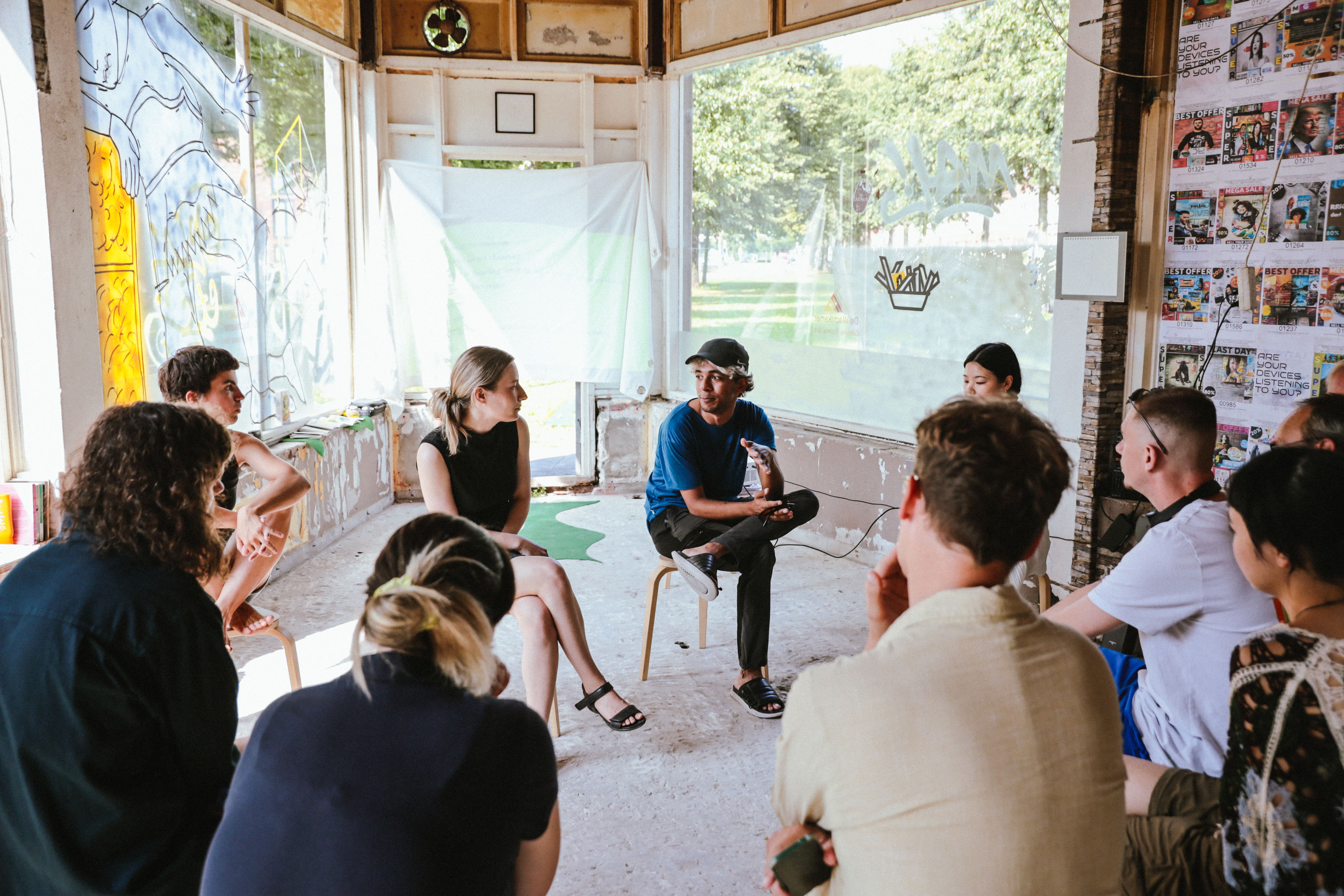
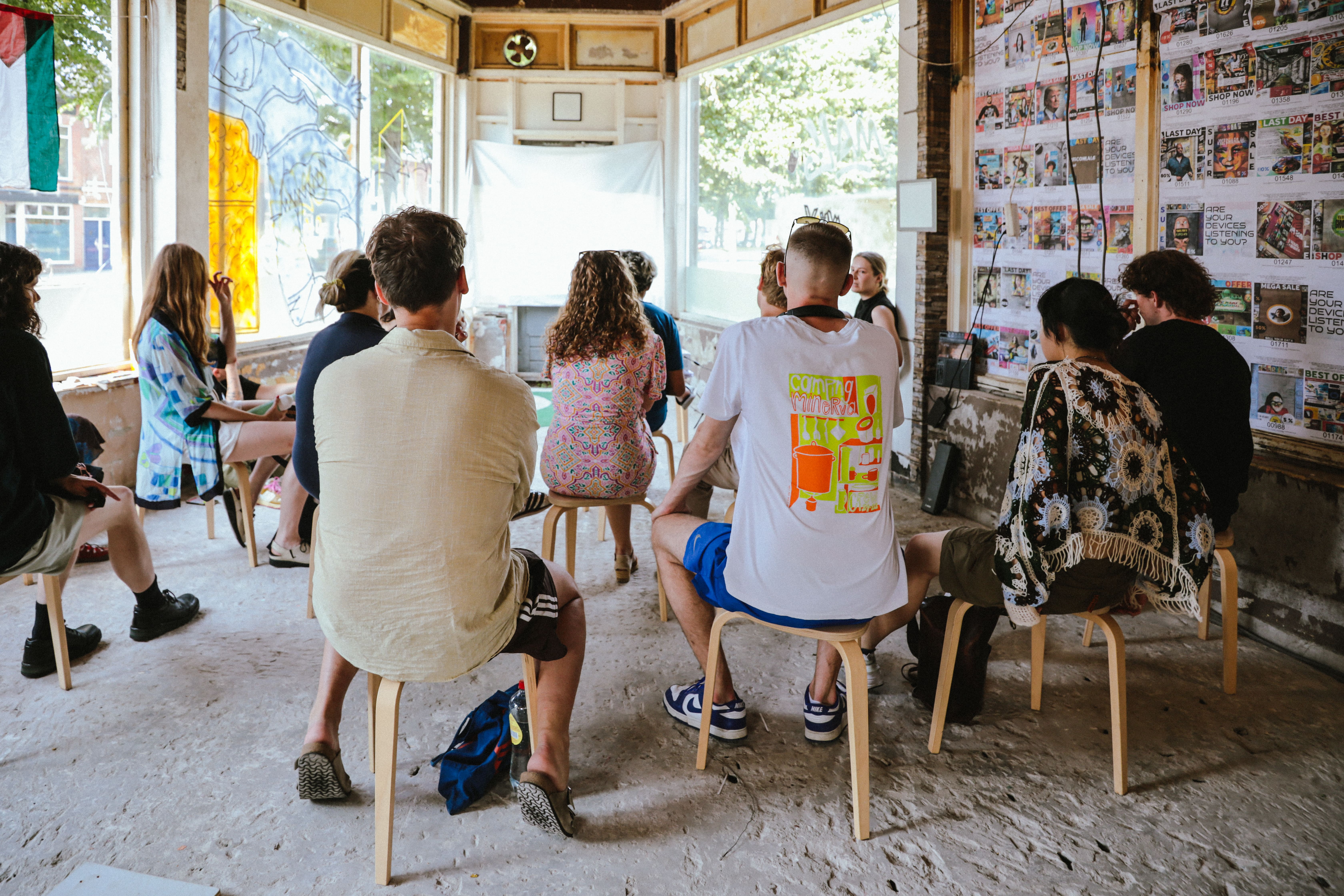
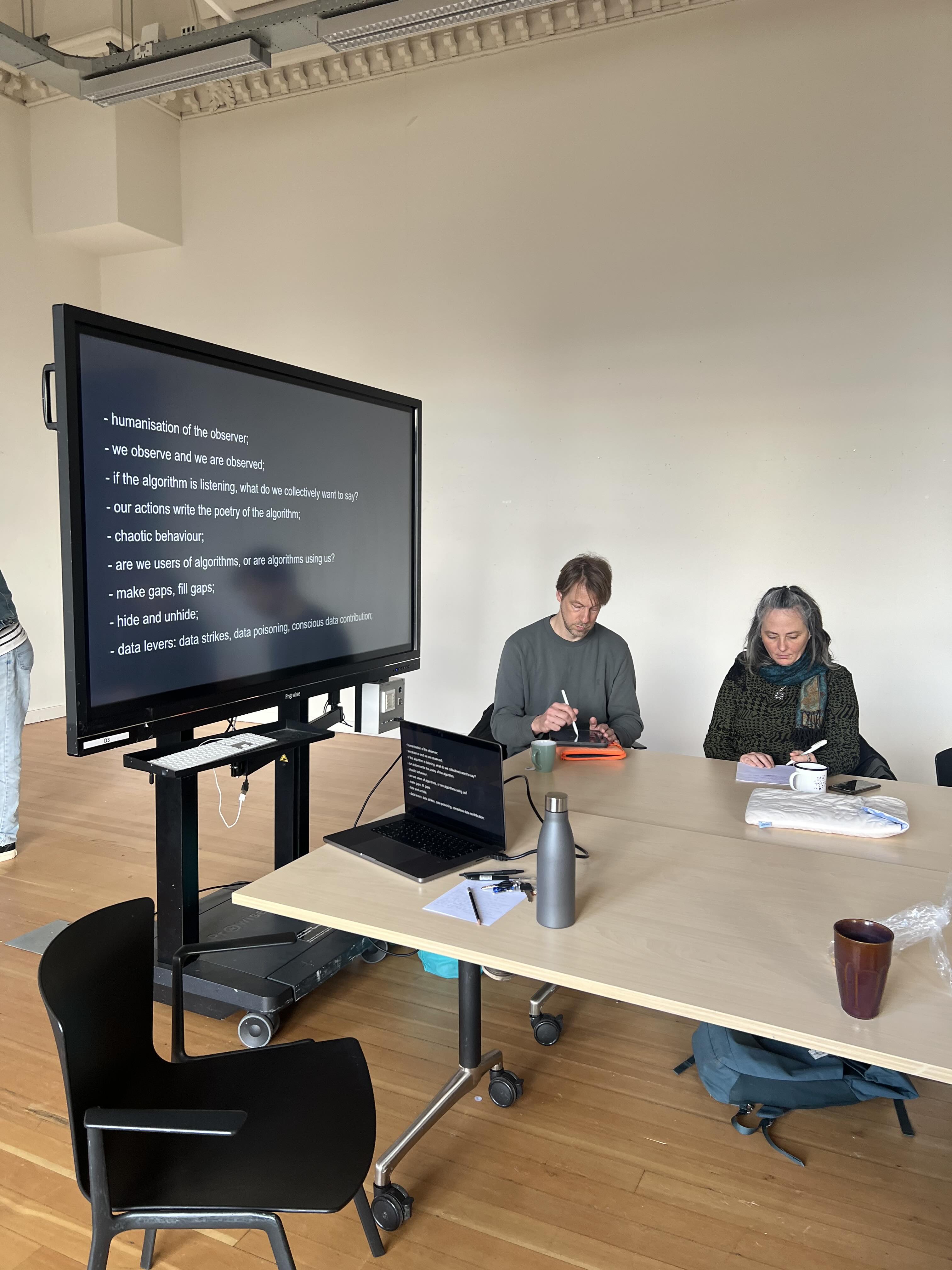
"Yo, first I want to thank the great algorithm that pull us all here." – Donald Glover, Emmys acceptance speech, 2017.
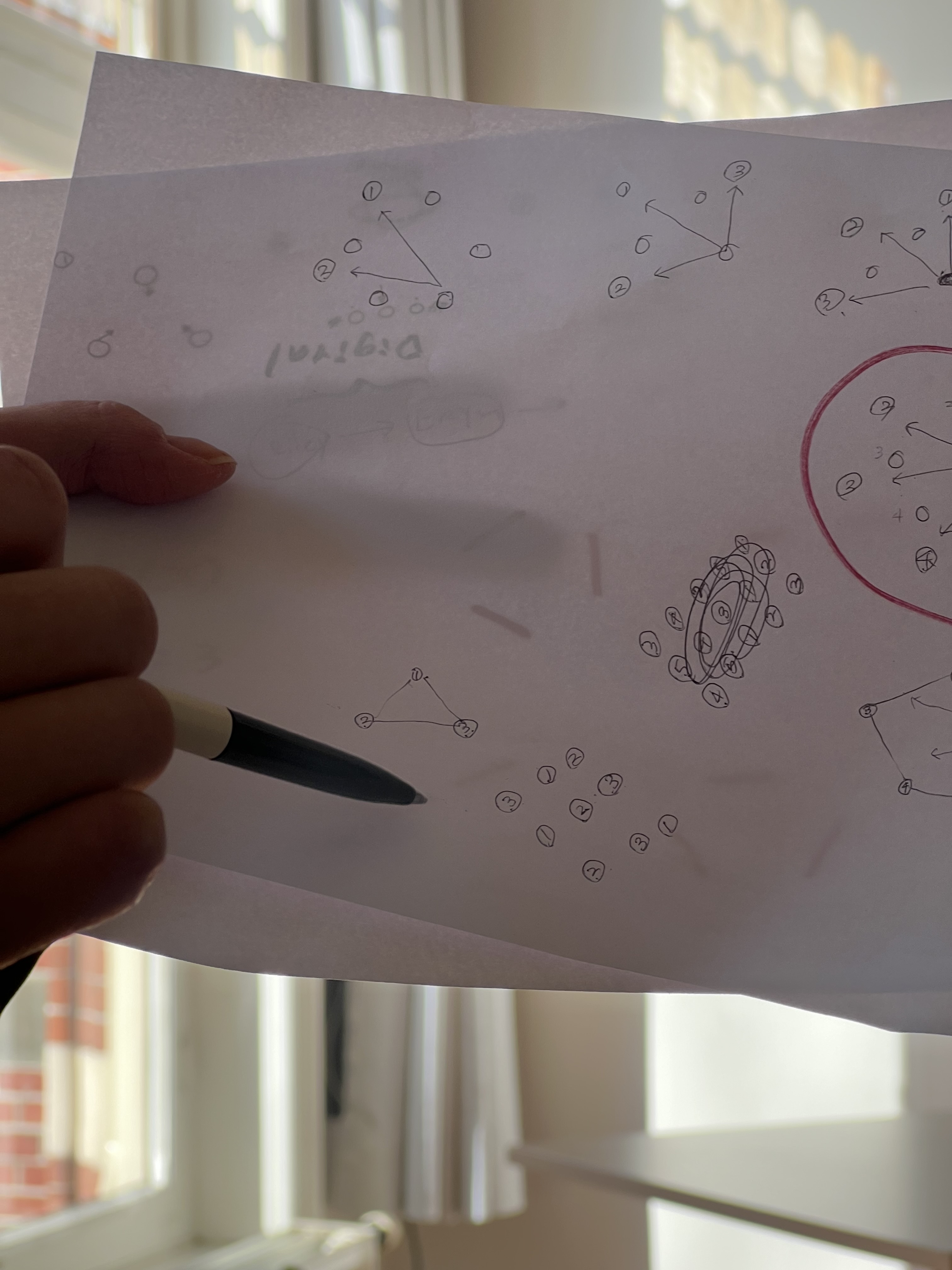
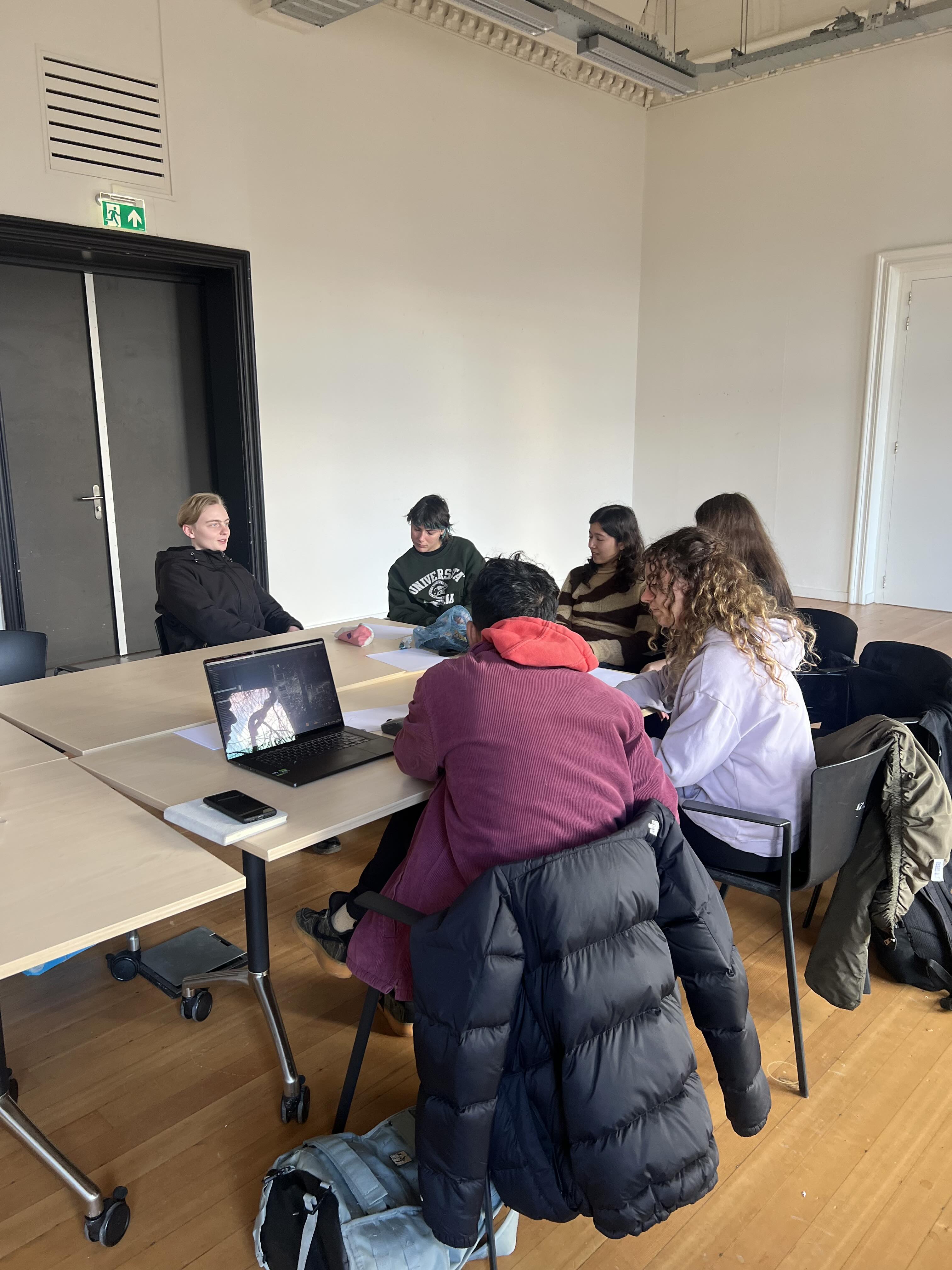
Because algorithms impact not only individuals but also collectives seeing us as datasets and forming subjects, collectives, and even erasing our agency, the artist invites participants to explore these dynamics through a hands-on, collaborative approach. By making and experimenting together, we explore how algorithms emerge, how they function, and how they might be reclaimed for the public good rather than serving the interests of big tech companies. The main goal is to collectively find new creative ways to communicate, resist, and collaborate with algorithms.
Duration of lecture – 30 min, hands-on part – 1 hour, discussions – 30 min.
Photos from workshops in Frank Mohr Institute, Het Resort cafe t'jongenpaard (photo credits Calluna Denkers), Groningen.
Digital wisdom manual
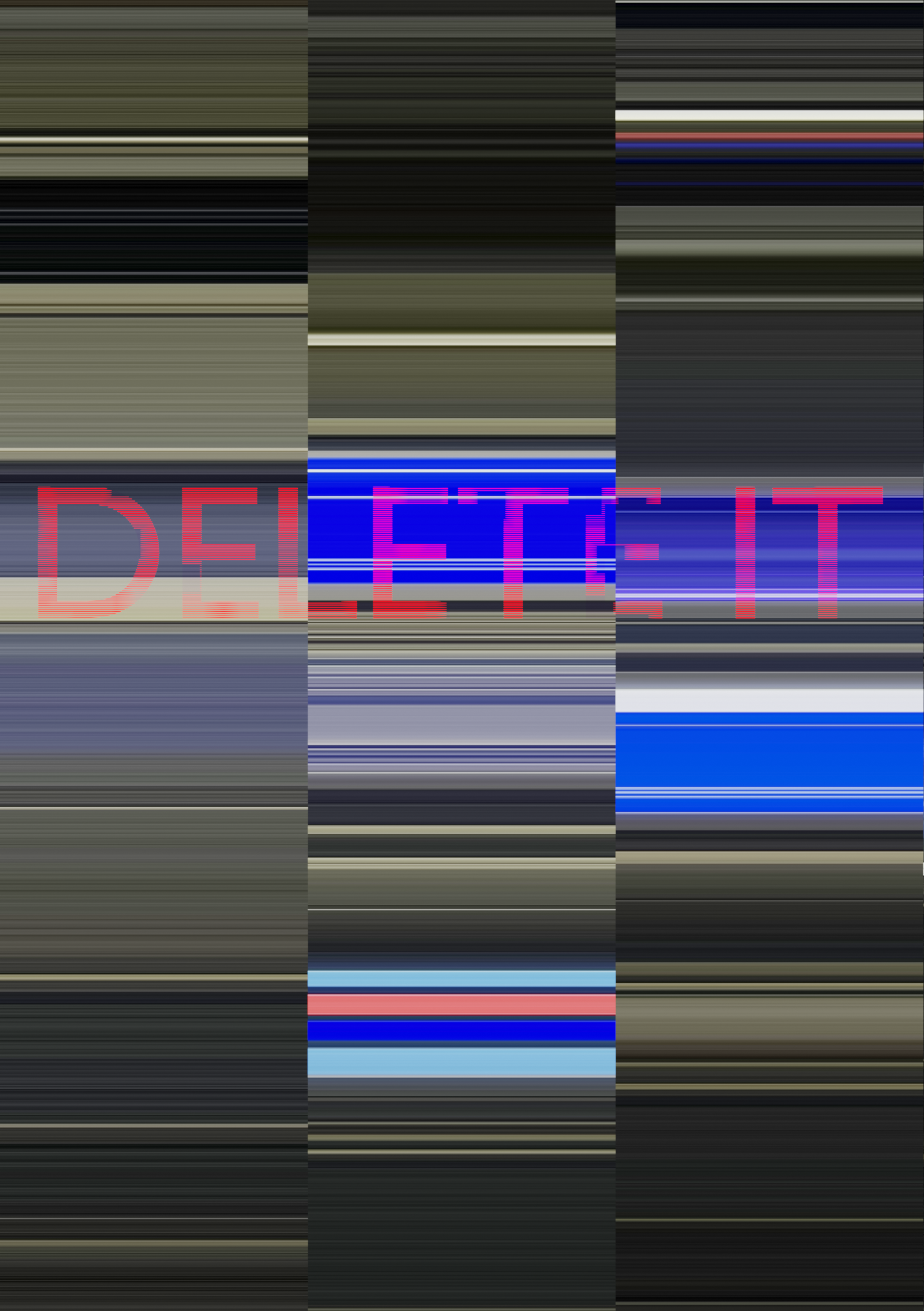
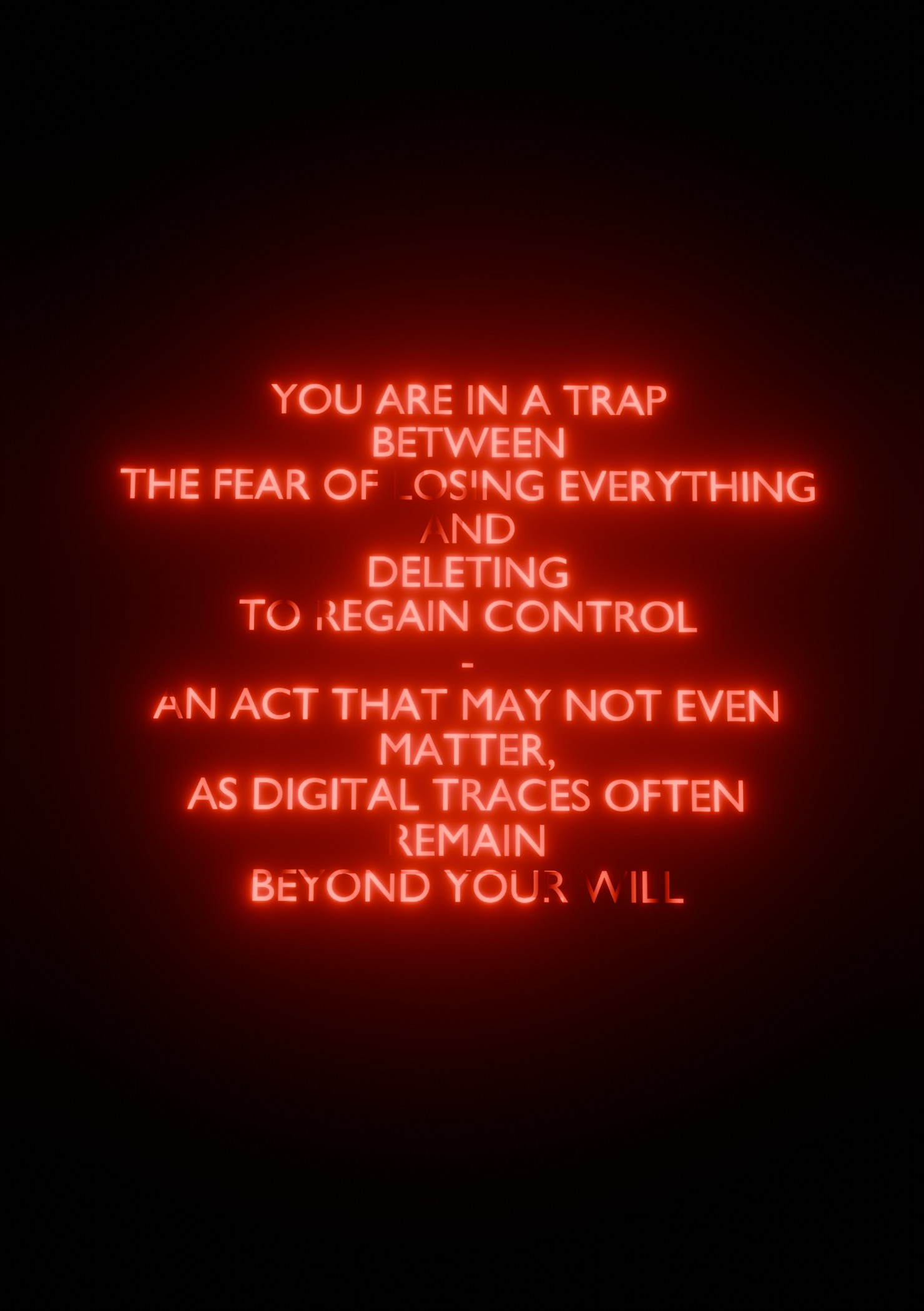
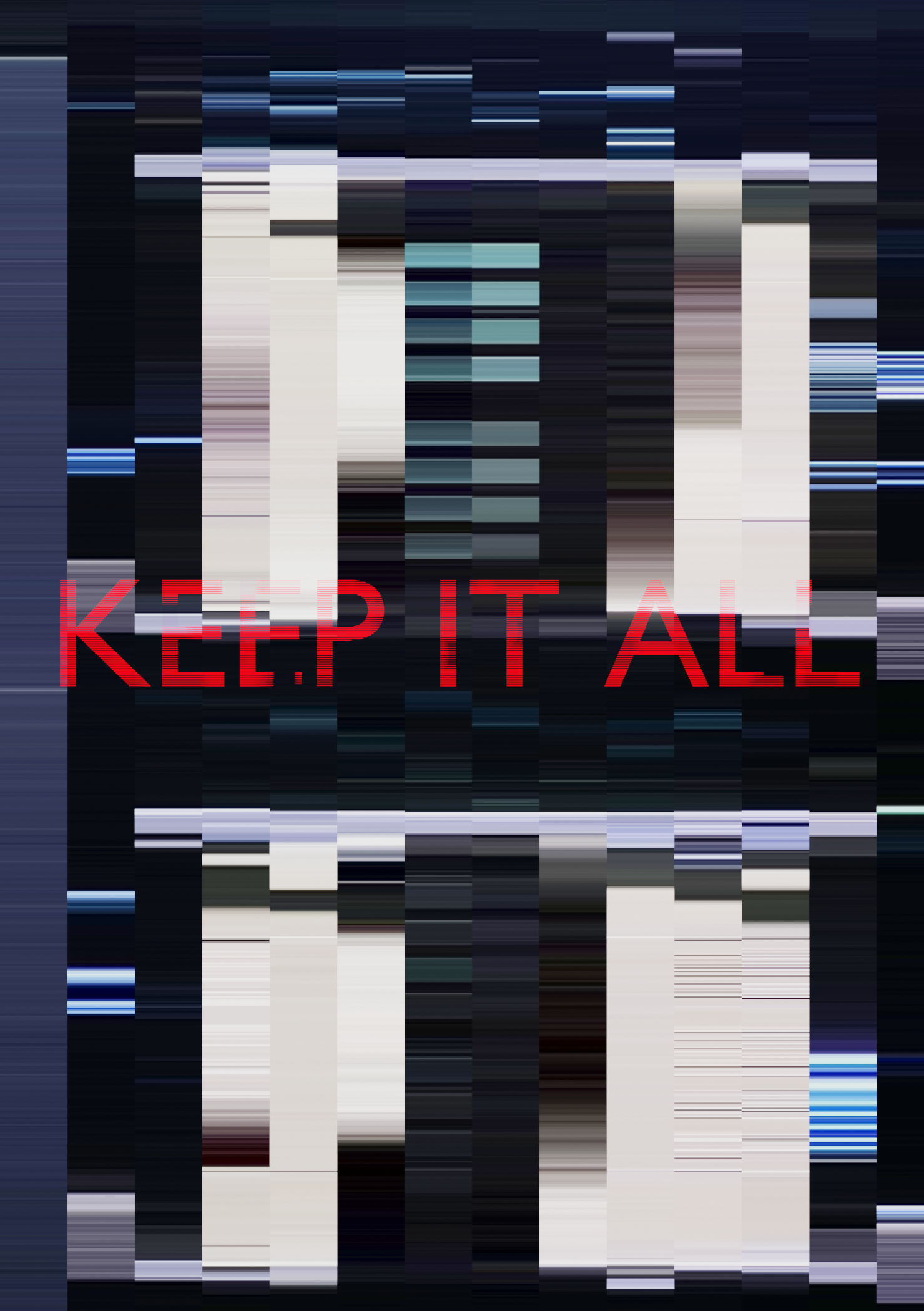
This is part of Digital manual of World for Us which explore dilemmas and actions related to human interaction with the digital world, emphasising practical and speculative considerations.
And at the same time ia asking questions: How could we deal with amount of data which we produced? What is the digital world, whose digital body we have created and in which we live? Do we ready to delete our data before death and how we can do it?
Project is ongoing.
Tech: Blender, 3 projectors, speakers. Sound: machine noise.
Guān Luò Yīn
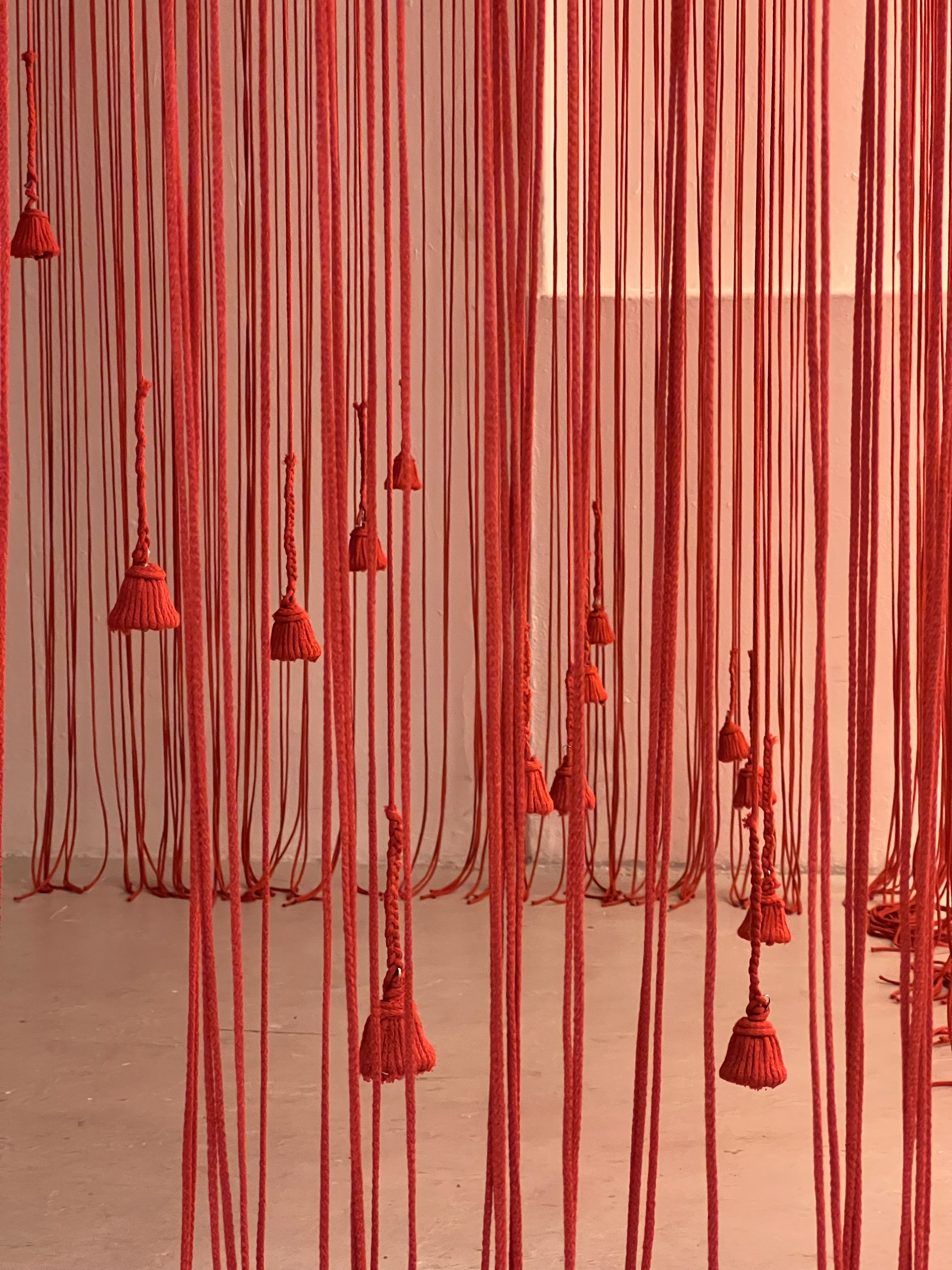
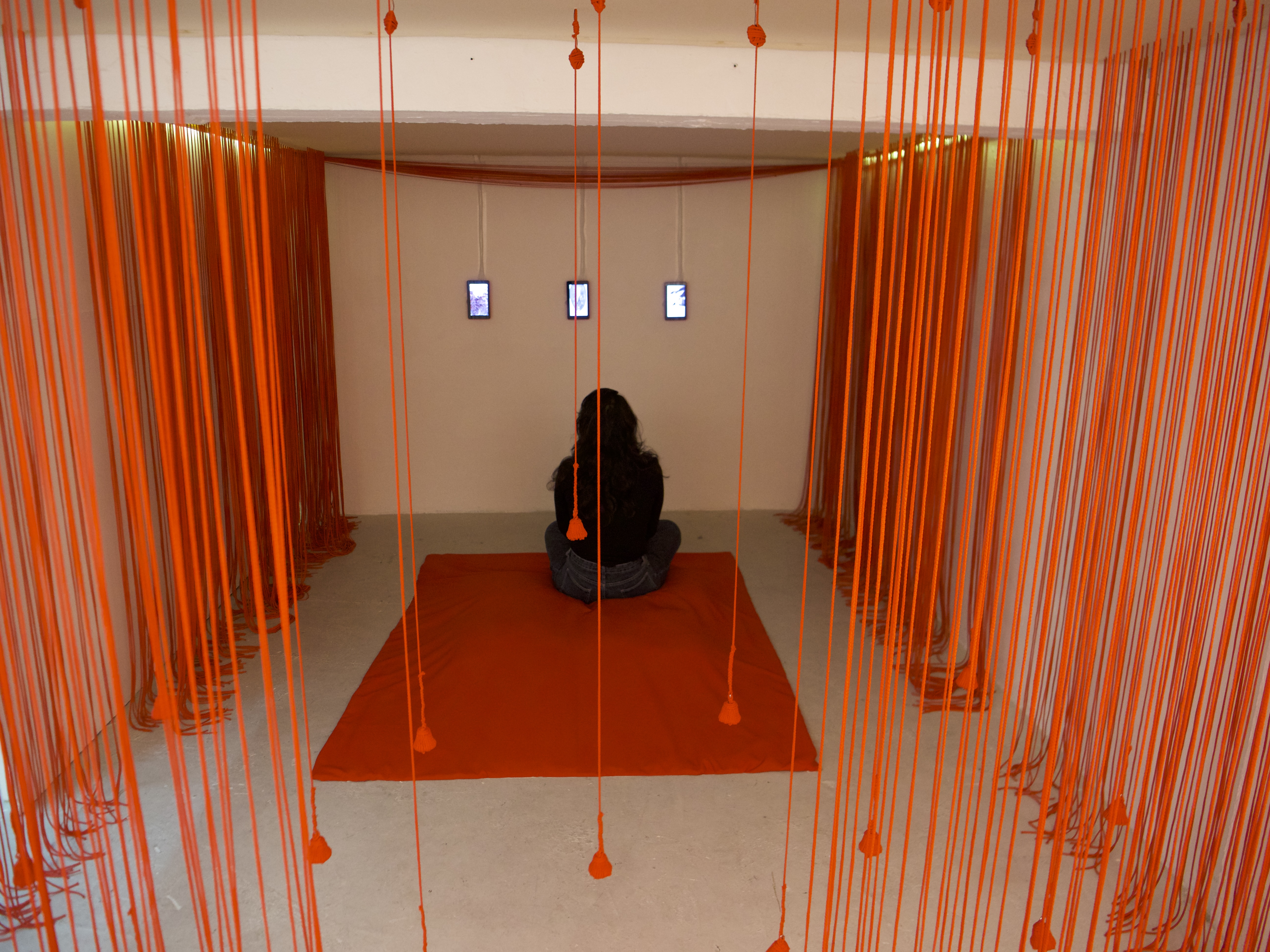
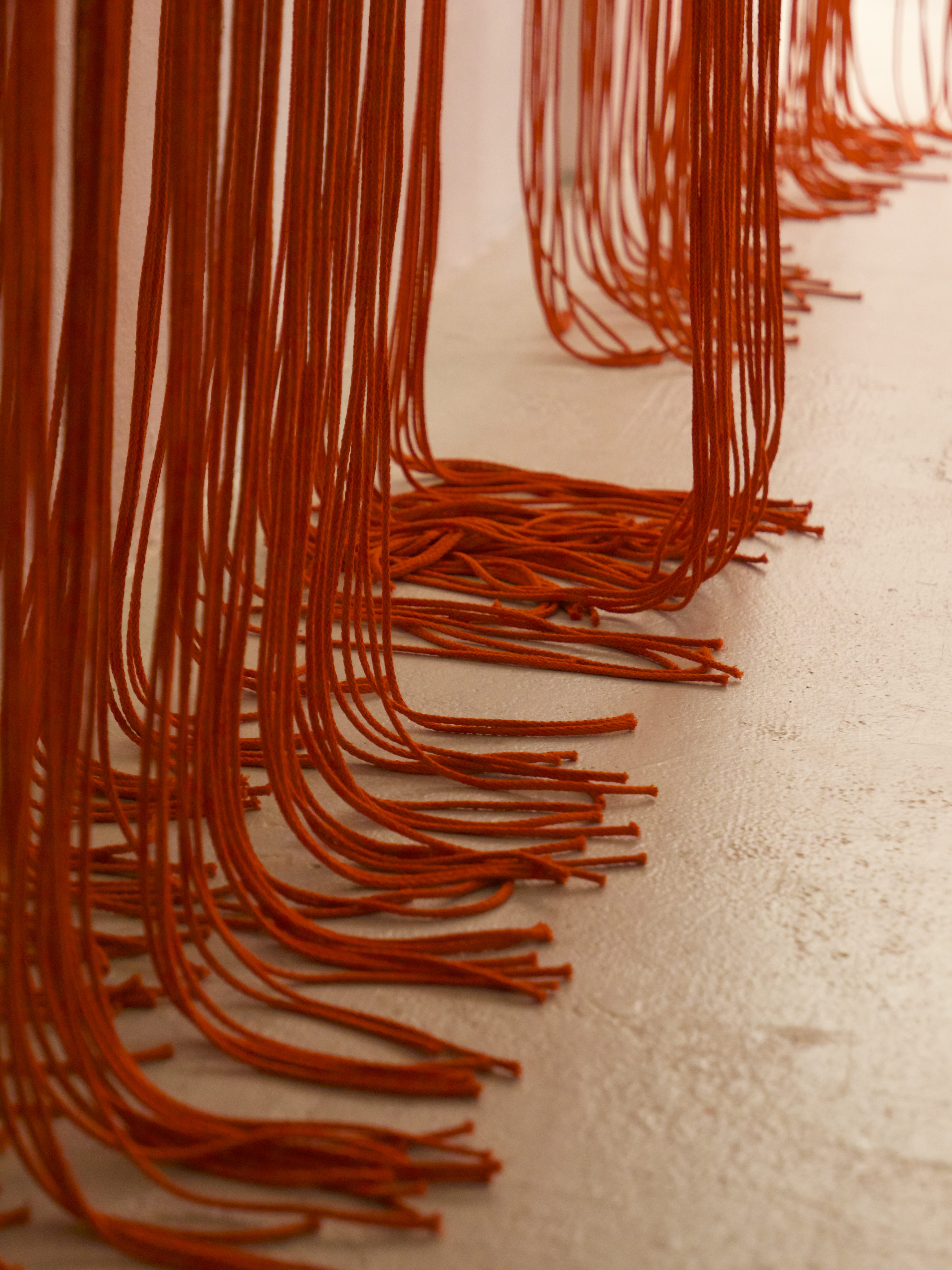
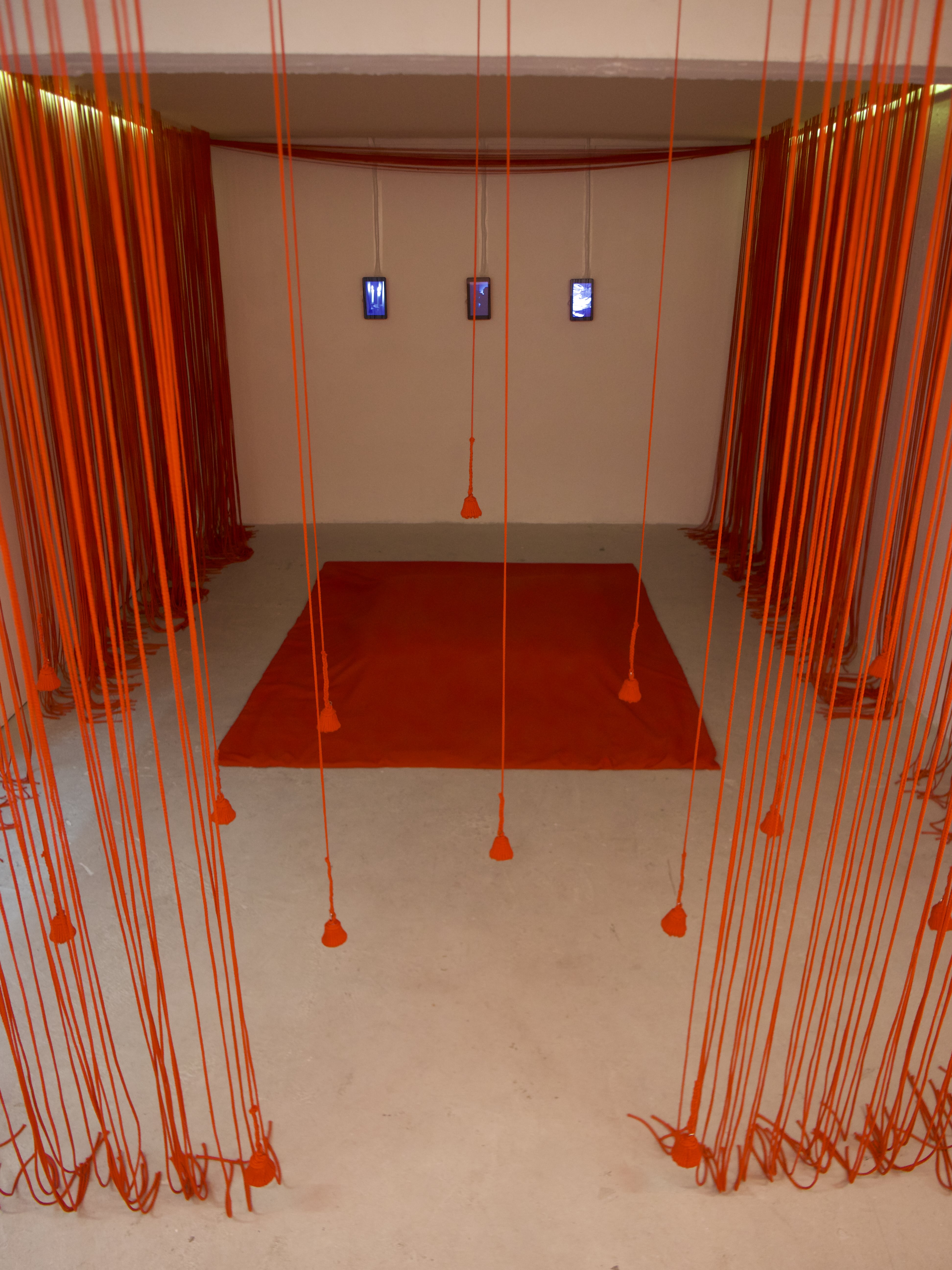
Inspired by the Taoist ritual of transitioning between worlds, this interactive installation uses the gallery space as a physical medium for an invisible journey. By combining audio, video, red strings, bells and cloth, we create a sensory architecture that transitioning from the tangible world into a spiritual or subconscious dimension.
This work explores space of presece, where the audience moves through layers of red cloth to encounter a state of reflection on fate and emotional solace. By using immersive sensory experiences, installation invites the audience to step out of their daily reality and routine to perceive a different kind of presence – one where the space itself becomes the guide for a transition into the unseen.
Sound produces by touching the bells. Video is sound reactive.
Sound by Yu Shi Wei, videos by Anna Musikhina.
Collaboration with Yu Shi Wei, funded by SIGN project space, Groningen for Sound music festival 2024.
Tech: Touchdesigner, MaxMsp, Ableton, sensors Piezo, RPI 4.
Material: treads, canvas, bells, 3 screens, fabric.
Size of the room 400 x 150 x 170 cm
D.ecosystem
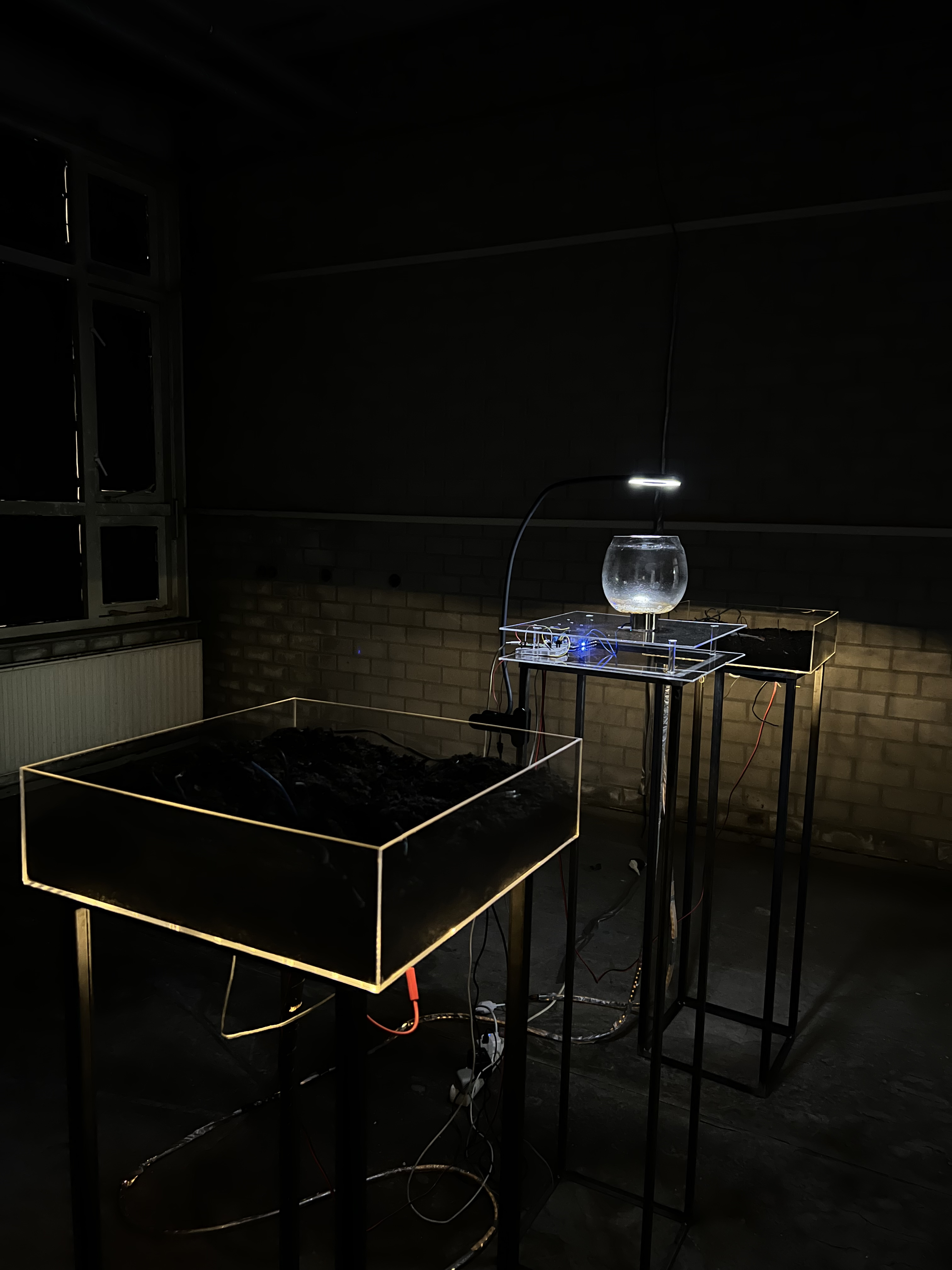
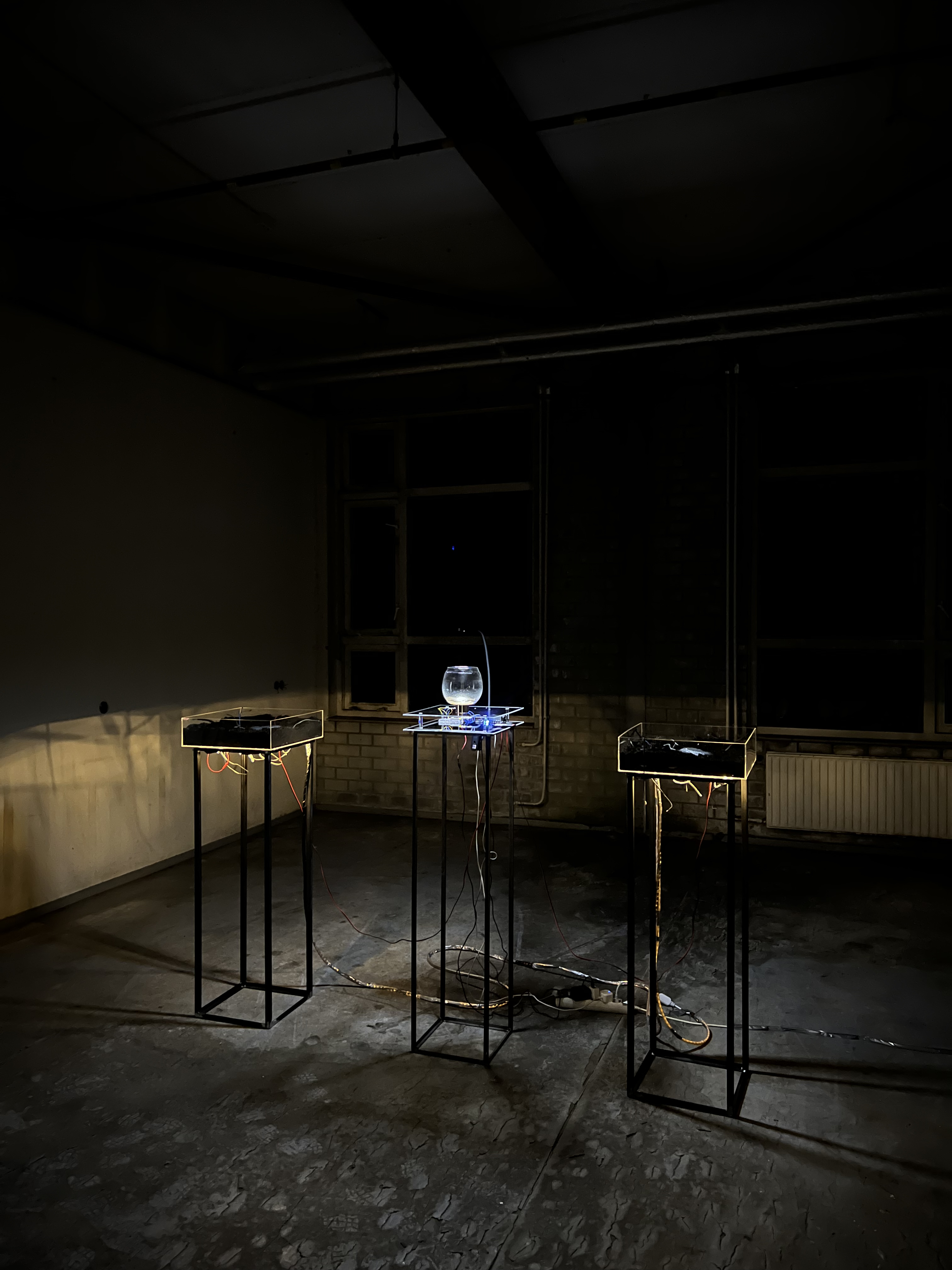
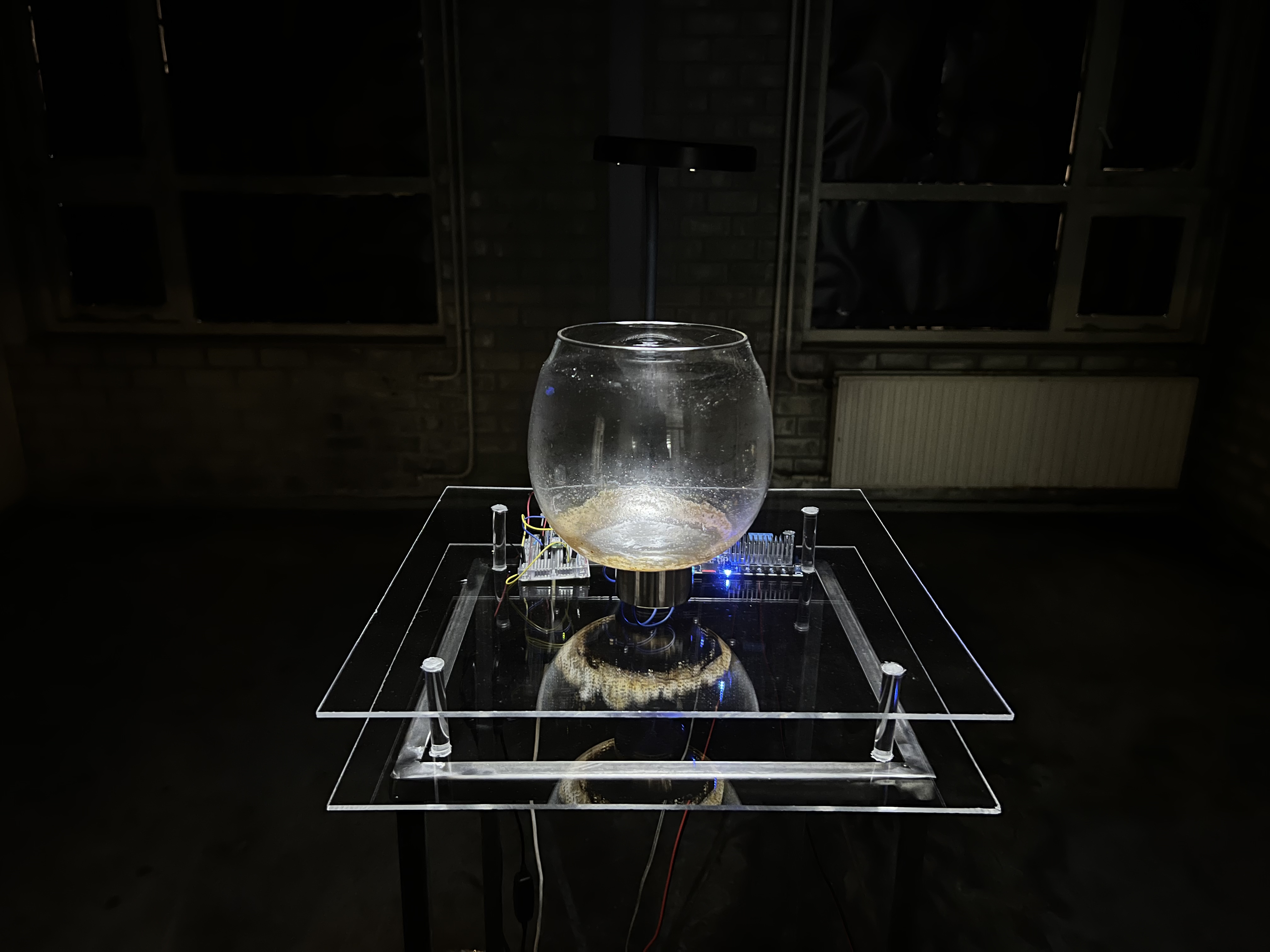
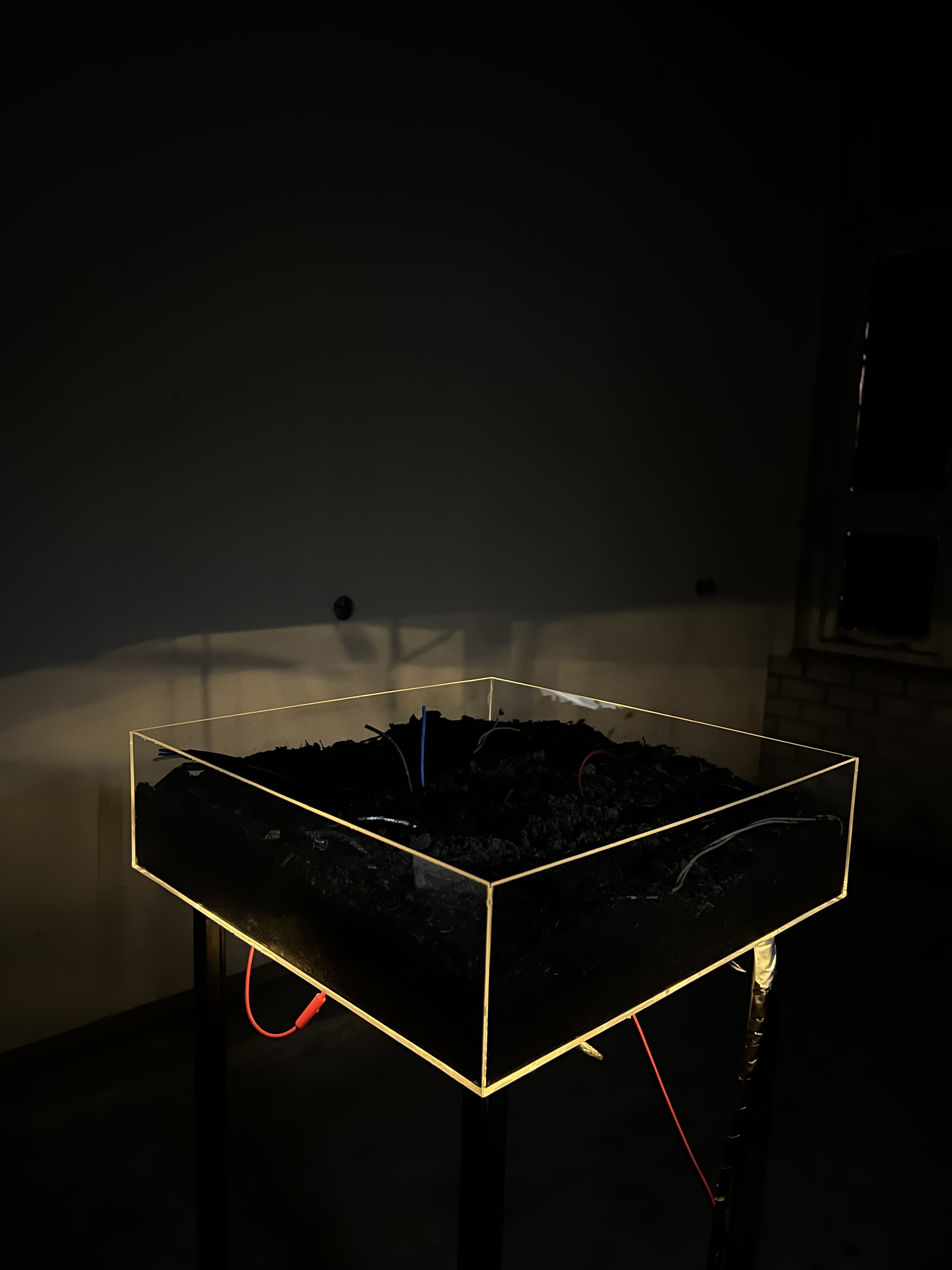
In this work, the artist turns to the digital world, which is created by people, but also has its own life, invisible and uncontrollable. In an attempt to comprehend the nature of the digital world, you will find yourself in a digital ecosystem intertwined with three levels of its development.
There is an anonymous, faceless World inside, indifferent to us as human beings, despite all our efforts to change, shape, improve and even save this world. This indifference arises from the lack of digital wisdom in our lives and we are left alone with emptiness and disappointment.
World for us not only implies a human-centred way of being, but also points to a vague realm of non-human, which is not for us. We can generalise this to say that we are unable to control or predict any digital or natural disaster.
World without us is sublime and inaccessible, with dark magnetic liquid living on its own terms. Anticipation of the threat from the rapid development of technology is already wrong. With every passing minute, we go too far, but do not reach this world and return to the World for us. Interaction with the digital ecosystem is impossible, but influence and change are always possible in both directions.
Sound by Alexander Shlyakhov.
Exhibited at De Proef, Frederiksoord.
Tech: Arduino + electromagnet + ferromagnet liquid, audio amplifier.
Size of the installation: 200 x 45 x 145 cm
Archive of ourselves
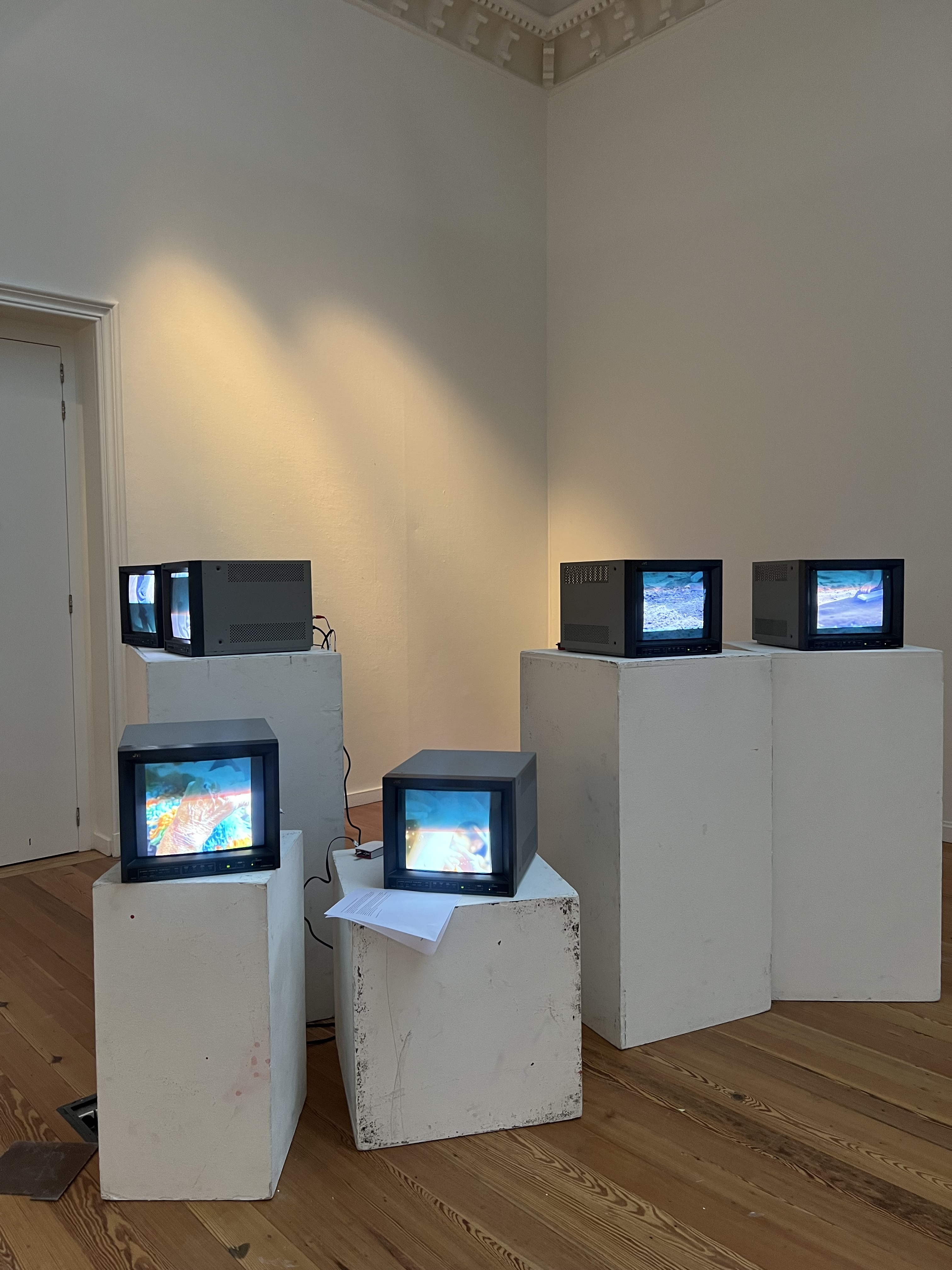
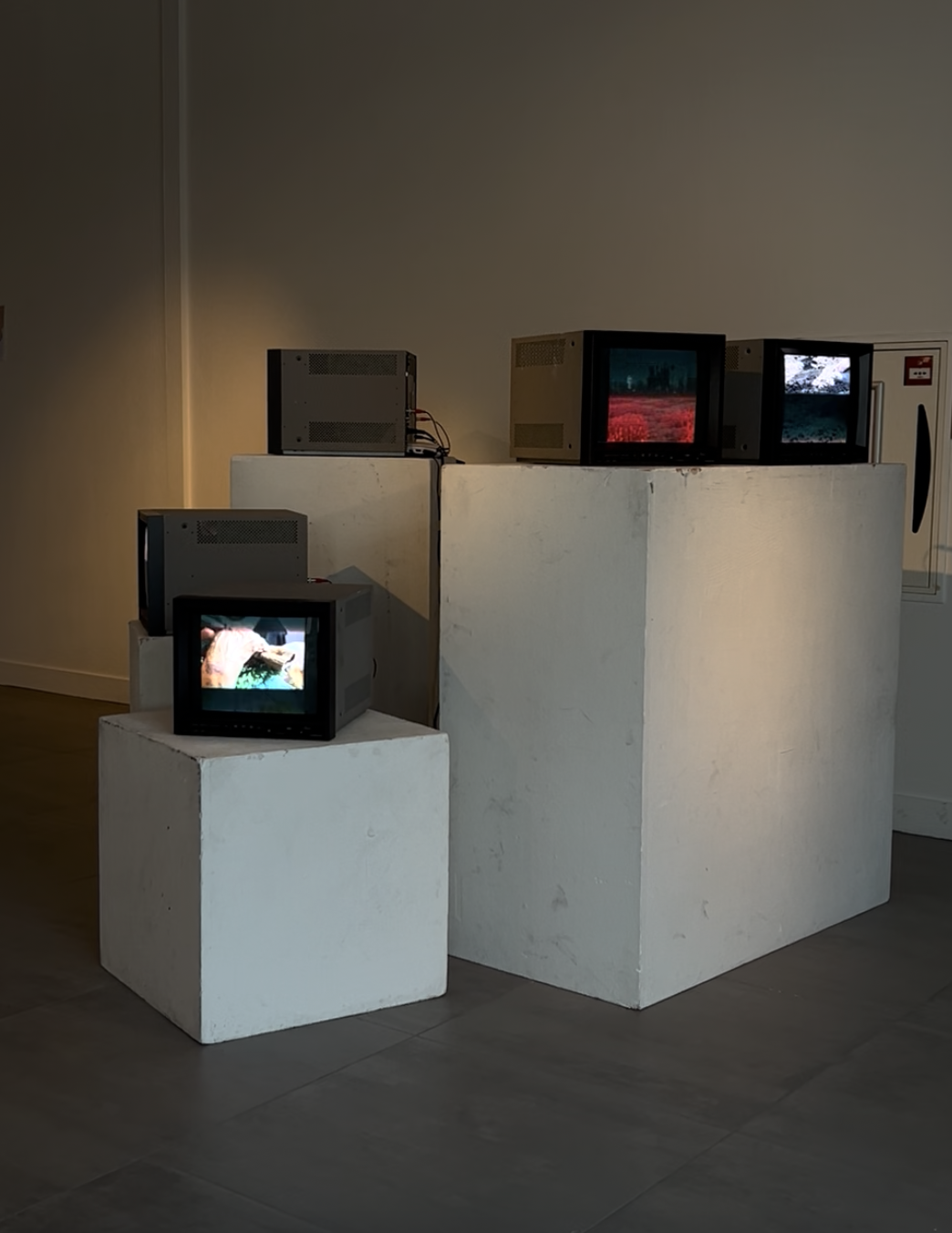
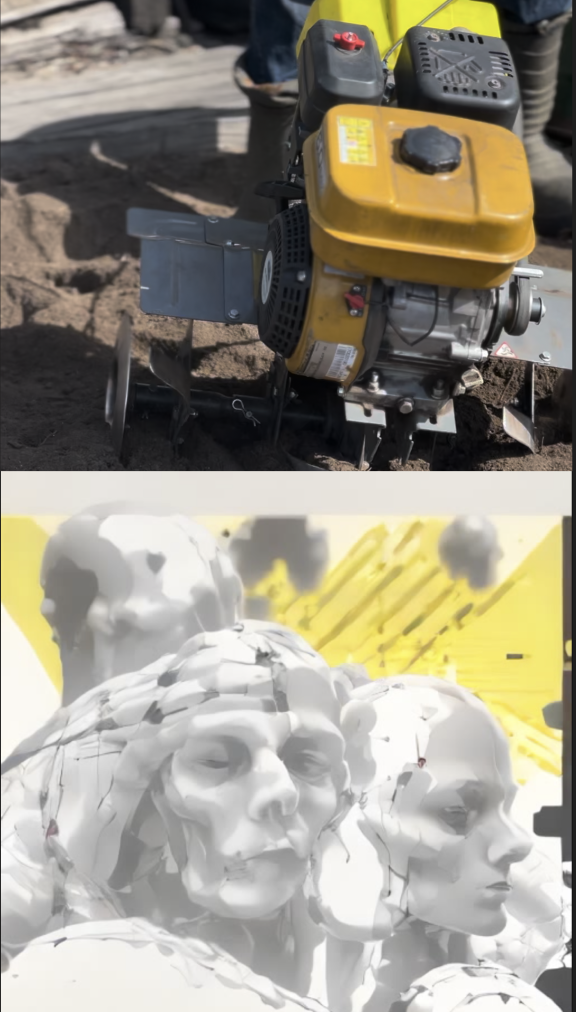
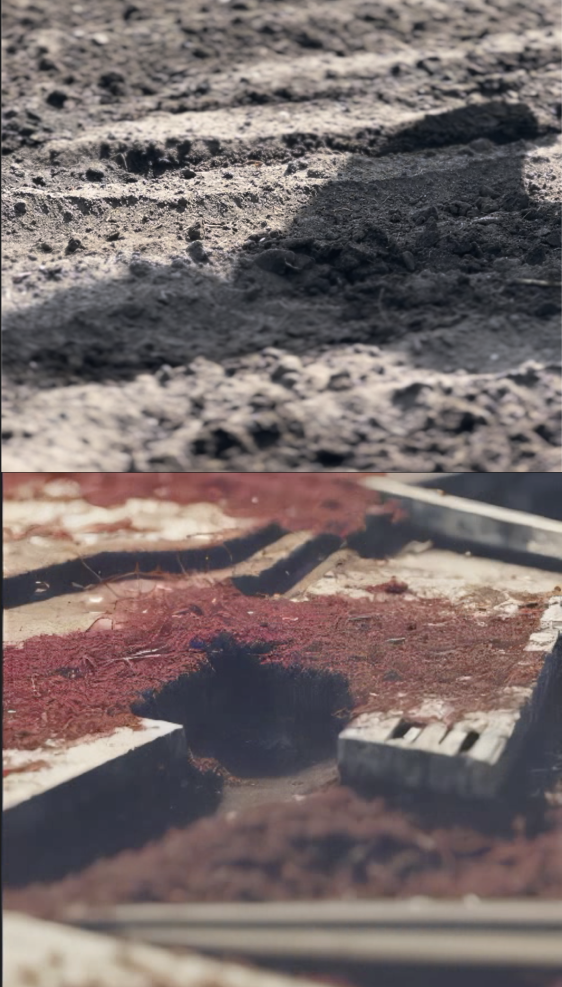
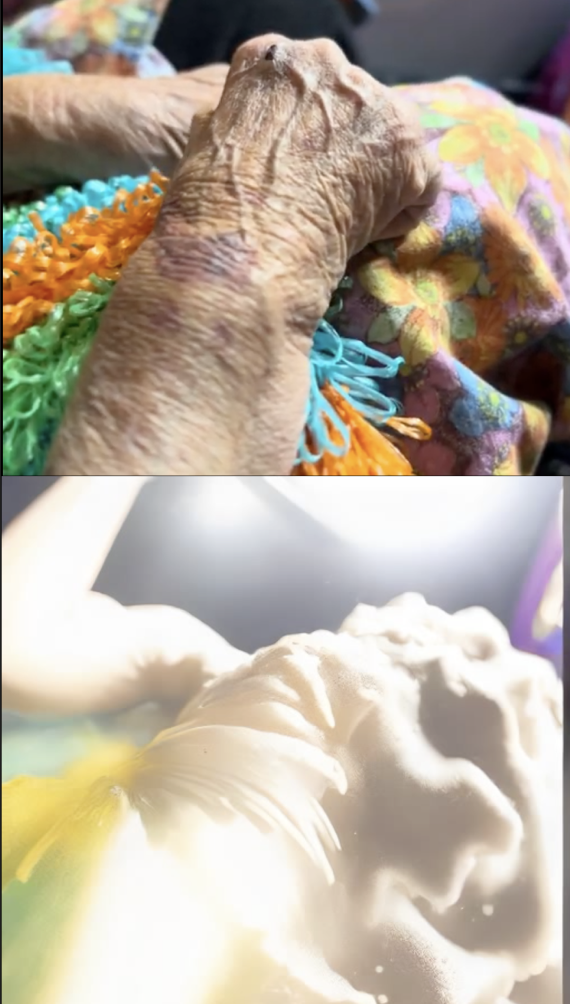
The digital footprints we leave every day lose their identity becoming an anonymous client ID with a set of our characteristics and preferences. Our data is no longer ours, although we should be able to own, use and dispose of it. The personality as a unique subject is no longer important for companies which collect our data.
In this work the artist explores the idea of data depersonalization and protection. The encounter of a depersonalised AI with personal memories and experiences transforms them into a visually different video with lost subjectivity. Loss of subjectivity of the archive allows it to protect personal data and doesn’t allow the original to be returned.
In three videos the visual component changes depending on the depth of penetration of AI as a tool. It is also presented with the original video archive which has been modified.
Exhibited at FMI, Groningen for Encounters in Artistic Research and ELSA LAB Network event
Tech: Touchdesigner, AI - StreamDiffusion, 6 TVs and RPIs
MADxNAIP
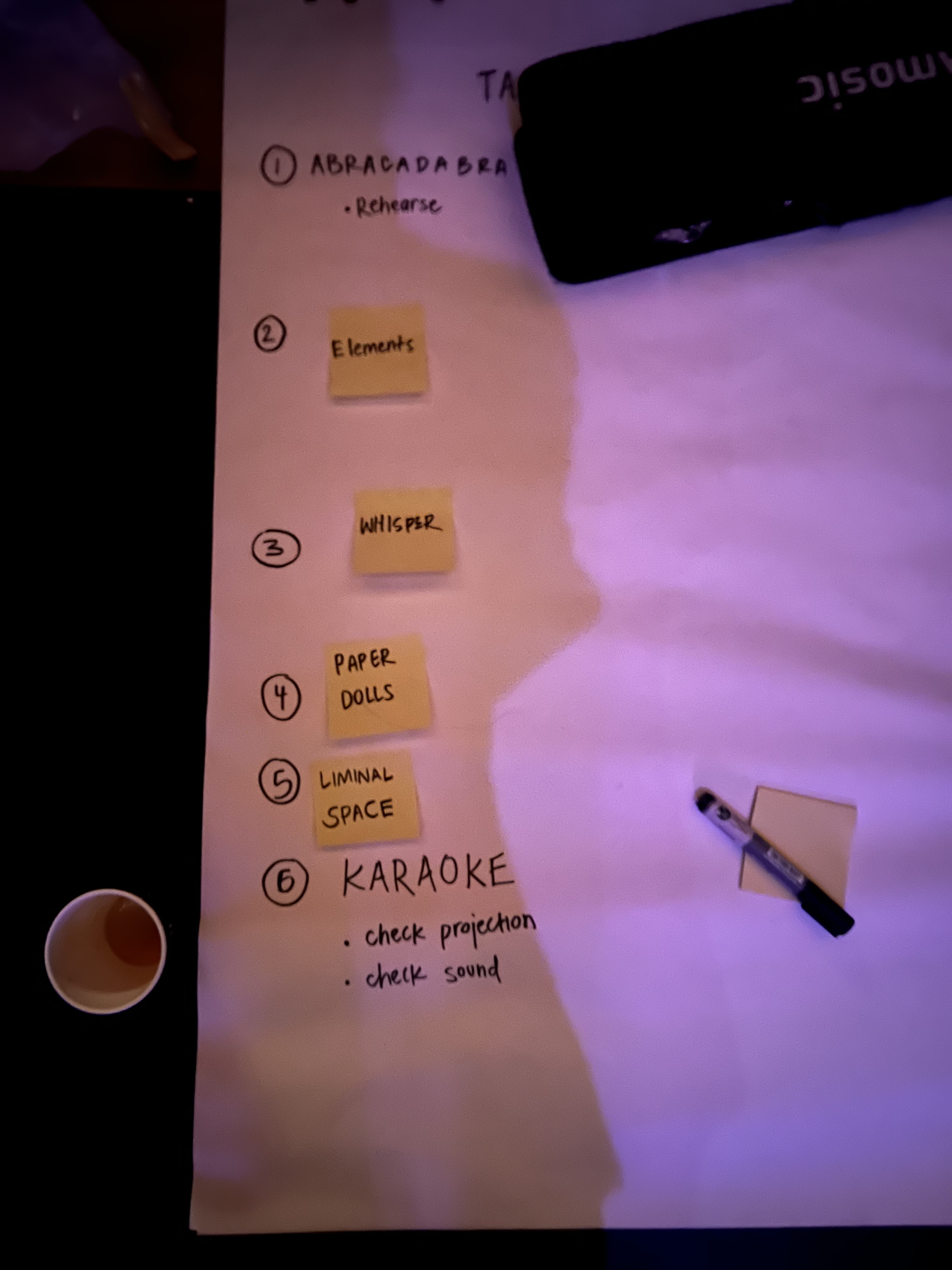
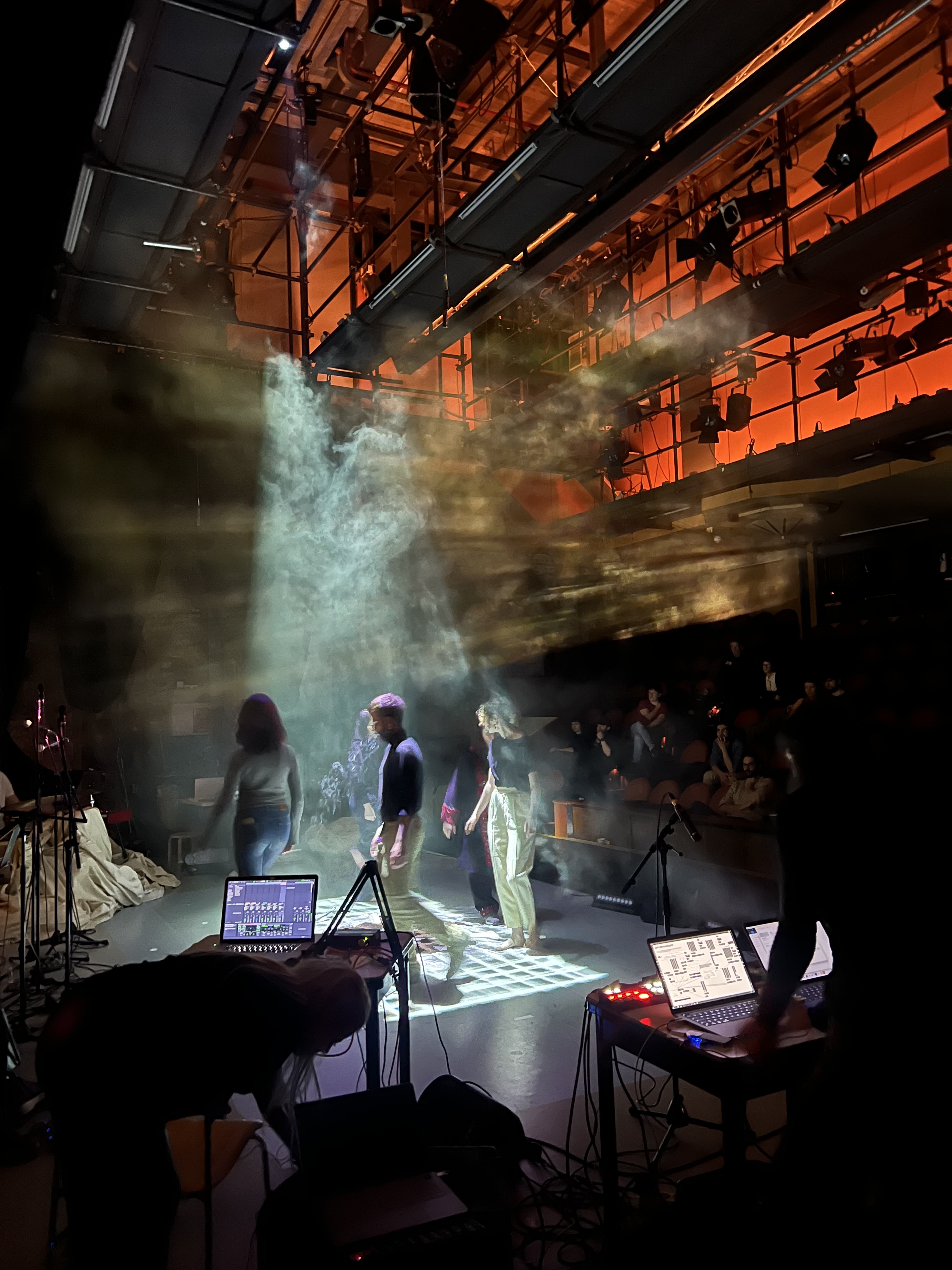
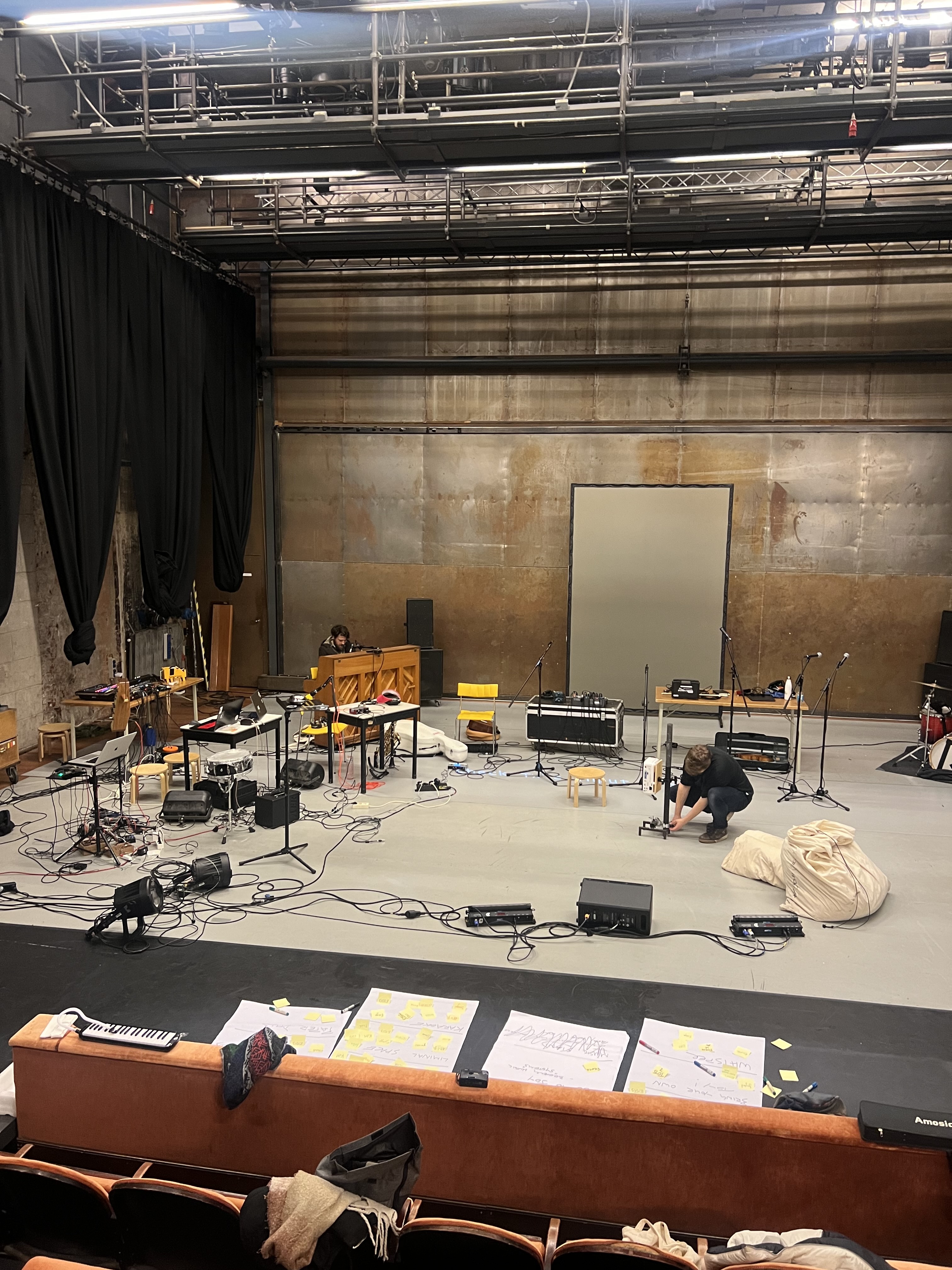
The first part being a series of 4 Live Lab sessions exploring core concepts behind our collaboration and the art of co-making in an ‘open space’ domain. The second part is a 4-Day residency on location at the Grand Theatre, Groningen, working in a variety of their spaces physically and virtually. This season's residency explores further into the creative artistic realm between the digital and physical domains. Collaborating with NAIP students and faculty from the Icelandic Academy of the arts. The collective explore themes of the sensuous and the imperfect.
The module focuses on sharing the process of art making with artists of different disciplines in order to look at this creative process from many different perspectives. It is hosted in The Grand Theatre, Groningen where throughout the journey they explored the fusion of 4 pillars of making: sonic, visual, technological and performative.
Chaos of dreams
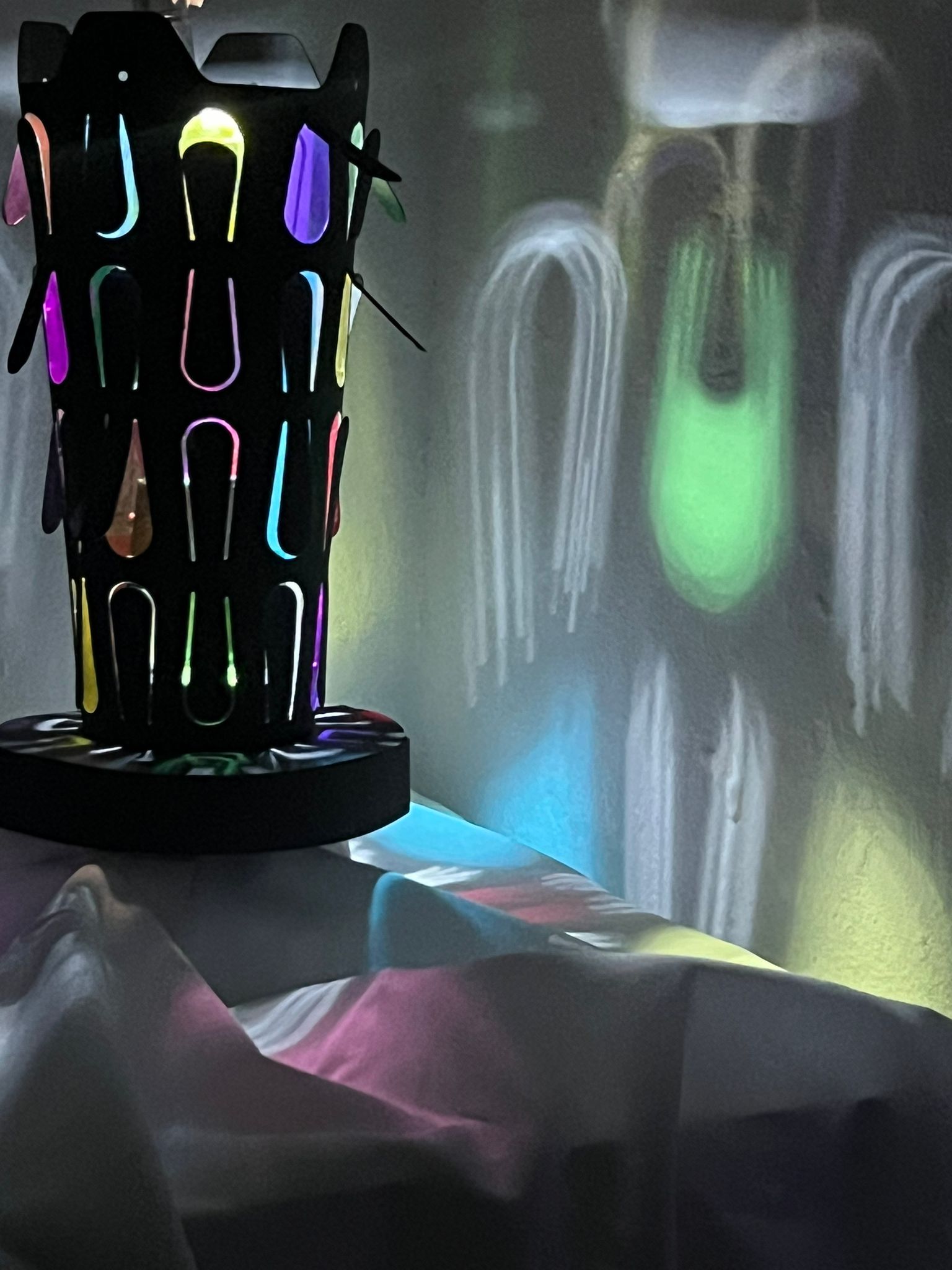
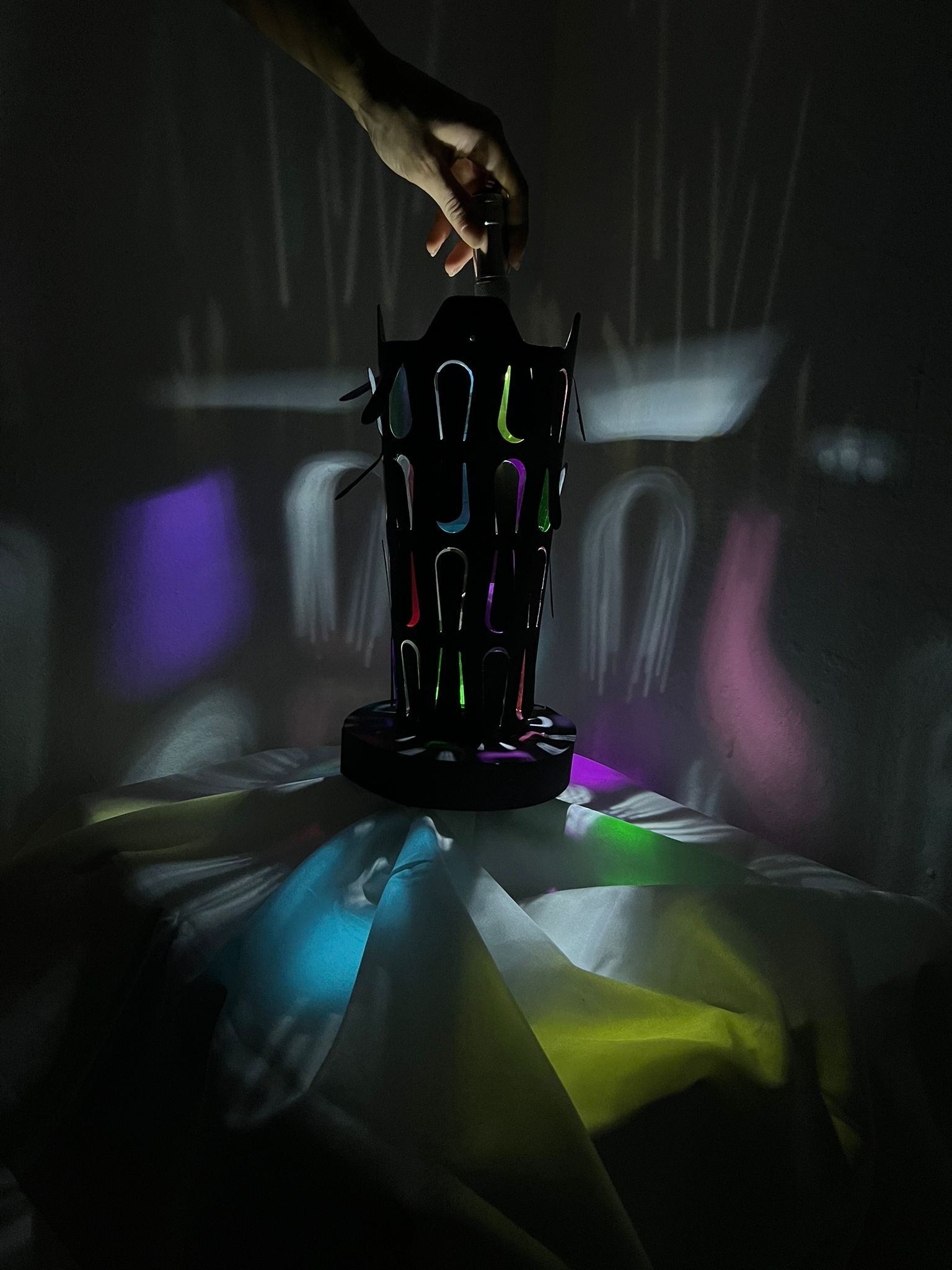
This work involves finding order in a magical world collected in pieces. Dreams particles are scattered unpredictably everywhere. They interact with light and sound, creating chaos that seems uncontrollable and destabilising.
However, it has a "will" as the main driving force - the deep conviction that nothing happens unless somebody or some being wills it to happen. Everything important is happening inside. There are no accidents in the our world.
The installation is interactive: turn on the flashlight and explore the coloured shadows of the installation, you can shine it inside and hear a mysterious voice.
Made with Letizia Roccaro as part of hackathon for Sound music festival 2023, Groningen. Exhibited at SIGN project space.
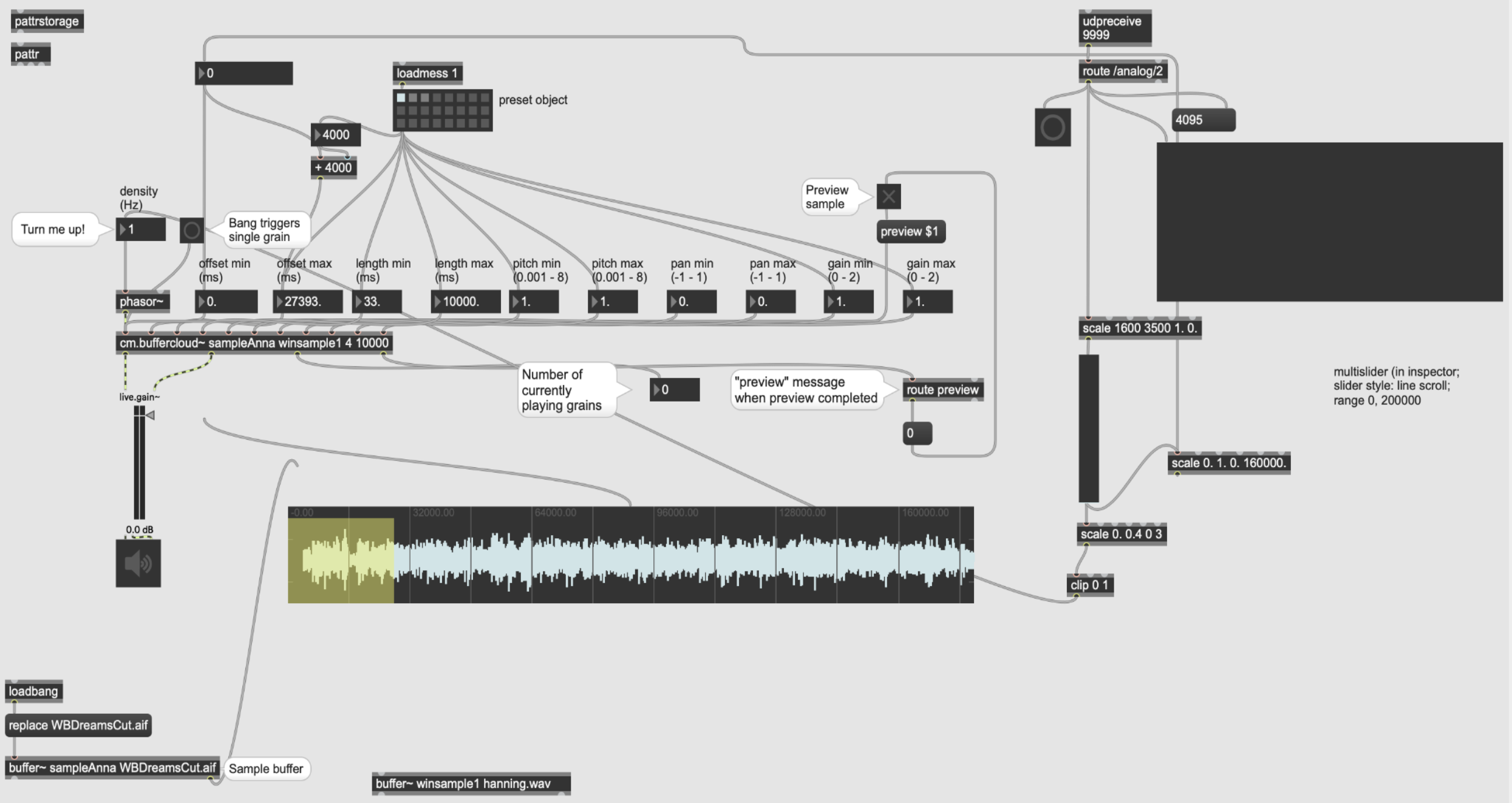
Tech: Arduino, Max Msp, motor.
Material: fabric, metal sculpture 50 x 15 x 15 cm, plastic sheets, paper.
Voices in the room
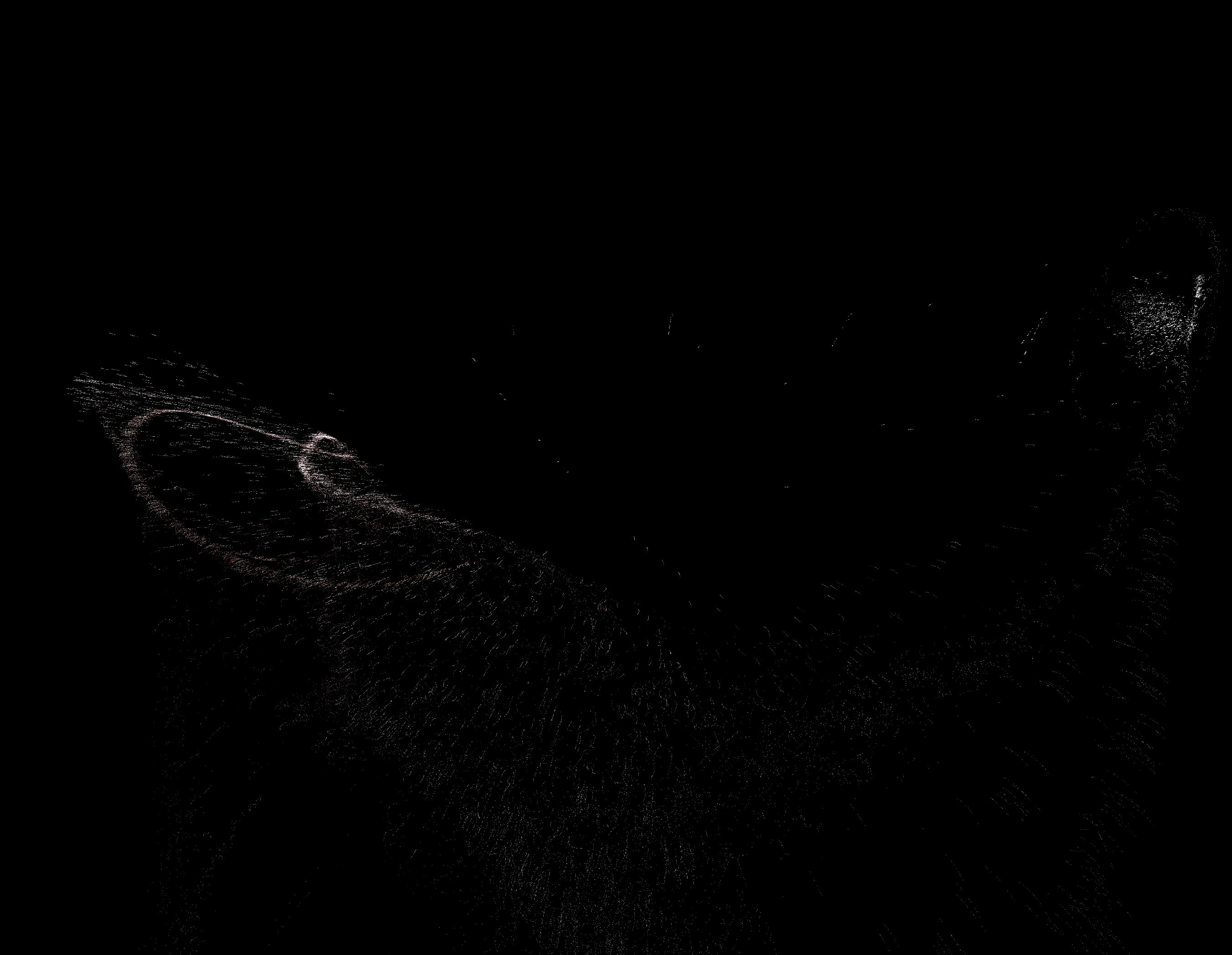
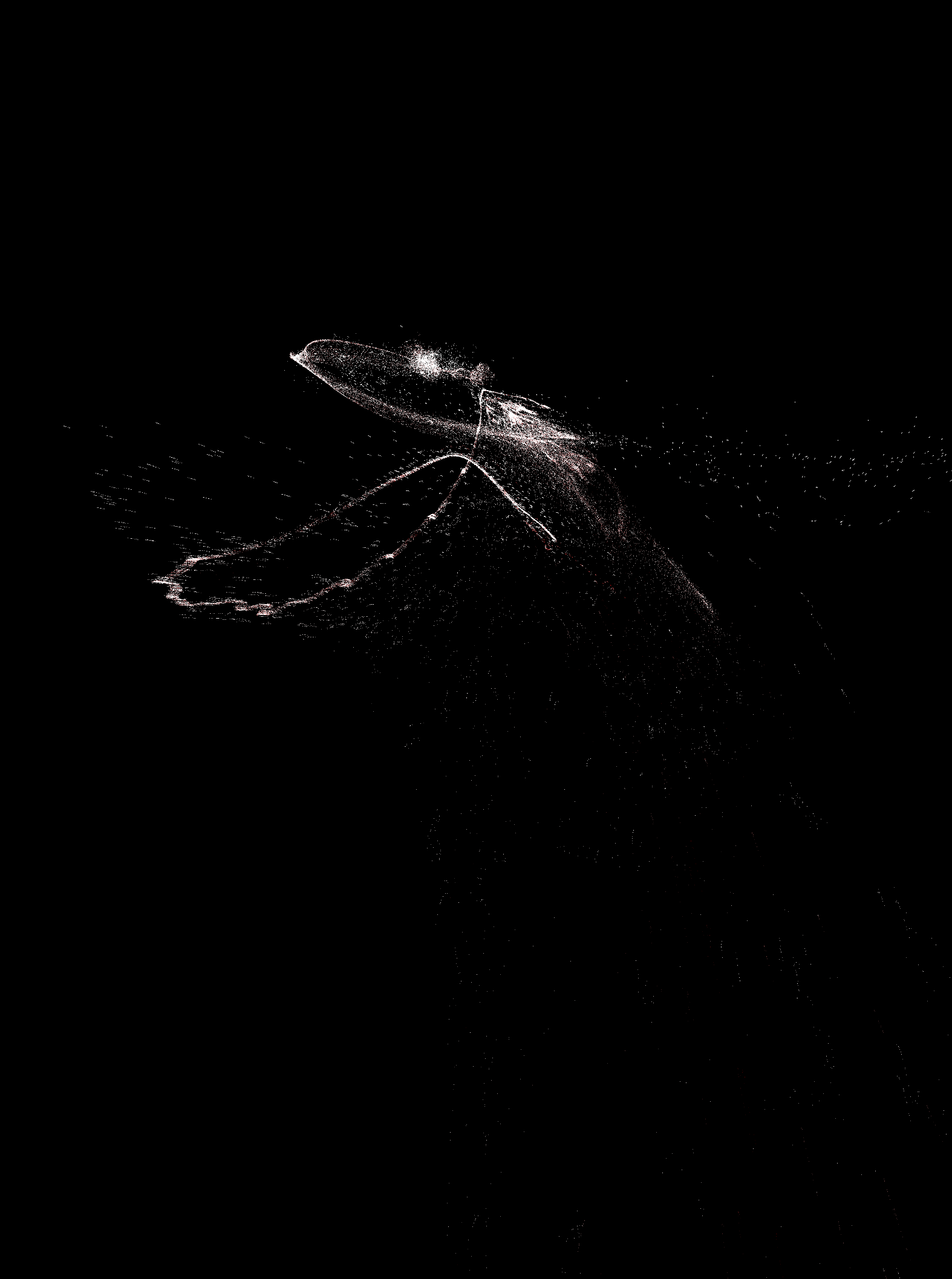
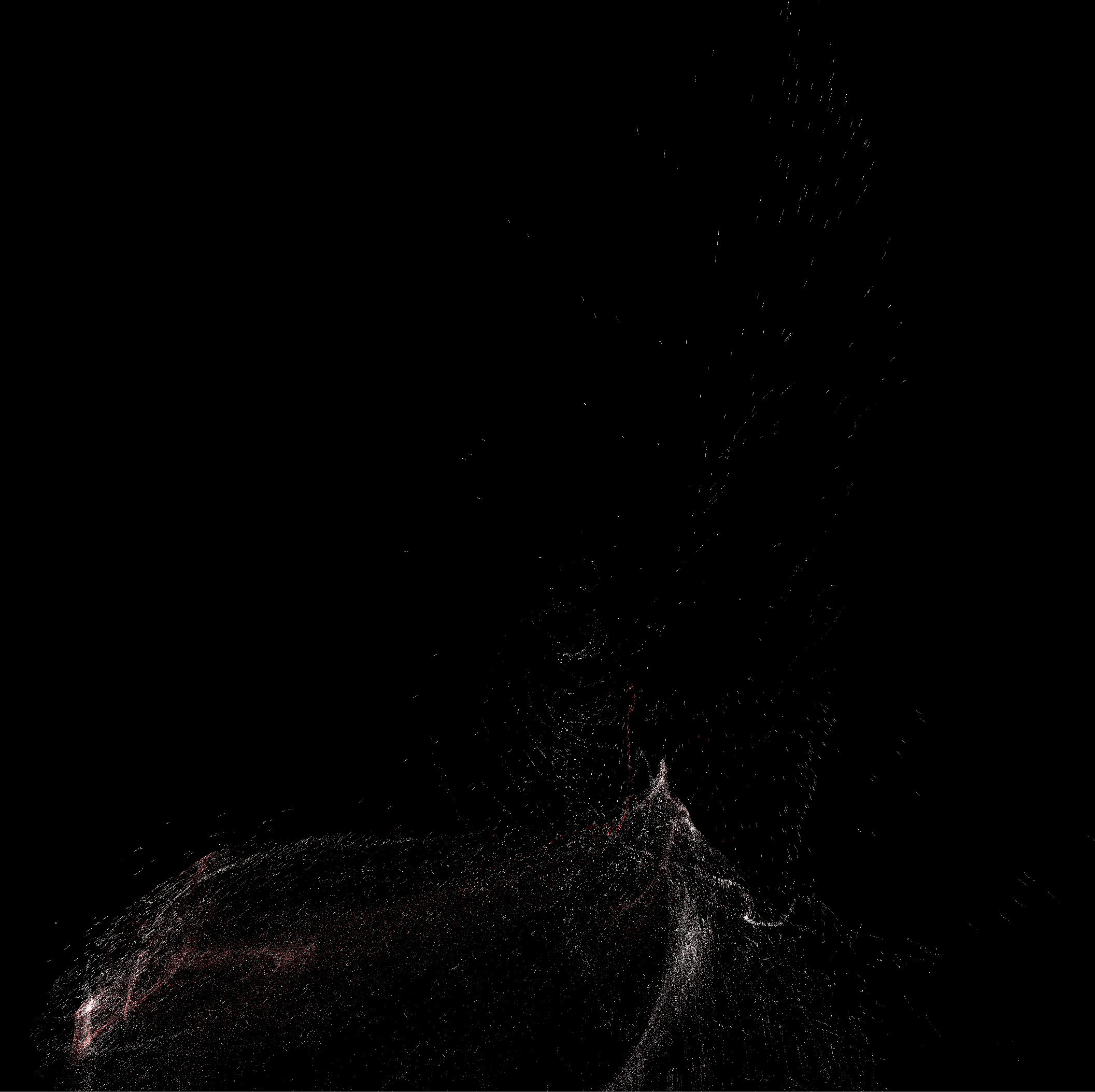
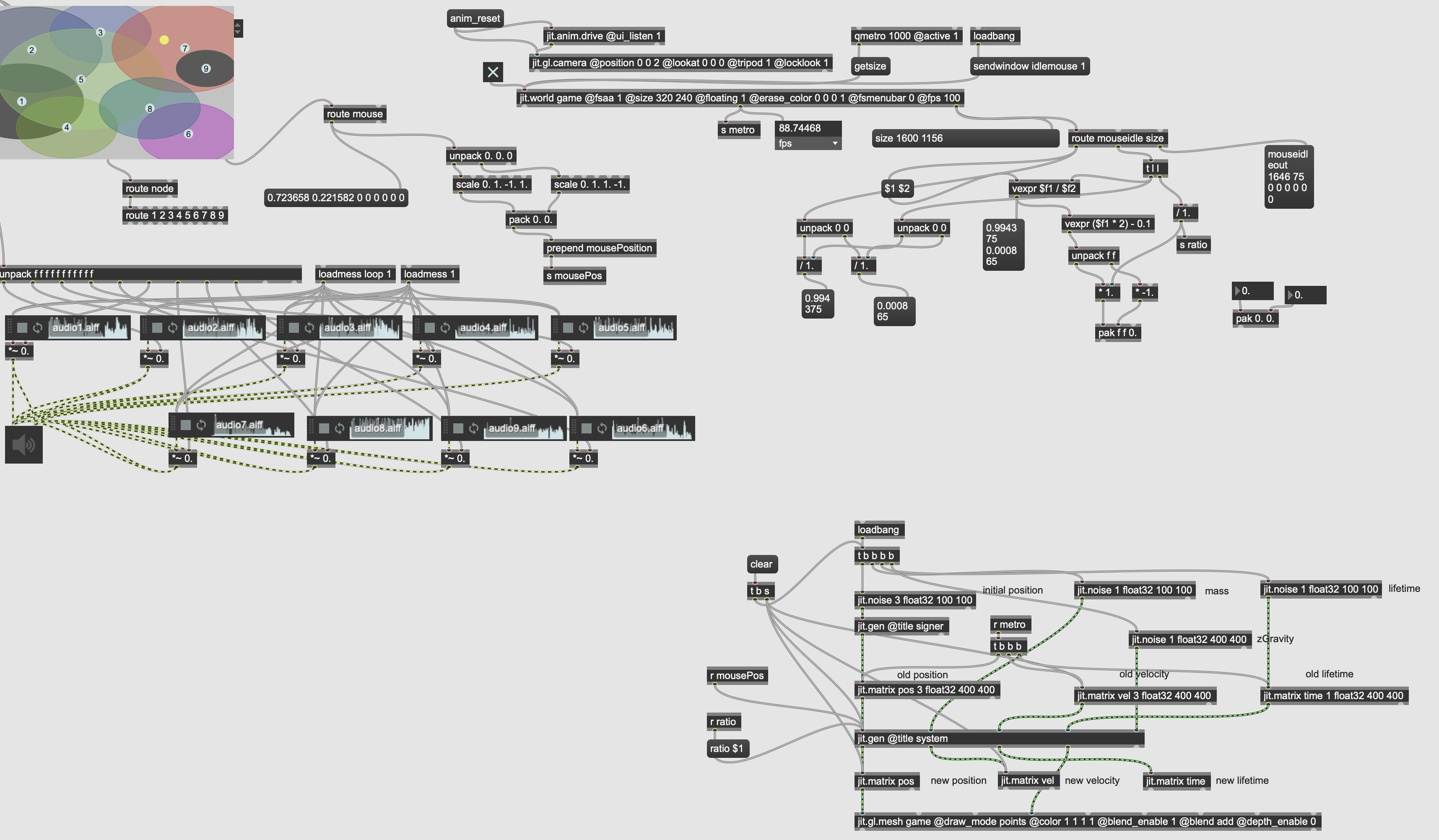
This work shows that there is no difference between a living person and a heartless mechanism when we thoughtlessly do things with data. Repetition, mechanicality and aimlessness arise when we thoughtlessly scroll, photograph the same thing, taking a reflex phone out of pocket, stop looking, to be conscious and to notice. The human ceases to differ from the mechanism, from the media image. Media image - a digital body, becomes for a moment more interesting than the living machine itself.
The installation is interactive: As you scroll through the tablet screen, you come across the once recorded messages, the sound of which turns into an image on the screen. These scattering dots remind us of the endless flow of monotonous information that we create every day.
Messages:
"Consume without asking questions."
"We produce seven hundred twenty thousand hours of YouTube videos daily, we can't consume that much."
"The search for cheap dopamine."
"Happiness for everyone, free of charge, and let no one be left out."
"Nothing has changed."
"To feel inner void in the information space."
"I want to learn how to cultivate my own ideas and thoughts."
Tech: MaxMsp, tablet, screen.
Bye World
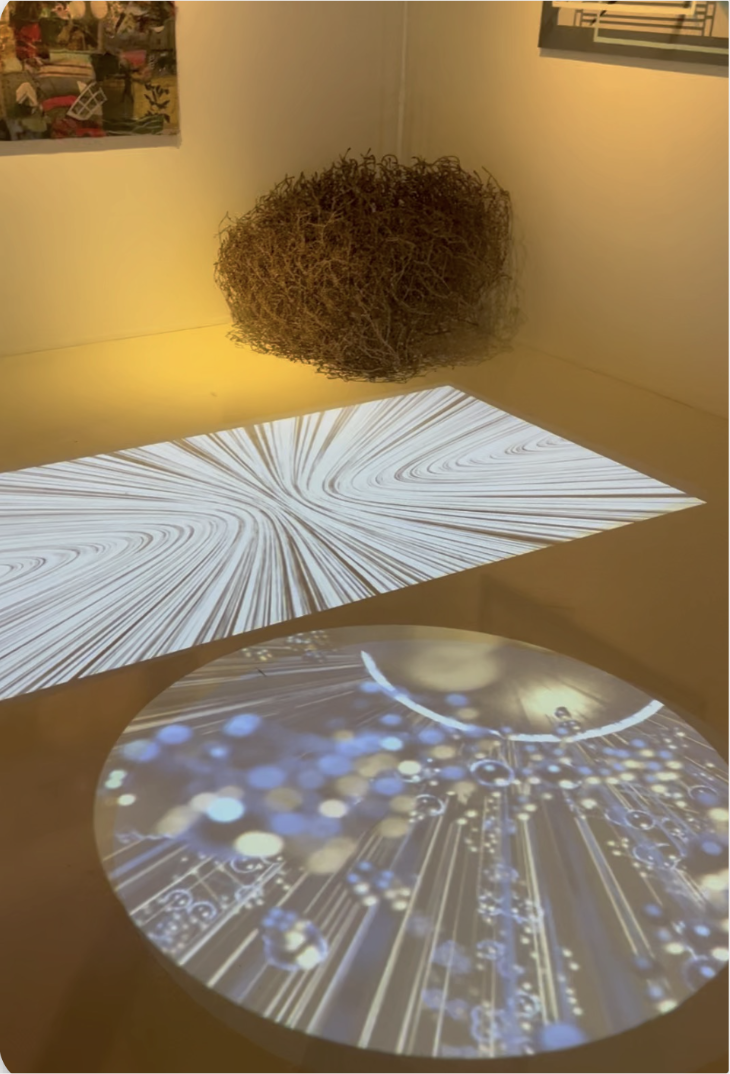
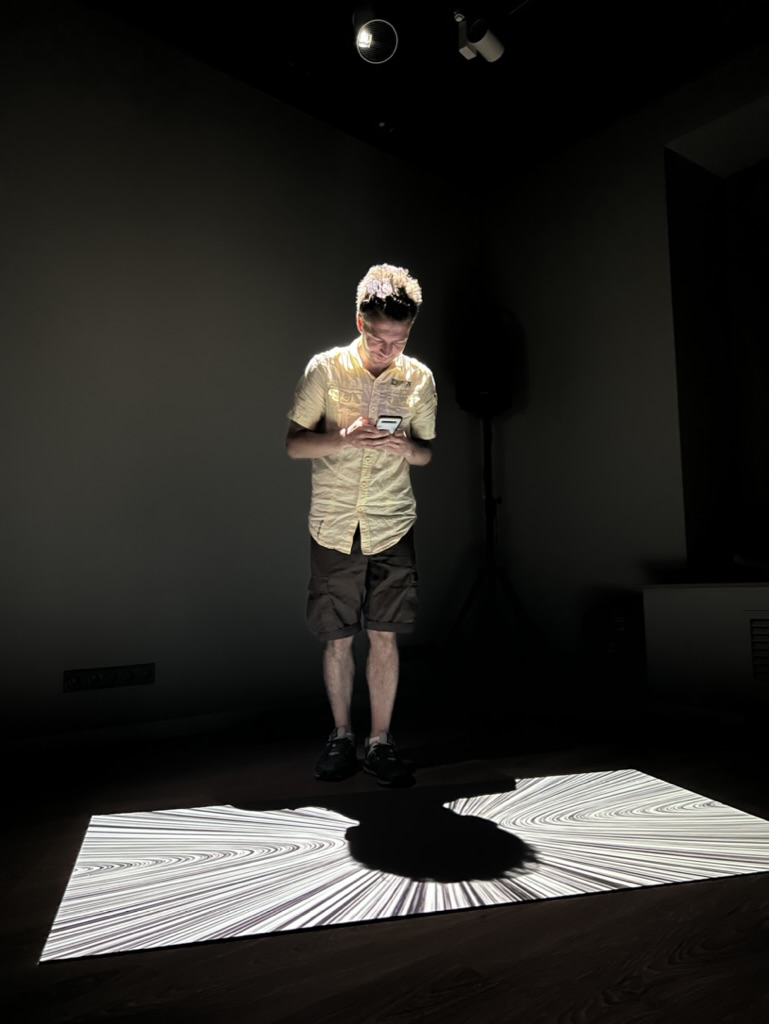
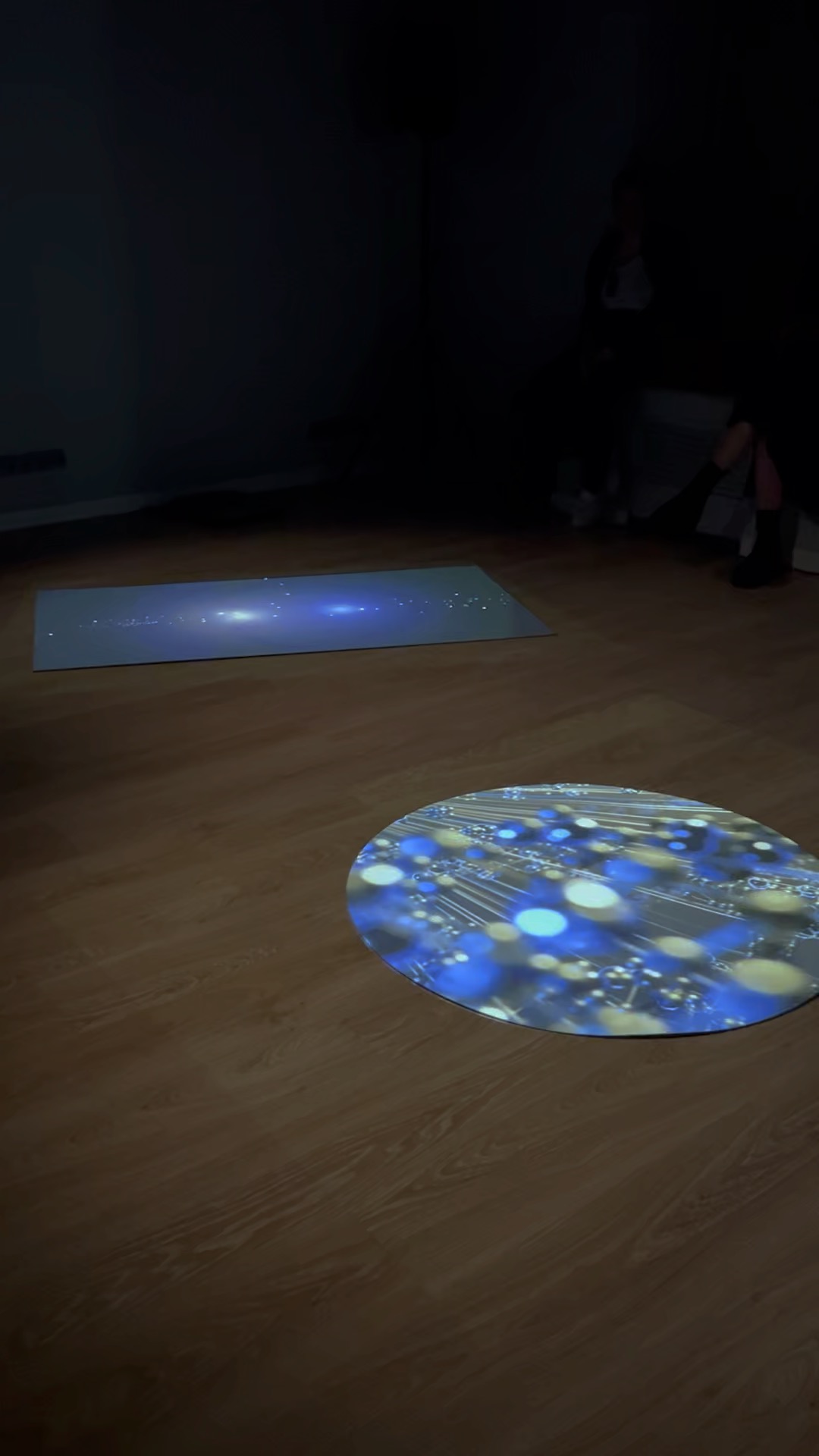
By getting information reproduction tools, we create and leave a huge digital footprints, absolutely justifying the status of Homo Sapiens Digital. In most cases, without thinking about what happens to that data set after the owner dies.
The concept of Homo Sapiens Digital is, among other things, about the development of digital wisdom, which will be «digital purity»: do not leave behind useless information globally, loading the servers and networks with continuously published content from our lives.
The project suggests turning to digital wisdom and digital purity during life and the process of decomposing the digital personality profile after death.
Collaboration with Alexander Shlyakhov.
Graduation project from the New Media in Contemporary Art program Moscow School of Contemporary Art.
Exhibited at 30/7 Gallery and Zaryadye, Moscow.
Tech: Blender, Ableton, 2 projectors.
Size of whole projections: 200 x 200 cm
Don’t look at the light
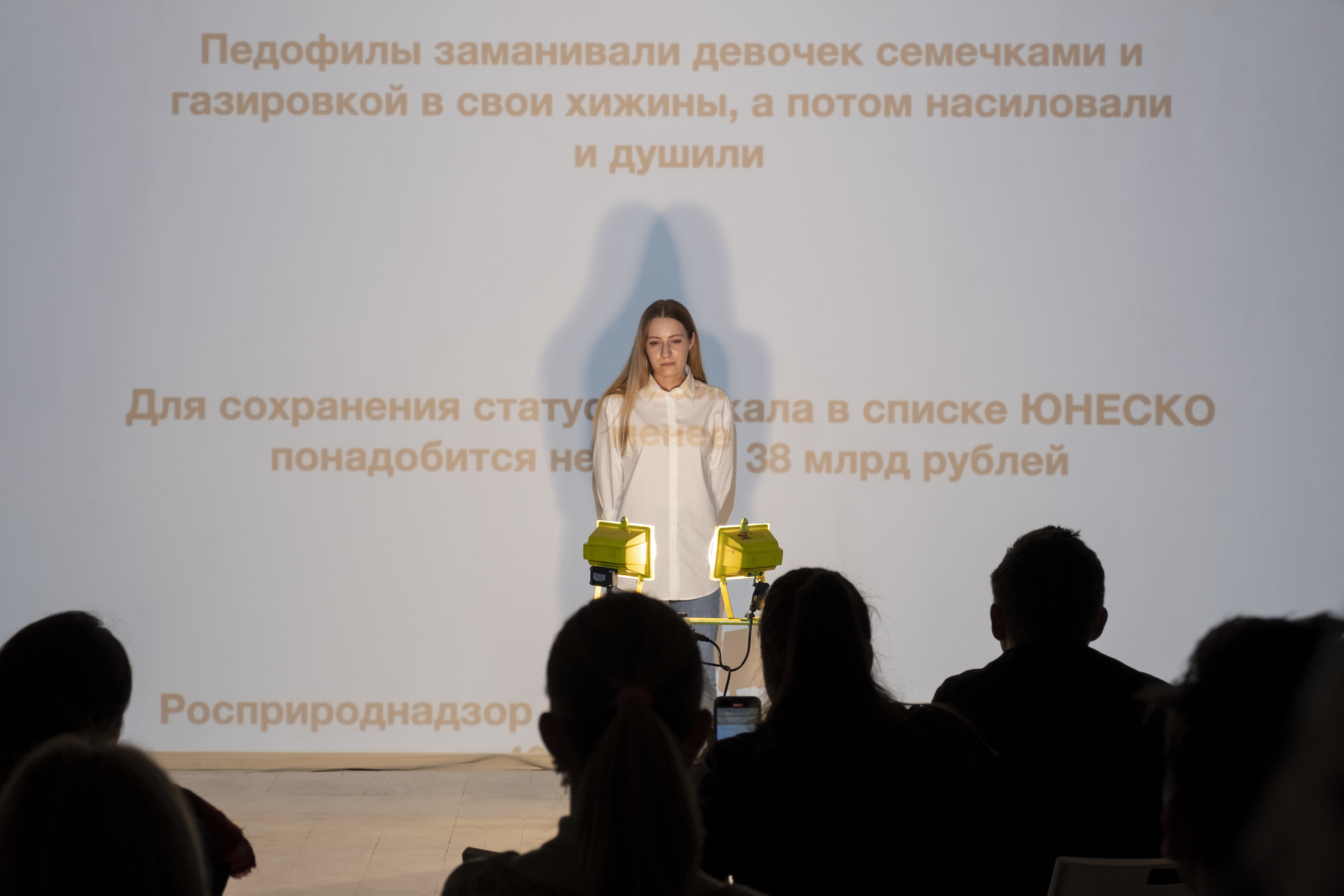
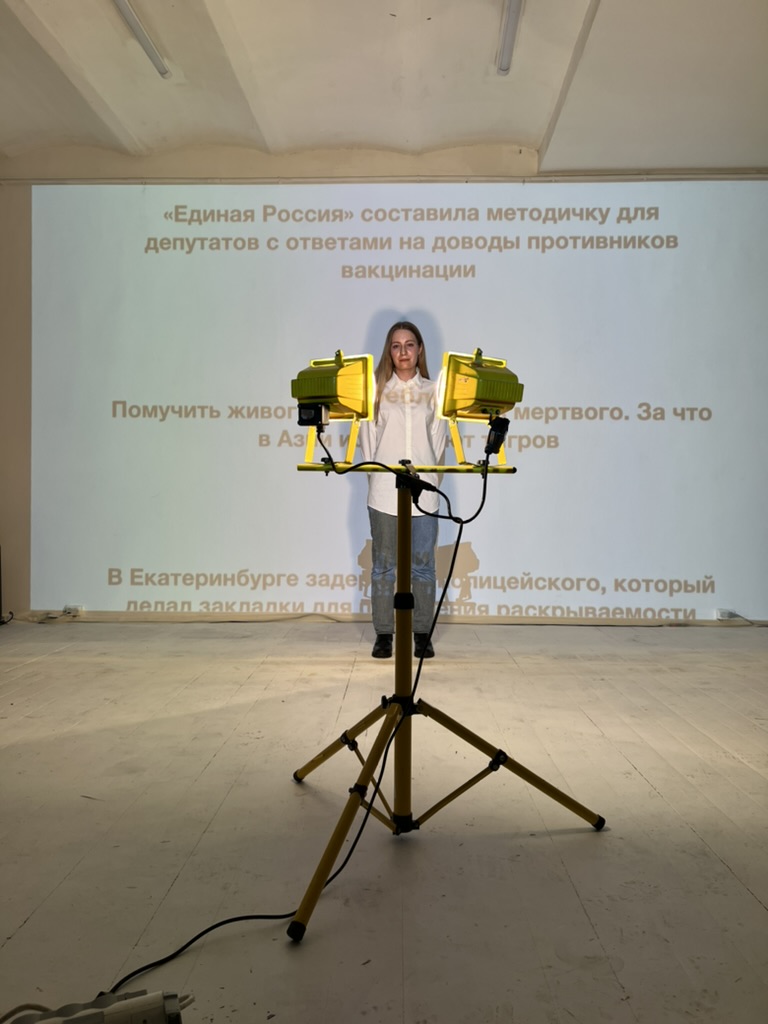
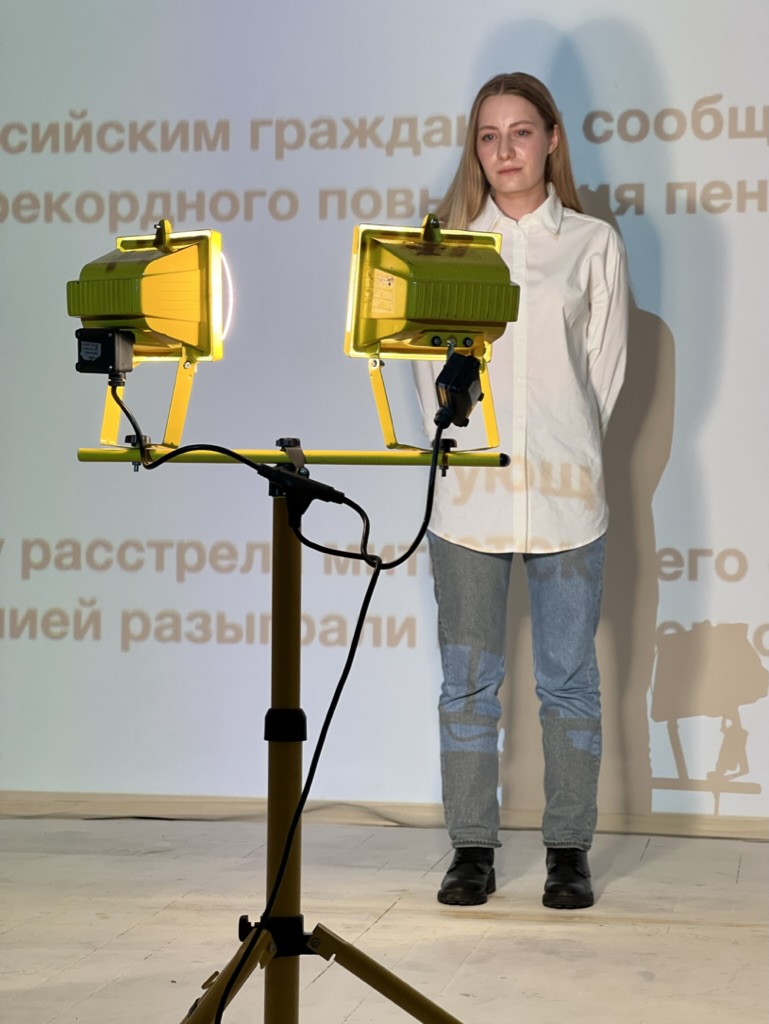
In this work the artist put light and information on one step. They are everywhere and they may be impossible to perceive, killing and destroying.
We get used to looking at the bright light, although initially it seems impossible to look at it. Long eyes absorb clarity of vision, causing nausea and dizziness.
We’re going blind and numb. We get used to looking at the injustice of life, the distortion of information, the propaganda, even though it seems impossible at first to look at, which is outrageous. We’re going blind and numb. The seeming impossibility of looking is replaced by addiction.
The habit takes away the strength from the struggle. What happens becomes natural and no longer causes the blinded pain.
Duration 5 min.
Project from the New Media in Contemporary Art program, Moscow School of Contemporary Art.